
How to Find Podcast Listenership: The Complete Guide

For enterprise B2B brands, success relies on measurable audience engagement.
But you will never be able to engage the wrong audience.
This guide gives you a step-by-step roadmap for moving past basic downloads to identify, segment, and understand your listeners.
You’ll learn the best tools and proven metrics to refine your content strategy, generate more leads and sales, and drive a measurable return on investment (ROI).
Let’s dive in.
See Who Listens to Your Podcast
To find podcast listenership, you need to understand who listens to your podcast. Then, you can target lookalike segments.
Tracking this audience and how they engage is also the foundation for demonstrating business value to stakeholders. We always advise enterprise marketing teams to move beyond simple download counts to focus on metrics that align content consumption with pipeline influence and marketing-to-sales attribution.
The solution here is accessing first party platform dashboards.
Track Your Audience on Apple Podcasts
Start with the native behavior of your distribution platforms. For example, on Apple Podcasts Connect, you log in, go to the Analytics tab, and view the “Listeners” and “Engaged Listeners” metrics (people who have listened to at least 20 minutes or 40% of an episode) along with geographic, city, and device type data.
Track Your Audience on Spotify for Podcasters
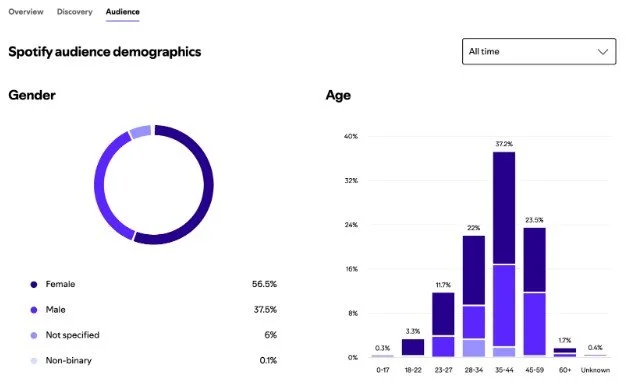
On Spotify for Podcasters, you log in, select your show, and the dashboard displays audience size, listener age, gender, location, and retention charts that show when half your listeners stop listening.
Track Your Audience on YouTube Podcasts
If your show is also published on YouTube, YouTube Studio offers valuable engagement data that complements audio-only metrics. You can track views, Audience Retention (which shows exactly where listeners drop off or rewatch), and Average Percentage Viewed to assess content effectiveness. You’ll also get insights into Click-Through Rate (CTR) on episode thumbnails.
These video-first metrics are especially valuable for understanding top-of-funnel engagement in visual-first audiences.
By using these dashboards, you can answer “who” in aggregated form. For example, you can find out how many unique devices streamed from a specific region, how many women aged 25 to 34 listened, or how many users stayed past the 10-minute mark. This begins to build a useful audience persona.
Centralizing Audience Data for Reporting
For Content Allies clients, data flow is centralized for enterprise reporting. We set up the podcast across the two main audio platforms, Apple Podcasts and Spotify, then integrate all data through a single hosting platform, typically CoHost.
This system consolidates every crucial audio metric, including IAB-certified unique listeners, consumption time, and geographic insights. We also implement a video-first strategy by setting up the show on YouTube Podcasts.
This comprehensive data is then presented and analyzed during quarterly business reviews (QBRs) every 90 days, providing strategic next steps for content, distribution, and pipeline alignment.
How Big Is My Podcast Audience? Metrics That Matter
Another frequently asked question related to how to find your podcast listenership is how big your audience actually is.
When you're measuring your podcast’s reach, the key is to focus on a small set of high-impact metrics that reflect real audience behavior. Metrics like unique listeners, completion rate, and subscriber growth give you far more actionable insights than downloads alone. Together, they help you evaluate both engagement and potential business impact.
Core Metrics for Your Podcast Listenership
Core metrics include:
Unique Listeners
This is the number of individual people or devices who listen to your show, regardless of how many episodes they stream. It reflects actual audience size, unlike downloads, which can be inflated by auto-downloads or repeat requests. Unique listener counts are typically IAB-certified and available through your podcast host.
Downloads (IAB Standard)
A download is recorded when a unique user requests an episode file, filtered to exclude bots and repeat requests within a specific time frame. Defined by the Interactive Advertising Bureau (IAB), this metric is used primarily for ad impression reporting and is supported by most major podcast hosting platforms.
Consumption or Completion Rate
This measures how much of an episode the average listener hears, often expressed as a percentage. For example, if the average listener hears 80% of a 30-minute episode, your completion rate is 80%. According to industry research, most podcasts average between 50% and 70%. Anything above 70% is considered excellent.
Of course, that engagement also depends on podcast length, which is why you may be interested in this next point:
What to read next: How Long Should a B2B Podcast Be? Data-Backed Insights for Engagement
Subscribers and Followers
Subscriber growth reflects ongoing interest and loyalty. Each major platform defines this slightly differently:
Apple Podcasts tracks “Followers,” users who opt to be notified of new episodes.
Spotify uses “Followers” and ties them to demographic insights.
YouTube tracks “Subscribers” for podcasts published as video or live streams.
Tracking subscriber trends across platforms reveals how well you’re converting casual listeners into long-term audience members.
Tracking these four metrics episode by episode helps you identify trends and make content decisions. For instance, a drop in unique listeners but a spike in completion rate may signal content quality improvements with narrower appeal. Conversely, fast subscriber growth but low completion could mean good topic hooks but weak follow-through.
Podcast Metrics at a Glance
| Metric | What It Measures | Why It Matters | Where to Find It |
|---|---|---|---|
| Unique Listeners | Actual individuals/devices who listened | Indicates true reach and audience size | Podcast host (IAB-certified platforms) |
| Downloads (IAB) | Episode files requested | Used for ad impressions, filtered for accuracy | Podcast host dashboard |
| Completion Rate | Percent of episode listened | Measures content engagement and quality | Apple Podcasts, Spotify, CoHost |
| Subscribers/Followers | Listeners who opted in to follow the show | Indicates audience loyalty and conversion | Apple Podcasts, Spotify, YouTube Studio |
Vanity Metrics vs Actionable Insights for Your Podcast Audience
It’s tempting to fixate on high download counts or a rising subscriber number. But those are "vanity metrics" if your goal is to learn more about your podcast listenership.
They might look good on paper yet tell you little about listener behavior. For example, a Podnews study points out that about 13% of podcast downloads are never listened to.
If you’re in that situation, you need to understand why.
In contrast, actionable insights come from metrics you can respond to.
For instance:
A dip in consumption around minute 12 across multiple episodes suggests your format needs an earlier hook.
A strong completion rate signals listeners find value and are more likely to become loyal.
Unique listener growth signals your reach is expanding into new ears rather than just the same people listening more.
Podcast Listenership Numbers: Industry Benchmarks
So, how do you know your podcast listenership metrics are good? Having benchmarks gives you context for where you stand.
According to data from Buzzsprout; the median podcast gets about 28 downloads in the first 7 days after release. For higher tiers, Buzzsprout lists around 111 downloads in 7 days for the top 25% of shows, and about 449 for the top 10%.
A broader survey notes that if your new episode gets about 25 to 30 downloads in the first week, you’re already in the top 50%
For branded or B2B-niche podcasts, benchmarks differ. One study found a 67% average retention rate and around 321 downloads in the first 7 days.
Keep in mind that benchmarks vary by niche, region, and show age, so use them as directional reference rather than strict targets.
Next, let’s dive deeper into understanding your podcast listenership:
Track Listener Identity, Source, and Behavior
For enterprise podcasts, tracking who listens and how they find your content goes beyond download counts. It is about aligning content performance with strategic goals like account-based marketing (ABM), brand engagement, and pipeline generation.
To do that effectively, enterprise teams rely on hosting platforms like CoHost, Captivate, Transistor, or Libsyn as their central analytics layer. These hosts consolidate audience and episode-level metrics from across all major distribution platforms, serving as the single source of truth.
Hosting Platforms as the Central Data Hub
Every episode distributed on Apple Podcasts, Spotify, Amazon Music, or Overcast flows through your podcast host, making it the best source for aggregated performance data. Platforms like Captivate offer detailed episodic analytics including:
Listening apps (e.g., Chrome, Apple Podcasts, Safari)
Platforms used (mobile vs. desktop, browser vs. app)
Operating systems (Android, iOS, macOS, Windows)
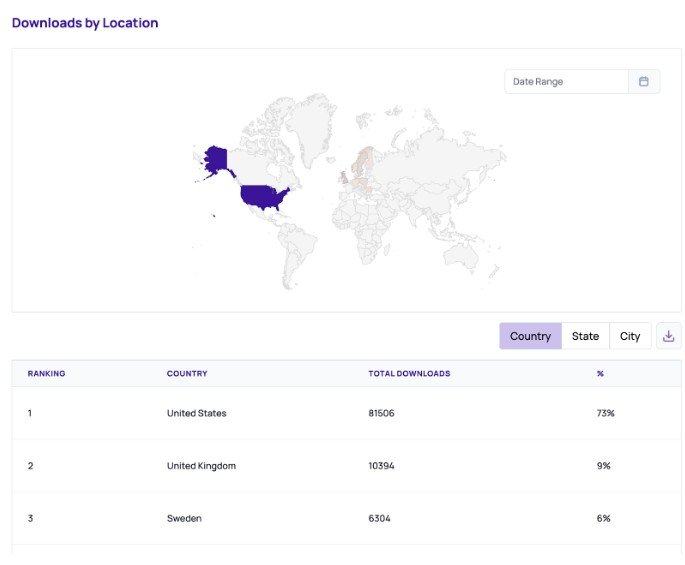
Geographic breakdowns (downloads by country)

This level of detail helps marketers identify where listeners are coming from and what devices or formats they are using. For example, if 70% of your listens are via Chrome on Android devices in the U.S., you might prioritize web-based promotion over app-focused strategies.
P.S:. If you want to learn how to engage decision makers with your enterprise podcast, we created this guide just for you: Podcasting for Enterprise Brands: How to Engage Decision-Makers at Scale
Native Platforms for Deeper Engagement Metrics
Once you establish baseline performance, platforms like Apple Podcasts Connect, Spotify for Podcasters, and YouTube Studio give you a second layer of insight:
Apple shows “Engaged Listeners” (listeners who play 40% or more of an episode)

Spotify reports on follower growth, listener age, gender, and retention trends
YouTube shows traffic sources, average view duration, and click-through rates for video episodes
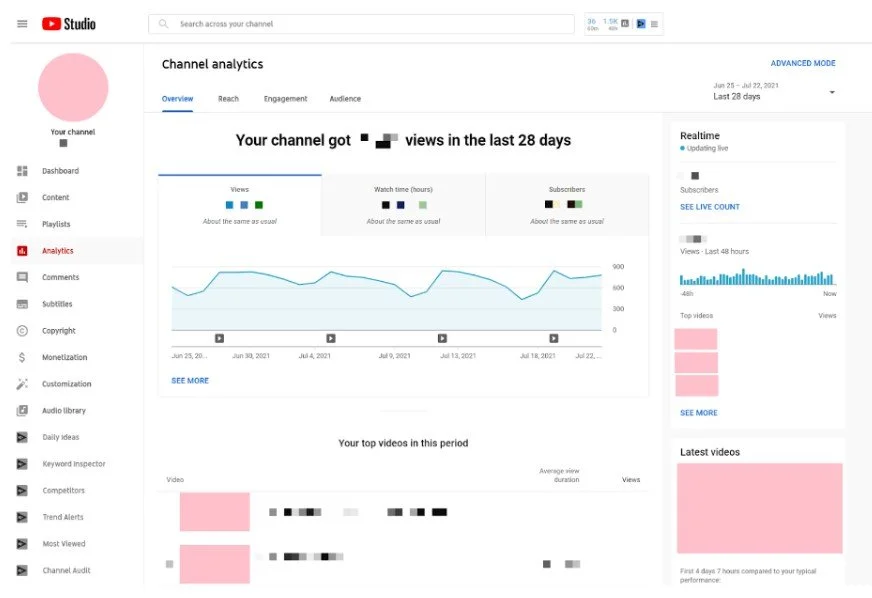
These native dashboards help you understand how your audience interacts with your content across platforms, revealing drop-off points, loyalty patterns, and engagement trends.
Audience Intelligence with CoHost B2B Analytics
For enterprise teams, the most strategic layer is firmographic intelligence. This means knowing not just that someone listened, but which company they represent.
And in case you’re wondering, yes, we’re using it, too.
CoHost’s B2B Analytics allows you to:
Identify companies listening to specific episodes (e.g., Skanska, Accenture, P&G)
View audience breakdowns by job role, seniority, company size, industry, and revenue band

Align episodes with buyer personas and pipeline movement
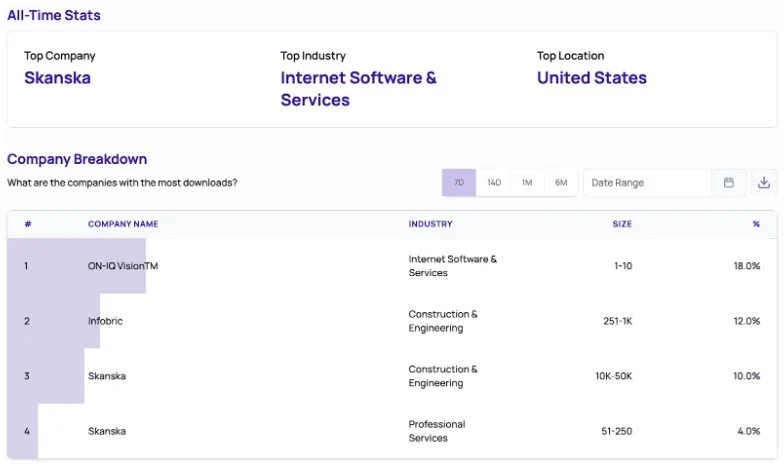
You can even filter analytics by episode, time period, or target account, which is critical for QBRs, ABM campaign reporting, and sales enablement.
Persona-Level Insights with Rephonic
To complement firmographic data, Rephonic shows you the demographic and psychographic profiles of your podcast’s audience, such as:
Geographic spread (e.g., U.S. 44%, Canada 26%)
Age ranges (majority 35–44)
Job roles (e.g., CRE brokers, analysts, consultants)
Education, income, and relationship status
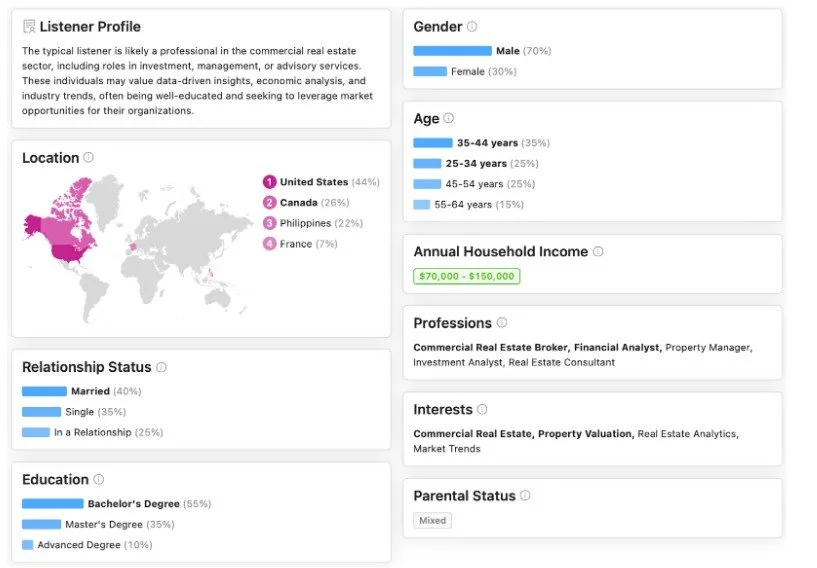
These insights help you fine-tune your messaging, tailor guest selection, and even choose the right platforms for promotion based on listener behavior (e.g., high LinkedIn or YouTube usage).
Tracking Referral Sources and Listener Acquisition
To understand how listeners discover your podcast, tracking referral sources is essential. Your website, social media posts, and newsletters often drive traffic to your episodes.
By identifying which of these touchpoints lead to listens or clicks, you can focus your promotion on what works best.
The most effective way to do this is through UTM parameters added to podcast links. For example, if you're promoting an episode in your LinkedIn newsletter, you can append a UTM string to track traffic and engagement back to that channel.
Pro tip: Tools like Podsights and Podtrac offer smart URLs that auto-generate these links and consolidate the data into usable dashboards.
When layered with hosting analytics and native platform insights, UTM tracking helps complete the picture of how a listener found you and what they did next.
Why Listener Identity, Source and Behavior Data Matters
When enterprise marketing teams centralize their podcast analytics and enrich it with firmographic and behavioral overlays, the podcast becomes a measurable growth channel rather than just a brand asset.
You are no longer asking, “How many people listened?”
You are answering, “Which accounts listened, what content they engaged with, and how can we use that data to drive action?”
Use Paid Distribution Data to Identify and Grow Podcast Listenership
While organic podcast analytics offer valuable insight into who is listening and how they engage, they usually don’t have the detailed demographic or firmographic data needed during early-stage awareness.
Paid distribution complements this by offering a more complete picture of your audience.
At Content Allies, we use paid distribution on Google, YouTube and LinkedIn to extend episode reach. Plus, we can use the same platforms to extract deeper audience intelligence beyond what traditional podcast platforms report.
Google & YouTube: Behavior-led Audience Discovery
Google and YouTube Ads help you evaluate content resonance across different interest categories. Campaigns are structured around specific themes or topics, such as market trends, innovation, or leadership insights.
For example, we used this approach for one of our clients in the commercial real estate (CRE) industry. We track key engagement metrics including:
Impressions and click-through rates
Conversion rate by topic
Audience demographics (age, gender, household income)
Geographic regions of engagement
Impressions and click-through rates
Conversion rate by topic
Audience demographics (age, gender, household income)
Geographic regions of engagement
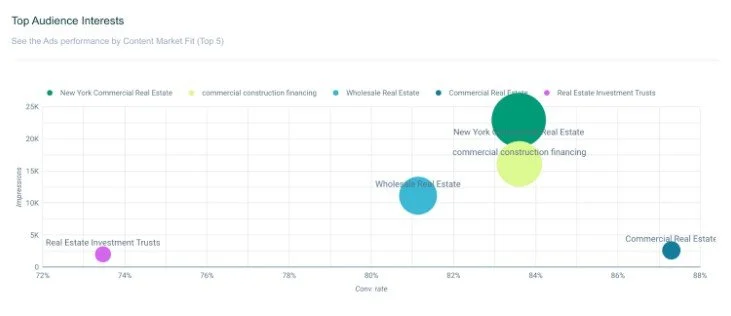
Charts like “Top Audience Interests” also validate which topics attract the most interest.
Demographic breakdowns by age, gender, and income level give marketers insight into how well content aligns with their intended personas.
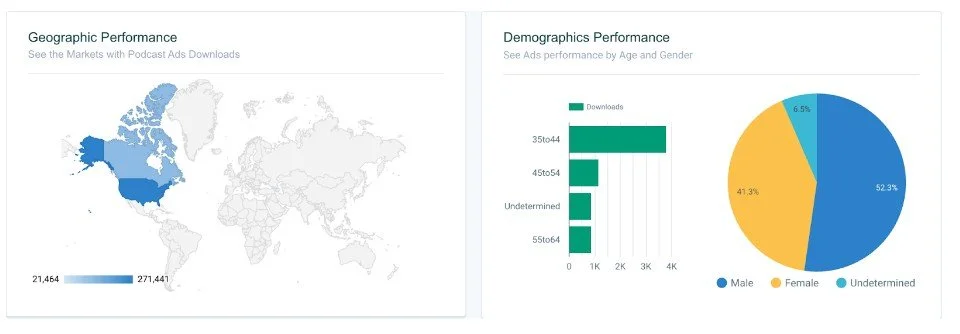
This allows us to confidently test strategic questions such as:
“Will this ‘Future of Construction’ episode appeal to high-income commercial real estate professionals aged 35 to 54 in North America?”
The results inform decisions within days and offer concrete feedback for both future content and targeting.
LinkedIn Ads: Precision Firmographic Insights
While Google and YouTube have good behavioral data, LinkedIn Ads give you access to professional-level audience insights. And these are highly valuable for B2B podcasting. Through LinkedIn’s reporting, we can view engagement broken down by:
Job function (e.g., Marketing, Engineering, Sales)
Job titles (e.g., Marketing Manager, Software Engineer, CMO)
Seniority levels (e.g., Senior, Director, VP, CXO)
Company size, industry, and named organizations
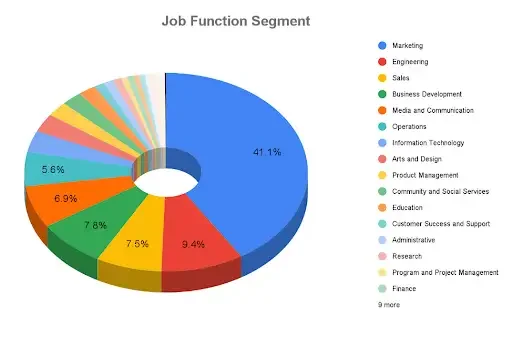
For instance, a campaign targeting AI executives revealed listener engagement from professionals at companies like Google, OpenAI, DeepMind, NVIDIA, Meta, and Databricks. Reports from these campaigns include industry segments, job role distribution, and regional breakdowns, giving clients actionable insights into who is consuming their content.

Benefits of Using Paid Distribution to Understand Your Podcast Listenership
Paid distribution strengthens your understanding of podcast listeners at the top of the funnel. Basically, you can:
Confirm ideal customer profile (ICP) alignment early
Improve episode topics and guest selection using live performance data
Build remarketing lists of engaged professionals
Make sure your content strategy supports ABM efforts
A strategic layer in the Content Allies approach
At Content Allies, paid distribution is an intentional part of our podcast strategy. We use it to:
Test content resonance
Scale audience reach
Gather audience intelligence that goes beyond what standard podcast analytics can provide
Whether launching a new show or growing an existing one, we help clients target and reach decision-makers within the companies that matter most.
Common Mistakes Podcasters Make When Tracking Listenership
Podcast analytics are only as useful as the decisions they support. Many teams fall into avoidable mistakes when interpreting listener data. Below are four of the most common missteps and how to correct them.
Overvaluing Download Numbers
Downloads are usually the most visible metric in podcast dashboards, but, as we explained above, they can be misleading. A single listener may trigger multiple downloads across devices or apps, and many downloaded episodes are never actually played.
Treating this number as your audience size inflates expectations and obscures true engagement.
For a more accurate view, focus instead on:
Unique listeners
Engaged listeners
Subscribers
Completion rate
Ignoring Audience Retention
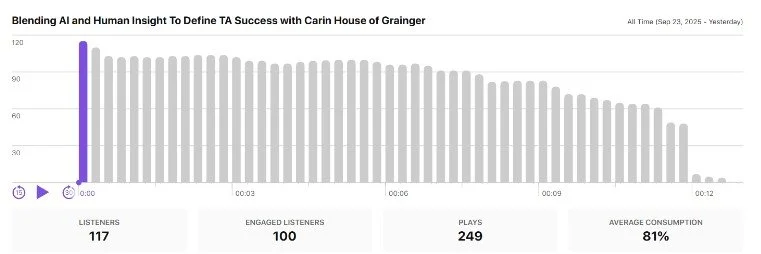
Getting someone to press play is only the beginning. Retention metrics, which show how long people listen and how often they come back, reveal whether your content is delivering value.
If a large portion of your audience stops listening within the first few minutes, that episode’s structure, pacing, or opening segment may need improvement.
Basically, monitoring retention is great for targeted optimization because you now know the key moments that need to be improved.
Using One Analytics Source Only
Limiting analysis to a single dashboard gives you an incomplete picture.
Hosting platforms offer aggregate data, but native dashboards like Apple Podcasts Connect, Spotify for Podcasters, and YouTube Studio show you detailed engagement insights by platform.
Enterprise-level tools such as CoHost and Rephonic add another layer by capturing company-level data, listener demographics, and audience profiles.
Tracking Without Tying To Business Outcomes
Collecting analytics in isolation from business strategy reduces their impact. Many podcasters measure listens and downloads without linking them to sales, lead behavior, or pipeline movement.
The most effective teams align podcast data with their marketing funnel, using it to support lead nurturing, ABM targeting, and customer retention.
Find (and Scale) Your Podcast Listenership with Content Allies
Podcast analytics give you the clarity to understand what’s working, who’s listening, and how your content drives business value.
Use that information to find lookalike audiences and scale your podcast.
With the right strategy and tools, your podcast becomes a powerful channel for thought leadership and pipeline growth.
At Content Allies, we build B2B podcasts that align with marketing goals and deliver measurable results. Explore our services to see how we can help.
Frequently Asked Questions (FAQ)
How do I find the listenership of a podcast?
If it’s your own podcast, the best way to measure listenership is through your hosting platform, which aggregates data from every distribution channel. Metrics like unique listeners, episode downloads, completion rate, and subscriber growth are your key indicators. For external shows, you can use tools like Rephonic to estimate audience size and demographics, but full access is limited without backend data.
How do I check how many listens a podcast has on Spotify?
Log into Spotify for Podcasters, select your show, and view analytics under the “Audience” and “Episodes” tabs. Spotify displays total starts, streams, followers, and retention data. This only reflects Spotify activity and doesn’t include data from Apple, YouTube, or other platforms.
How to find podcast listenership data for my own show?
Start with your podcast host (e.g., CoHost, Captivate, Libsyn, Transistor), which serves as your central analytics hub. It will show total downloads, unique listeners, device types, apps used, and geographic breakdowns. For deeper insights, supplement with native dashboards like Apple Podcasts Connect, Spotify for Podcasters, and YouTube Studio. Use tools like Rephonic for demographic analysis and CoHost’s B2B Analytics for company-level listener identification.
What’s considered good podcast listenership?
According to Buzzsprout, if your episode gets 28 downloads in the first 7 days, you're in the top 50% of podcasts. Reaching 111 downloads places you in the top 25%. Beyond these raw numbers, strong completion rates (70%+) and subscriber growth are better indicators of quality and engagement, especially for B2B shows with targeted audiences.
How do I grow podcast listenership effectively?
Use a multi-channel strategy that includes both organic and paid distribution. Share episodes via email, social media, and on your website with UTM-tagged links. Run paid campaigns through Google Ads, YouTube, and LinkedIn Ads to reach high-intent listeners and gather firmographic data. Regularly review episode-level performance to refine topics, formats, and guest selection based on actual engagement trends.
How do I track podcast listenership ROI?
Align your podcast metrics with your business goals. Use your host and platforms like CoHost to measure listener engagement and B2B firmographics. Track conversions from links in show notes, newsletter clicks, or dedicated landing pages. Paid distribution platforms like LinkedIn Ads also allow you to see which job roles and companies are engaging with your episodes. During quarterly business reviews (QBRs), assess how podcast content influenced pipeline, brand awareness, or lead quality.