
From Audience to Tribe: The Ultimate Podcast Community Strategy Guide
Building a podcast is one thing; building a community around it is another. That’s where the real results come from. A solid podcast community strategy can turn casual listeners into loyal advocates who refer friends, share your content, show up to live events, and even create content of their own.
In this guide, we’ll walk through how to design a community strategy that actually works. We cover everything from platform selection and engagement rituals to live AMAs, feedback loops, and member-led content.
We’ll also show how partners like Content Allies can help amplify your efforts along the way.
Let’s dive in.
Podcast Community Strategy Template
Use this quick-hit template to map out your podcast community strategy. You can (and should ) adjust and expand as needed, but this gives you a solid starting framework:
| Pillar | What to Focus On | How to Do It |
|---|---|---|
| Audience Insight | Understand your listeners' habits, needs, and preferences | Use platform analytics, voice surveys, and personas |
| Platform Choice | Pick the best space for engagement | Facebook Group, Discord server, Circle, etc. |
| Cadence & Rituals | Create recurring community touchpoints | Weekly check-ins, monthly AMAs, and shout-outs |
| Live Events | Plan high-impact interactive experiences | Live recordings, panel Q&As, meetups |
| Feedback Loops | Capture input regularly and use it | Post-episode prompts, polls, voice feedback |
| UGC & Content Loops | Invite the community to co-create and share | Listener stories, video reactions, and guest ideas |
| Growth Infrastructure | Build systems for scale and sustainability | Moderators, automation, and tiered access |
| Measurement and Outcomes | Track engagement and link it to business goals | Active members, referrals, and UGC share rate |
| Community Vibe | Lead with purpose, values, and consistent presence | Vision statement, tone guidelines, and recognition |
Why “Community” Matters & What a Strong Podcast Community Looks Like
When we talk about a “community” in the context of your podcast, we’re not just talking about people who hit play. We’re talking about active community members, which means listeners who comment, share, join the conversation, show up in real‑time, and invite others in.
That’s at the heart of any effective podcast community strategy. And you can learn more about that concept from this short YouTube video.
What a Real Podcast Community Looks Like
Your listeners actively participate: Instead of passively consuming your podcast, they submit questions, join live sessions, interact in digital spaces, and even create content with you.
It’s built on connection: According to a survey by Deloitte, around 75% of listeners say they trust their podcast hosts, which makes the host‑listener relationship similar to a micro‑influencer environment. But more importantly, you will also create connections between your audience members, facilitating further relationships.
It’s participatory: A recent peer‑reviewed study on podcasts found that elements like “liveness,” opportunities for interaction, and trans‑media platform engagement are key to building a stronger sense of community.
It’s outcome‑driven: When listeners become part of the tribe, they share your episodes, generate UGC (user‑generated content), attend live events, turn into brand advocates, and, even better, drive referrals.
Why a Strong Podcast Community Matters for Business
More referrals: When community members feel invested, they tell friends, and that word‑of‑mouth is gold. That’s great if you want to use your B2B podcast as a lead gen machine.
More sharing: Engaged listeners are far more likely to share show notes, social posts, clips (think YouTube Shorts or Instagram Reels), and help with distribution platforms like Apple Podcasts.
Here’s a good example:
Higher lifetime value: These folks tend to show up for live recordings, AMAs, community events, and even help you sell or promote something because they feel involved in it.
So, if you’re serious about growing a more engaged podcast community, you need an intentional podcast community strategy.
Let’s dive into the step‑by‑step playbook.
Podcast Community Building Step By Step
You’ve got listeners, now let’s turn them into a real community. This section breaks down the essentials of a solid podcast community strategy: choosing your platform, building engagement habits, running live events, gathering feedback, and inspiring listener-led content.
Step 1. Know Your Audience
Every great podcast community strategy starts with knowing exactly who you’re talking to. What do they care about? What keeps them listening? What kind of content gets them to lean in, click share, or drop a comment?
The more clearly you understand your listener personas, the easier it becomes to choose the right community spaces, build relevant rituals, and drive real listener participation.
How to gather audience insights
Podcast analytics: Platforms like Apple Podcasts and Spotify offer valuable data around locations, devices, retention, and episode drop-off points
Email marketing tool suite: If you send newsletters or follow-ups, see what gets opened and clicked. These patterns reveal content preferences.
Social media behavior: Monitor who’s tagging your show, which posts get engagement, and where your listeners already hang out (Instagram? LinkedIn? Facebook Groups? Discord?)
Voice feedback surveys: A simple, friendly voice prompt in your show notes can spark meaningful feedback and give you content ideas straight from your community members
And here’s why it matters: A 2023 report from Pew Research shows that 72% of U.S. podcast listeners aged 18-49 say they’ve recommended a podcast to others. That word-of-mouth power is pure gold when you’re building a community that grows itself.
Pro tip: For a more in-depth guide to finding your ideal listenership, check out our guide on the topic here.
Step 2. Choose the Right Platform(s) for Your Podcast Community
When you’re building out your podcast community strategy, picking the right platform(s) is a foundational decision. Get this wrong, and you’ll struggle to get meaningful engagement from your community members.
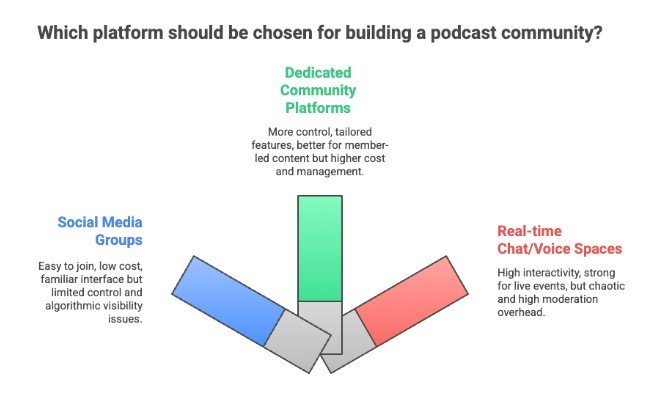
Platform types & trade‑offs for podcast community building
Social media groups (e.g., Facebook Groups, LinkedIn Groups)
Pros: Easy for listeners to join (they already have accounts), familiar interface, low cost
Cons: Limited control, algorithmic visibility issues, and the community becomes dependent on a third party
Dedicated community platforms (e.g., Circle, Mighty Networks)
Pros: You own more of the environment, more tailored features for community builders, and it’s better for member‑led content loops and rituals
Cons: Higher cost, requires more setup and ongoing moderation/management
Real‑time/chat/voice‑first spaces (e.g., Discord servers)
Pros: High interactivity, strong for live streaming, AMAs, voice chats, and culture‑building.
Cons: Can be chaotic, high moderation overhead (especially voice).
To make the choice, ask yourself:
Where do your audience and community members already hang out?
What’s your moderation and management capacity (your podcast team)?
What’s your budget and cost tolerance?
How will the platform integrate with your brand, your show notes, and your distribution platforms (Apple Podcasts, Spotify)?
How scalable is the space as your community grows?
Practical tips to pick the right podcast community channel
Don’t try to be everywhere at once. Pick one “home base” community space (your primary community platform) and get depth there before branching out into satellite spaces.
Designate one place as the hub for listener participation, content repurposing, and engagement rituals. Once that’s stable, you can experiment with secondary spaces like a live chat on Discord after major episodes.
Step 3. Establish Cadence, Rituals & Engagement Frameworks
One of the most powerful levers in your podcast community strategy is building predictable patterns and shared rituals. These are the touchpoints that turn listeners into community members who come back ready to participate.
What is a podcast cadence?
Cadence is simply your steady beat of engagement. How often do you post? When do you roll out content? When do you host live moments? When do you ask for input? Having a cadence means your community knows what to expect, and that creates trust and momentum.
That said, you need podcast community rituals that build belonging and participation. You also need a good cadence for them, like so:
A “Listener check‑in” post every Monday. Ask members to share what they’re working on or what they learned from the latest episode.
Live Q&A shortly after each major episode drops.
Member highlight/shout‑out of the week, where you spotlight a member’s story, contribution, or comment
UGC prompt or contest once a month. This could be asking your audience to send in a short video clip of what this episode meant to them. You can repurpose these for YouTube Shorts and social posts.
These rituals matter because they build habit, belonging, and expectation. Rituals in online communities lead to stronger engagement, deeper identity connection, and more cohesion.
When people know “every Monday I check in,” and “right after an episode we meet live,” they’re more likely to show up because it becomes part of how they engage.
To make this cadence manageable and effective, we advise you to:
Keep it doable for your podcast team. Don’t launch a full‑scale ritual every week if you don’t have the bandwidth.
Automate where possible. Schedule check‑in posts ahead of time and use reminders for live events.
Respond and interact. The value for community members is seeing that their voice matters, so make sure you’re replying, acknowledging, and following up.
Tie your podcast episodes directly to your community rhythm. After you drop an episode, post a discussion thread in your home space. Ask, “What did you take away? What question did you have?” Then follow up in the next ritual.
Make sure your rituals link back to your brand and broader ecosystem. Use show notes, email marketing, social mentions, and integration with your distribution platforms to widen and deepen the loop.
That’s how you can lay the foundation for a lively community where members engage, share, create, and grow with you.
Step 4. Live Recordings, AMAs, and Event‑Based Community Touchpoints
Live moments are powerful pillars in your podcast community strategy.
They transform listeners into participants and spark the kind of connection that broadcasts alone can’t. Whether virtual or in‑person, they create experiences that community members talk about, share, and invite others into.
Besides, you get the chance to reward super‑fans, create exclusive perks, and build strategic partnerships around the live format.
Podcast Formats for Community Building
Live podcast recording with your community in the room or live‑streamed. This gives your listeners front‑row access and makes them feel part of the show.
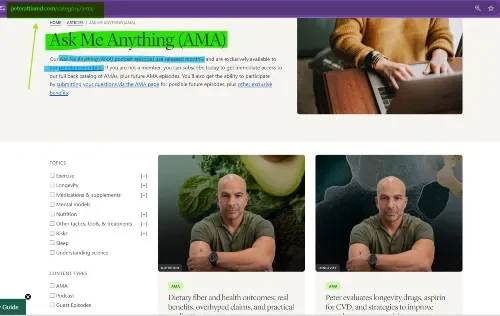
AMAs (Ask Me Anything) with the host or a special guest. These are a direct line between your audience and your brand/podcast moments. Peter Attia offers a great example here, especially because he groups these AMA episodes in a separate category on his website and offers them only to premium members:
Listener panels and virtual meet‑ups. Invite members to share stories, ask questions, and collaborate. Use famous guest appearances, too.
In‑person meet‑ups or hybrid events are ideal for brands or podcast teams that want to deepen bonds and reward super‑fans. Live events also boost visibility across search engines and build strong connections that drive podcast audience growth. For example, the My Favorite Murder podcast has organized live shows in several cities over the years.
Best Practices for Podcast Live Recordings, AMAs, and Events
Set a clear agenda. Let attendees know what to expect, when Q&A happens, and what the theme is.
Make participation easy by using familiar tools for your audience (like Zoom, YouTube Live, and Discord stage). Share a link early to build hype.
Record and repurpose. Capture the event (audio or video), then turn snippets into social clips, YouTube Shorts, or new content for show notes.
Highlight attendee stories afterward, post event photos or clips, thank participants, and invite further engagement.
Step 5. Feedback Capture and Member‑led Content Loops
A strong podcast community strategy thrives on two-way interaction. Instead of just talking at your audience, you need them to speak back, shape the conversation, and even help create the content. That’s how you turn listeners into community members who stick around, show up, and spread the word.
Start with simple feedback capture.
Build in easy ways for your audience to share their thoughts and ideas before, during, and after episodes. That might mean:
Embedding a quick voice feedback survey in your show notes
Kicking off a thread in your Facebook Group
Asking a strategic question via email, like “What should we ask our next guest?”
These little touchpoints add up. They show listeners that their input matters and that you’re listening.
Once people feel heard, it’s a short jump to getting them involved.
This is where member-led content loops come in.
Encourage listeners to submit stories or questions, share reactions, or even co-create new pieces.
Maybe a listener sends in a voice memo that ends up on the show. Maybe their feedback sparks an episode, which then turns into a community conversation, which you clip into a YouTube Short, and tag that same listener who shared it out to their network.
That’s a loop with real momentum.
Here’s a stat that drives this home:
According to a survey from MASV, 81% of consumers say they trust user‑generated video more than professionally created brand content, and 85% say they rely on UGC video before making a purchase. That means when your community members generate content or feedback, you get real credibility and reach.
To keep this going smoothly, make participation easy:
Don’t overcomplicate submissions.
Recognize contributors publicly.
And, while you should always maintain quality, don’t let the pursuit of “perfect” get in the way of progress.
When listeners start creating content with you, they move from audience to advocate. They refer, promote, and pull others into your orbit.
Bringing the Podcast Community Strategy Together: Measuring, Scaling, and Sustaining
Your podcast community strategy isn’t complete just by launching a platform or hosting live events. You need to measure what matters, scale the effort effectively, and sustain momentum over time.
Here’s how.
How to Measure a Podcast Community Strategy
Podcast metrics don’t tell the whole story if you’re implementing this tactic to grow your show.
For real community growth, you’ll want to track metrics like:
Active community members
Posts/ comments per week
Event attendance
User‑generated content share rates
Member referrals
Conversions
Download numbers
These metrics tell you if your audience is becoming an engaged community rather than staying passive listeners of your audio content, and if you’re reaching your podcast goals.
How to Scale a Podcast Community Strategy
As your community grows, what worked when you were 50 members won’t necessarily hold when you hit 500. You’ll need infrastructure, like community managers, automation for onboarding and engagement, tiered access, and more streamlined workflows for your online community spaces. Your podcast team must evolve, too, with different AI tools, more delegation, and clearer roles.
How to Sustain a Podcast Community Strategy
Growth only lasts if you keep the community feeling fresh and intentional. We advise you to:
Refresh your rituals every so often.
Listen to member feedback (you’ve built those feedback loops).
Reward participation with shout‑outs, perks, and access.
Always tie back to your vision statement and brand mission.
If you're a brand or marketing team looking to build a podcast community as part of your broader ecosystem, a partner like Content Allies can help. For example, learn how to leverage guest content for long-term relationships.
Best Practices for Building Your Podcast Community
Building a strong podcast community is a real commitment. And while the rewards can be powerful (like referrals, UGC, event engagement, and ultimately business outcomes), getting there takes intention, patience, and a whole lot of heart. Below are some best practices to help guide your podcast community strategy toward long-term, meaningful success.
Lead with Vision and Consistency
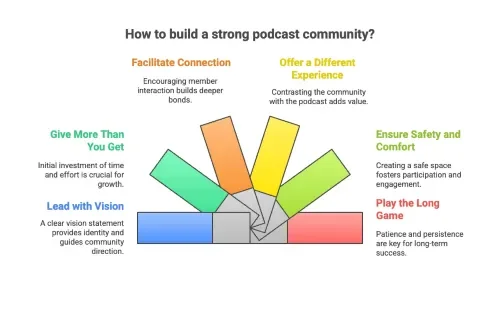
A clear vision statement for your community is non-negotiable. What do you want it to stand for? What values tie it to your podcast and your brand? Having a strong identity gives members something to connect with, sure, but it also helps you.
That’s because you can guide tone, culture, and direction, especially in the early days when things feel slow.
A vague community without a purpose will quickly lose direction. That’s why communities need clear leadership, which means behavior modeled daily by you and your team.
Be Ready to Give More Than You First Get
Building a podcast community takes serious time. In the early stages, it might feel like no one’s engaging, like you’re talking into the void. That’s normal.
The creator of the Cut The Bullshit Podcasting Community shared that they spent 10-20 hours a week building their group before it hit a tipping point. It was a slow burn, but totally worth it once members began leading conversations, supporting one another, and amplifying the group’s values.
Facilitate Connection, Not Just Attention
And here’s something smart they pointed out: most podcast listeners don’t know each other.
You’re the common link. That puts you in the perfect position to help members connect, collaborate, and support one another.
Facilitating those connections (introducing members, creating space for interaction, and even helping members guest on each other’s shows) builds deeper bonds than you could ever create alone.
Make the Community Feel Different From the Podcast
The goal isn’t to replicate your show in another format. It’s to offer a different experience that’s more relaxed, more interactive, and more personal.
Maybe your podcast is polished and professional, but your community is goofy and raw. Maybe your show focuses on expert interviews, but your group offers listener AMAs, behind-the-scenes content, or live streaming hangouts.
This kind of contrast adds value.
Design for Safety, Comfort, and Participation
Creating a space where people feel safe enough to ask questions, be vulnerable, and share without judgment is community gold. It doesn’t happen by default, though; you have to nurture it. Set the tone through your own posts and responses. Call out toxic behavior early. Celebrate openness.
A 2023 study in Sustainability found that strong community identity significantly boosts engagement and word-of-mouth intention, especially when members feel emotionally safe and aligned.
Play the Long Game
Communities don’t grow overnight. But when they do start to click, they often become the most energizing part of your podcasting journey. Members show up for each other, share your content, and help grow something bigger than you could build alone. That’s the goal.
Ready to Build a Podcast Community Strategy That Grows Your Show?
Whether you’re a marketing team or a solo podcast creator, now’s the time to turn your listeners into loyal community members. Start by mapping out your podcast community strategy: pick your platform, plan your first engagement ritual, and schedule that first live event or AMA.
If you want a strategic partner to help amplify your efforts, check out Content Allies.
Our relationship-marketing approach, guest sourcing expertise, and content repurposing systems are built to support community-led growth and long-term podcast impact.
Get in touch with us today and start building a community that lasts.
FAQs
1. What exactly is a “podcast community strategy,” and why do I need one?
A podcast community strategy is a plan to transform listeners into engaged community members who fuel growth through referrals, UGC, and participation. It strengthens audience engagement, supports your broader content strategy, and creates long-term impact and trust.
2. How do I choose the best platform for my podcast community?
Start by considering where your podcast audience already gathers (this could be Facebook Groups, Discord, or membership sites), and pick a platform that aligns with your brand, community engagement goals, and overall content marketing approach.
3. What kind of cadence and rituals work best for engaging listeners regularly?
Weekly check-ins, live AMAs, and Q&As encourage audience engagement while reinforcing your podcast’s identity. Create a very intentional content strategy to keep your community interested and returning, though. For example, smart episode titles can attract more people to these events.
4. How often should I host live events or AMAs to keep momentum?
Once a month is a good starting point. Just make sure they align with your podcast strategy and are sustainable for your team.
5. How do I encourage listener-generated content without overwhelming my team?
Keep submission formats simple, repurpose what you receive, and highlight contributors in your community space. You can also integrate UGC in your broader content marketing strategy, through cover art shoutouts or even creative episode titles that give credit back to your audience.
6. How can Content Allies help my podcast community strategy beyond just guest booking?
We help you build long-term relationships with guests, repurpose content for community channels, and design systems that support community growth and engagement.