
How to Do B2B Podcast Marketing That Actually Drives Pipeline
Let’s be honest. If your B2B podcast doesn’t have a clear path from episode to meeting to revenue, then it is just expensive noise.
A podcast can be a powerful B2B marketing channel, but only when it’s built to support sales outcomes. The data backs it up. Brands that invest in branded podcasts see 89% higher brand awareness and 57% higher brand consideration.
Yet most teams still chase download counts and vanity metrics. The ones who see real ROI focus on a different question: how is each episode creating conversations, how do those conversations turn into relationships, and how do those relationships convert into closed business?
Here’s what we’re going to cover:
How a podcast can drive revenue
A step‑by‑step strategy to build a podcast that activates sales
How to amplify the reach of your show so it hits buyers where they already are
Real results from clients who treated their podcast marketing strategy with discipline and tied it to revenue
P.S.Want to turn your podcast into a demand engine instead of a nice‑to‑have content piece? That’s where Content Allies comes in. We help B2B brands launch, market, and optimise podcasts that fill the sales funnel.
The Real Reason B2B Podcasts Drive Revenue
When you treat a podcast as a strategic demand engine, here’s how it actually moves the needle for B2B marketing and sales teams:
Relationship-first touchpoint: With busy buyers increasingly skipping cold outreach, a podcast offers a relationship-first way to engage prospects who rarely respond to traditional outreach.
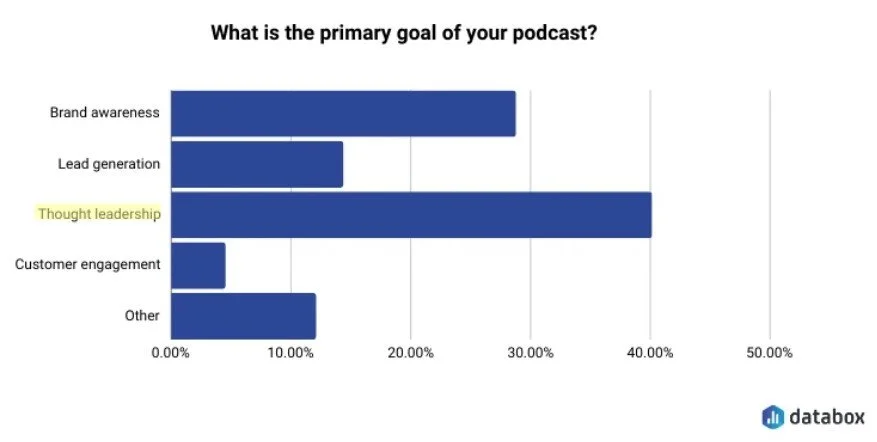
Thought-leadership positioning: When your marketing strategy includes a consistent podcast featuring expert conversations, you position your brand as a go-to for meaningful insight and top-tier expertise. It’s why, in one survey, “thought leadership” was the #1 reason B2B brands launched a podcast (around 40%).
Account & lead funnel activation: Each episode becomes a chance to warm up a target account, nurture a connection, and funnel a qualified prospect into your pipeline, instead of waiting for someone to fill out a generic form.
Educated audience entering later in funnel: Because you’re building brand awareness, credibility, and ongoing engagement via your show pages, social clips, and content repurposing, your audience enters the funnel better educated. This means less hand-holding.
Multi-channel reach & amplified discoverability: A smart podcast strategy and distribution plan means your show isn’t restricted to one app (like Apple Podcasts or Spotify). You also repurpose into LinkedIn posts, YouTube clips, SEO blog posts, and social media. That amplifies reach and increases the chances of target buyers finding you.
Aligned sales-enablement machine: By aligning podcast production, guest strategy, CTAs, tracking (UTMs), and CRM flows, a podcast becomes part of your sales-enablement toolkit and content-marketing engine.
These aren’t just nice-to-have benefits. The data shows why podcasts consistently outperform other B2B content formats.
Podcasts outperform every other B2B format on retention. Videos barely hit 12% completion, but podcasts consistently maintain 80%+ listener engagement from start to finish.
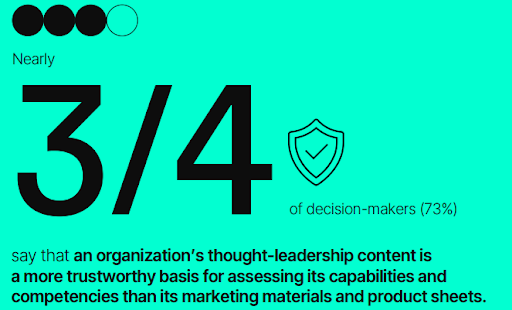
~73% of B2B decision-makers say a company’s thought-leadership content is more trustworthy for assessing its capabilities than marketing materials or product sheets.
Over 75% of decision-makers said a piece of thought-leadership has led them to research a product or service they weren’t previously considering.
68% of listeners say they typically finish an entire episode, far higher than average for many other content types
Branded B2B podcasts report an uplift in brand awareness between 24%-79%, which is cited as being up to 30X more than traditional channels
Steps to Build a B2B Podcast Strategy That Drives Pipelines
Over the years, we’ve worked with dozens of B2B brands and marketing teams to turn their podcast idea into a full‑blown revenue engine.
What you’re about to see is our playbook: the exact process we use to help a B2B marketer launch a cast, build an audience, and tie every episode back to sales enablement and pipeline.
In the next few steps, we’ll walk you through:
How to pick the right channels and build a distribution plan where your target audience actually hangs out
How to design a content strategy, from guest strategy to clip packages to show notes, that works with your marketing strategy and drives engagement
How to set up tracking, metrics that matter, and conversion CTAs so your podcast becomes a pipeline‑driving tool
Step 1: Build a Channel Plan That Works Where B2B Buyers Live
When you’re playing the long game with a B2B marketing podcast, the platform you choose and how you show up matter just as much as the content you create.
At Content Allies, we’ve learned that your podcast strategy needs a built‑in distribution plan, because even the best episode won’t drive pipeline if no one sees or hears it. The strategy is not to just “publish and hope.” It’s “publish and multiply.”
LinkedIn & YouTube are the power platforms for B2B podcasting.
Turn each episode into a full week of content. Use:
Carousel teasers
Founder POV takes
Key-quote graphics
Short clips from the conversation
This keeps your show in front of the decision-makers who check LinkedIn daily for industry insight.
YouTube
Treat YouTube like a search engine, instead of just a video library. Optimize:
Thumbnails
Titles
Descriptions
Chapters
Playlists
This helps your episodes get discovered long after release. And yes, B2B buyers do watch long-form video. One study shows 57% of decision-makers use YouTube for professional content.
Step 2: Consider SEO for Your Show Pages (Yes, It Matters)
Most podcast pages get little to no traffic, not because the content is weak, but because the pages aren’t built for search. At Content Allies, we’ve seen how pairing a strong podcast strategy with SEO-driven show pages can turn hidden episodes into a discoverable asset.
Here’s how to build SEO-ready show pages that actually get found:
Target niche keywords in titles, show notes, and episode URLs. Use terms that your target audience searches for in your titles, show notes, headers, and episode URLs. This pulls your podcast into your broader content marketing and search ecosystem, instead of letting episodes sit as isolated audio files.
Add transcripts, internal links, and topic summaries for indexability. Search engines can’t “read” your audio on Apple Podcasts or Spotify. Transcripts, summaries, and internal linking solve this by giving Google something to index. They also increase user engagement because visitors skim before they commit to listening.
Embed YouTube video versions of your podcast. Linking your Video Podcasts on your show page gives you dual‑channel visibility: YouTube search plus your site’s organic traffic. It also increases time on page, which supports SEO performance and improves your overall distribution flow.
Treat each show page like a mini landing page. Optimize for both discoverability and conversions. Clear titles, structured copy, scannable summaries, CTAs, and related links all help turn a single episode into a lead-generating asset within your content creation toolkit.
At Content Allies, our show pages follow the same rigor we bring to end-to-end podcast production, guest strategy, and enterprise-level content workflows. They’re designed to rank, convert, and support long-term visibility for enterprise-focused and B2B tech brands.
You can explore our full breakdown in our blog on podcast SEO, or watch the detailed video by B2B podcast expert Jake Jorgovan.
Step 3: Clip Strategy That Drives Attention and Clicks
Turning full episodes into a steady stream of high‑impact assets is where your content strategy meets smart distribution plan execution. Clips are the bridge between long-form conversations and the places your buyers actually spend time.
Hero Clip vs Micro Moments
Hero Clip: A longer highlight (60‑120 seconds) from the episode. You might use this on your YouTube channel or as a centerpiece in your social media campaign.
Micro Moments: Shorter snippets (15‑30 seconds) designed for social sharing, stories, or comment‑friendly posts. Great for social marketing, social media clips, and bringing attention back to the full episode.
Align Clips with Funnel Stages
Here’s how your podcast clips fit into the different stages of your overall marketing funnel:
Top of Funnel: Educational/insightful clips that build brand awareness and invite your target audience to subscribe or follow
Middle of Funnel (MoF): Case studies, problem‑solution clips, and practical insights. This content speaks directly to a pain point your B2B brands or B2B tech buyers face and leans into thought leadership via real‑life stories
Bottom of Funnel (BoF): Host insights, client success snippets, and results-focused moments. These clips support sales enablement and guide listeners toward a meeting or consultation.
Best Practices for Formatting
Good formatting can be the difference between a clip people scroll past and a clip they stop to watch. It directly affects performance, watch-through rates, and how fast your audience connects with the message.
Use captions (many viewers watch without sound)
Match sizing for each channel: square or vertical for LinkedIn and mobile; landscape for YouTube, etc.
Hook fast: good micro‑clips grab attention in the first 3‑5 seconds
Pace thoughtfully and don’t over‑compress content. Your clips should retain the authenticity and voice that make the podcast content uniquely strong.
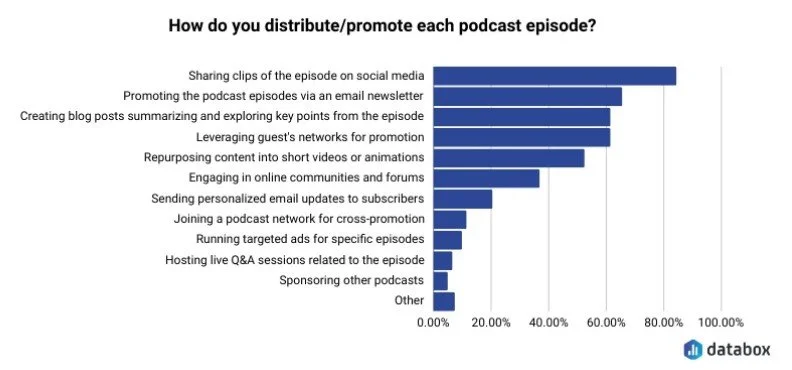
Why it matters: In a survey of 100+ companies doing B2B podcast marketing, 84.43% said they share clips of episodes on social media, and 62.30% found sharing clips was among the most effective tactics for driving engagement.
Step 4: Set Up Attribution & UTM Tracking (No More Guessing)
If you’re running a podcast strategy without tracking, you are basically throwing your podcast content into the void and hoping for a miracle.
At Content Allies, we treat each episode, clip, show page, and guest share as a measurable touchpoint. The real value appears when you connect the dots between content and pipeline movement.
What to do:
Track every link, from clips you post on social media to guests sharing their leveraged links. Make sure each asset includes UTM parameters so you know where your traffic and leads are coming from.
Use proper UTM structure. Stay consistent with naming across utm_source, utm_medium, and utm_campaign. Avoid messy uppercase/lowercase variations and keep parameters clean so reporting stays accurate.
Connect UTMs to your CRM. Tie your tagged links into HubSpot or your CRM of choice. When someone interacts with your podcast content, you should instantly see that activity in your pipeline: calls booked, demos scheduled, deals influenced.
Use templates and dashboards. Many marketing teams struggle with ad‑hoc tracking. At Content Allies, our clients get ready‑to‑go dashboard templates and link‑tracking sheets for their marketing teams to analyze.
Why this matters:
When your show pages, social posts, and guest networks are all tagged and tracked, you can stop asking “Is my podcast good for B2B marketing?”. Instead, you show clear numbers like: “This episode generated X calls, Y opportunities, and Z pipeline.”
And when you can attach attributed revenue to your podcast agency efforts, the show stops being a content experiment; it becomes a real business asset.
Watch the video below for a breakdown of the most important podcast KPIs to track:
Step 5: Add Conversion CTAs That Match Funnel Stages
Remember that even your best episodes won’t drive results if listeners don’t know what to do next. Ending every show with “book a demo” skips the buyer journey and wastes the attention you worked to earn.
Instead, use CTAs (call‑to‑actions) that match funnel stage, platform, and format so your podcast content actively drives engagement and pipeline.
Here are some CTA examples according to funnel stages:
Top of Funnel
Light-touch actions that build reach and familiarity:
Newsletter sign-up
Follow the show
Download a quick checklist
Use these in YouTube descriptions, show notes, social clips, and LinkedIn posts to grow awareness.
Middle of Funnel
CTAs that deepen trust once interest is captured:
Webinar invites
Case study downloads
Comparison guides or frameworks
These work well when your guest strategy or episode content has already sparked curiosity.
Bottom of Funnel
High-intent CTAs that support sales readiness:
Book a demo
Request a custom consult
Talk to sales
Place these inside the audio as verbal CTAs, and reinforce them visually on show pages, social posts, and after clips.
To make your CTAs work across every episode and channel, keep these best practices in mind.
Use verbal CTAs inside the episode so your audience hears a clear next step beyond just “thanks for listening.”
Create visual CTAs and add them to your show page, social media posts, and YouTube clips. Make it obvious: what do they do next?
Match the CTA to the listener’s journey. Don’t ask for a consult before they’ve even heard one minute.
Keep wording simple, action‑oriented, and aligned with your broader content marketing and distribution plan
Track and optimize your CTAs across key metrics like clicks, conversions, and attributed revenue
A well‑designed CTA can improve conversion rates significantly. And for B2B podcasts, where your audience is often decision‑making buyers looking for credentials, matching the CTA to the funnel stage means your show can become a strategic piece of your marketing and sales pipeline.
How to Get Your Podcast Heard by Buyers
Getting your podcast in front of the right audience requires more than publishing episodes. Here’s how to make sure actual buyers see, hear, and engage with your show.
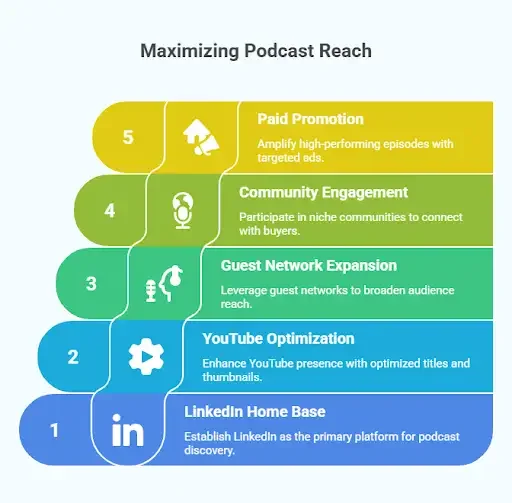
Turn LinkedIn Into Your Primary Discovery Channel
If your target audience lives on LinkedIn, and for most B2B marketers, they do, make it your podcast’s home base.
Encourage hosts and guests to share episodes with personal stories, quote posts, and social media clips. Tag guests, post consistently, and create engagement-worthy content that drives retention uplift.
Optimize YouTube Titles and Thumbnails to Capture Search Intent
YouTube is not just for entertainment. B2B buyers use it to research solutions. Use clear, keyword-optimized titles, thumbnails that highlight value, and hook-driven descriptions. Treat it like a search platform as well as a place to host your podcasts.
Use Guest Networks to Multiply Reach Instantly
Your guest strategy shouldn’t stop at recording. Equip guests with pre-made social assets, UTM links, and short blurbs to share. This expands your reach, improves user engagement, and introduces your podcast to net-new audiences already in your guests’ circles.
Activate Newsletters and Niche Communities Where Buyers Already Gather
Find the Slack groups, LinkedIn communities, or industry newsletters your buyers already trust. Share episodes selectively, especially those that deliver thought leadership or content marketing value that solves a real pain point. This kind of placement drives more qualified engagement than broad blasts.
Amplify High-Performing Episodes With Targeted Paid Promotion
When an episode gains early traction, amplify it with ads. Boost high-performing clips or run retargeting campaigns. With the right attribution setup, you’ll see exactly how paid distribution contributes to engagement, leads, and pipeline.
Real B2B Podcast Results: Pipeline Wins From Content Allies Clients
At Content Allies, we’ve helped dozens of B2B brands turn their podcasts into revenue-generating assets. With the right guest strategy, distribution plan, and attribution setup, a podcast becomes a repeatable source of high-value conversations, qualified leads, and a trackable pipeline.
Below is a look at some of our strongest examples.
1. Leaders of B2B: How We Use Our Own Podcast Playbook to Drive Revenue
When we launched the Leaders of B2B podcast, we built it as a revenue engine from day one. At Content Allies, we use the exact same podcasting strategy we apply for our clients, so this show became the perfect example of our own playbook in action.
Very quickly, the podcast turned into our most predictable and scalable growth channel.
We published three episodes per week and brought on two intentional types of guests:
Target prospects: The B2B executives who are a natural fit for our service
Strategic partners & influencers: People with audiences full of our ideal customers
That rhythm created a steady stream of high-value conversations with exactly the right people.
The results spoke for themselves:
94 C-level executive engagements
43 qualified sales opportunities
$100,500 in attributed revenue in the first four months
But the impact didn’t stop at the pipeline.
The podcast also opened doors to partnerships we wouldn’t have unlocked otherwise, including becoming the official sponsor of SaaS Connect, which placed Content Allies directly in front of thousands of ideal buyers.
Here are a few examples of the social assets we used to amplify the show across LinkedIn and keep each episode visible long after launch:
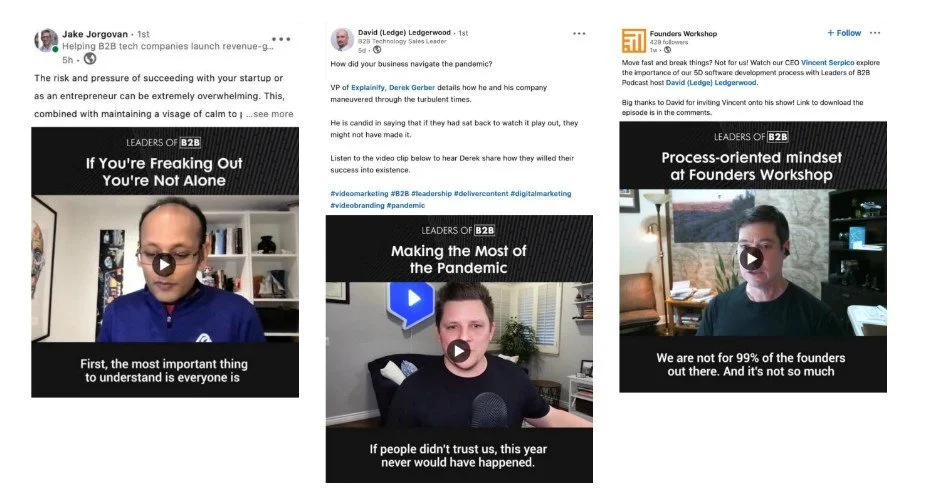
This is a clear example of how a B2B podcast, when built with the right guest strategy, distribution plan, and attribution setup, moves from a content channel to a repeatable growth machine.
2. Meta - Launching a B2B Podcast That Exceeded Every Growth Target
When Meta’s Business Engineering Team wanted to create a podcast that supported their B2B audiences, they needed more than a production vendor; they needed a partner who could drive the strategy, build the workflow, and prove business value. After almost a year of struggling to launch the show with another agency, they brought in Content Allies.
We worked with Meta to shape the Business, Innovation, and Technology podcast into a consistent, high-quality program aligned with their broader business objectives. Once the strategy and production pipeline were in place, the show began publishing on a dependable every-other-week schedule.
The results were immediate:
~170,000 downloads in the first six months
Exceeded the initial four-month download target by 7X
Featured high-profile guests from Salesforce, LinkedIn, SAP, BCG, BigCommerce, and more
Our role went well beyond audio production. We built a full content system around each episode: thought-leadership assets, promotional clips, and multichannel campaigns. We ensured Meta maximized reach across their platforms and presented a consistent, polished presence to decision-makers.
This is a clear example of how a strategic podcast framework, paired with disciplined execution, can help even the world’s biggest brands break into B2B podcasting with real momentum and measurable impact.
Turn Your Podcast Into a Demand Engine with Content Allies
By now, you’ve seen how the right podcast strategy drives real, measurable business results. Let’s recap:
B2B podcasts can build trust, create warm lead flow, and shorten sales cycles
Every episode is a content asset that fuels social media, SEO, and sales enablement
Distribution, tracking, and funnel-aligned CTAs are what turn content into a pipeline
And most importantly, our clients have already proven that this system leads to revenue
You don’t need more episodes. You need the right episodes, built for your audience, optimized for impact, and supported by consistent execution.
If you’re ready to build a podcast that drives actual leads and meetings, we can help. At Content Allies, we launch and grow B2B shows that open doors, spark conversations, and support your sales pipeline from first touch to closed deal.
Ready to build a podcast that drives actual leads and meetings? Let’s talk.
FAQs
How do you measure ROI from a B2B podcast?
Track qualified leads, meetings booked, and revenue influenced using UTMs, CRM attribution, and performance dashboards tied to your content and guest strategy.
What’s the best way to promote a B2B podcast on LinkedIn?
Break each episode into bite-sized clips, quote posts, carousels, and founder POV takes, then post consistently while tagging guests and engaging your network.
How can B2B podcasts generate qualified leads?
By inviting ideal buyers as guests, positioning your team as thought leaders, and using the podcast as a warm, value-first way to start real sales conversations.
What kind of content should a B2B podcast focus on?
Create episodes around real buyer pain points, customer stories, and industry insights. In other words, content that’s educational, actionable, and aligned with your sales cycle.
How do you track podcast performance across channels?
Use UTMs, platform analytics (YouTube, LinkedIn, podcast players), and CRM integrations to see what content drives clicks, engagement, and conversions.
What makes Content Allies different from other B2B podcast agencies?
We specialize in B2B podcasting that drives pipeline. Our full-service team handles everything from production to strategy to lead tracking.
How does Content Allies help turn podcast episodes into a sales pipeline?
We build a strategy that connects episodes to the pipeline with guest targeting, CTA planning, UTM tracking, and repurposed content that reaches buyers.
What kind of results do companies typically see working with Content Allies?
Clients see outcomes like 7x download growth, six-figure revenue attribution, and dozens of sales opportunities driven directly from podcast episodes.