
A Guide to Private Podcasting for Employees and Partners
Private podcasting is becoming a go-to tool for companies that want to keep employees and partners informed without flooding inboxes or adding more meetings.
It’s a simple, flexible way to share updates, training, and leadership messages that your people can listen to anytime and anywhere.
Podcast adoption is also growing inside organizations themselves. Among large enterprises with more than 10,000 employees, roughly 25% already use podcasts internally. This is a sign that audio is becoming a preferred channel for modern communication.
And with 158 million Americans now listening to podcasts each month, the format is more popular than ever.
This guide will walk you through planning, launching, and growing your own internal podcast, with a little help and first-hand wisdom from Content Allies along the way.
What Is Private Podcasting for Employees and Partners?
Private podcasting (sometimes called internal or corporate podcasting) means creating audio content that isn’t published publicly but is shared securely with a select group of employees, partners, contractors, or stakeholders. It works like a regular podcast, but with access controls so only authorized listeners can tune in.
Why is this growing so fast? Well, podcast listening has gone mainstream: according to a 2024 survey by YouGov, across 47 global markets, 40% of people say they listen to podcasts for at least one hour per week.
This shift makes private internal podcasts a natural fit for organizations looking to reach people when they’re commuting, working remotely, or just multitasking.
A private podcast gives you a channel to share:
Company updates or leadership messages
Training and onboarding material
Culture stories, values, and “inside voice” communications
Partner briefings or external stakeholder messaging
Any other content that benefits from the human touch of voice, rather than a dry memo or mass email.
And because it’s private, controlled, and designed for your team or partners only, you get the security, focus, and relevance that public podcasts or less‑secure tools can’t give.
Why Companies Should Consider Private Podcasting
A recent 2025 industry report found that 60% of internal‑comms leaders struggle to engage frontline or distributed workers with traditional channels like email or intranet.
What does this tell us? Legacy communication tools often fall short in hybrid or remote environments.
At the same time, podcast listening is booming, and many listeners use podcasts in cars or on smartphones, making “on‑the‑go” audio a natural fit for busy professionals.
Because of these trends, a private podcast becomes a powerful tool to improve internal communication flow, share confidential updates safely, deliver training, and give leadership a stronger, more personal voice across teams and partners.
Some of the concrete benefits of private internal podcasts are
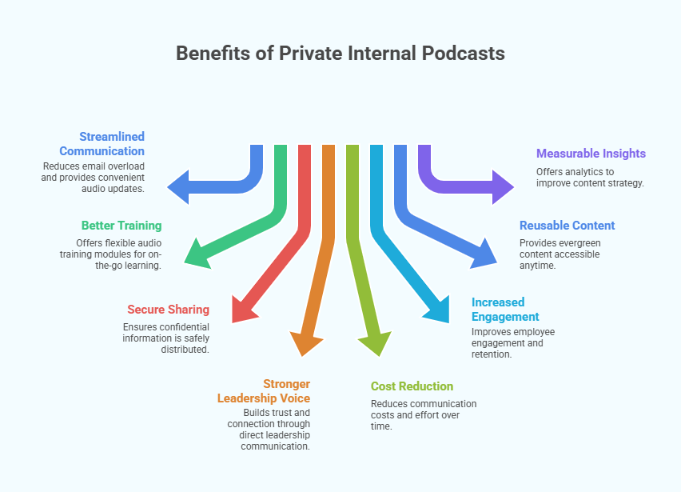
1. Streamlined Internal Communication and Reduced Overload
With inboxes already jammed and people juggling constant pings, long emails, and back-to-back meetings, it’s no surprise that knowledge workers spend close to 60% of their time inside communication tools.
A private podcast offers a clean, simple route: short, digestible audio updates that employees can listen to at their convenience (commute, lunch break, etc.).
2. Better Training and Workforce Development
Instead of forcing staff to sit through long training videos or live webinars, you can deliver audio training modules. This is perfect for people on the move or those who prefer listening over watching.
3. Secure Sharing of Confidential or Sensitive Updates
Private podcasts are distributed via controlled private feeds or secure podcast hosting platforms using authentication (passwords, SSO, private URLs, etc.). This keeps leadership messages, policy updates, partner information, or strategic content safe without risking leaks.
4. Builds a Stronger Leadership Voice and Company Culture
Hearing from leadership directly in a real, human tone helps build trust, clarity, and connection. This “inside voice” approach can boost cultural alignment and help employees or partners feel more connected to company goals and values.
5. Reduces Communication Costs and Effort Over Time
Compared to constant email blasts, text newsletters, or repeated live meetings, audio episodes are reusable, easy to produce (especially using good podcast equipment and simple recording software), and can be accessed asynchronously. All of this reduces time, meeting load, and communication overhead.
6. Increases Engagement, Retention, and Alignment
Many employees miss key updates or feel disconnected in hybrid settings. A steady internal podcast helps close those gaps. It gives clarity, reduces miscommunication, and gives people a simple way to stay in the loop.
For example, Lululemon’s internal podcasts reportedly achieve listen-through / completion rates as high as ~95%. That’s powerful, particularly compared to email open-rates or intranet-post clicks (which are often much lower or invisible).
7. Makes Content Easily Reusable and Accessible Anytime
Once you record an episode, it becomes an evergreen asset. People can listen when they want, re‑listen later, share with new hires, or use as reference material. This flexibility makes audio files a great long‑term investment.
8. Gives You Measurable Insights and Better Feedback Loops
Private podcasting uses hosting platforms that support analytics and allow you to track downloads, listener behavior, and completion rates. This means you can measure what people are listening to, how often, and how engaged they are. That data helps shape future content strategy, improve episodes, and make internal comms more effective over time.
How to Create a Private Podcast: Step-by-Step Guide
Launching a private podcast for your employees or partners might sound like a daunting prospect, but it’s easier than you think, especially when you break it down step by step.
In the sections below, we’ll walk you through how to do it, from defining your goals and audience to choosing the right private podcasting platform, setting up secure access, producing your episodes, and measuring what’s working.
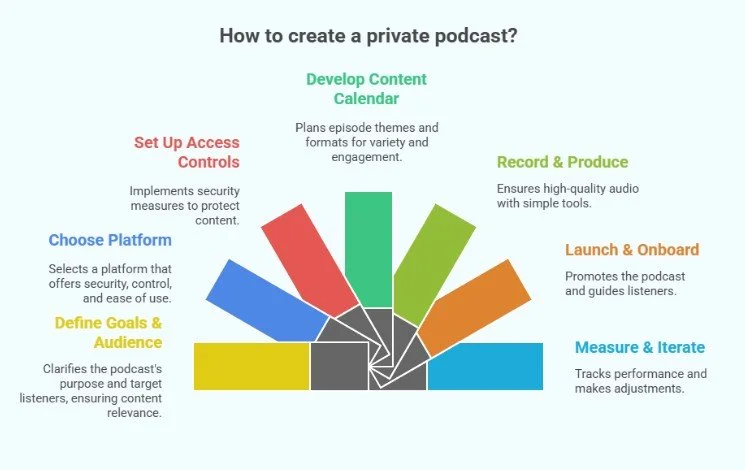
Step 1: Decide Your Goals, Audience, and Format
Before you hit record, you want to be super clear on why you’re doing the podcast, who you’re talking to, and how you want it to feel. This first step sets the tone and keeps everything focused.
Define Your Objectives
Ask yourself: what do you want the podcast to achieve? Some potential goals could be:
Training new hires or upskilling existing staff
Sharing leadership updates like company strategy, vision, and town‑hall summaries
Cultivating company culture and values through stories or conversations
Delivering partner‑ or contractor‑specific news or briefings
Onboarding, compliance reminders, or internal announcements
Employee/partner engagement, alignment, and retaining a shared voice
Having clear objectives from the start means you can give every episode a clear purpose.
Identify Your Audience(s)
Not all listeners are the same. Your private podcast might serve:
Internal employees (full‑time, part‑time, remote, or hybrid)
External partners, contractors, distributors, or vendors
Specific segments or teams (sales, operations, management, frontline, and so on)
Segmenting your audience helps you tailor tone, content, and messaging to what matters to them.
Choose a Format
Depending on your goals and audience, different formats will work better. Think:
Leadership monologue or CEO/Executive updates
Interviews (with leaders, team members, partners)
Round‑table discussions or panel‑style conversations
Q&A sessions where you answer employees’ questions
A mixed format where you alternate between styles for variety
Pick what feels aligned with your culture and helps convey your message best.
Decide Cadence and Episode Length
Be realistic and consistent. For instance:
Cadence can be weekly, biweekly, monthly, or quarterly
Length could be short and snappy (5–15 min) for quick updates, or deeper (20–30 min) for interviews, training, or stories
Consistency helps listeners know when to expect new content, which builds habit and trust.
Why This Planning Matters
Good planning is a core part of effective internal communication. Research shows that companies with strong internal‑communication practices, like timely, relevant, targeted messages, see higher employee engagement, alignment, and organizational performance.
P.S. Not sure how to communicate your podcast vision? Learn how to get aligned with your team or production partner using this simple, effective B2B podcast brief template.
Step 2: Choose the Right Private Podcasting Platform
When it comes to actually making your private podcast a reality, picking the right hosting and distribution platform is one of the most important decisions.
The right private podcasting platform will give you security, control, ease, and flexibility, all while minimizing headaches for your team.
What to Look For
Here are the must‑haves when you evaluate a private podcast host:
Private hosting and access controls: Look for platforms that support the access controls your team will need, such as private RSS feeds, SSO, and domain restrictions.
Strong security: This matters more than ever. According to Cybersecurity Insiders’ 2024 Insider Threat Report, 83% of organizations experienced at least one insider-related security incident in the past year. A private podcast platform should help reduce this risk with password protection, SSO, domain restrictions, and controlled access.
Analytics: Data like number of downloads, unique listeners, completion rates, and listener behavior help you measure engagement and refine content strategy over time.
Easy to use for non‑technical staff. Look for a clean, intuitive dashboard for uploading audio files, managing feeds, inviting listeners, issuing private links or feeds, without needing engineering help.
Mobile friendliness and cross-device support. Remember that many people will listen on the go on their phone, tablet, or laptop. Your platform should work well across devices, ideally with support for popular podcast players or mobile apps.
Types of Platforms to Consider
Not all podcast hosting solutions are built the same. Here are three common categories:
How Content Allies Can Help
If you don’t want to spend hours researching and testing platforms, or configuring security, analytics, and permissions, we can help you:
Choose the platform that matches your size, goals, and security needs
Create private RSS feeds, configure access controls, and integrate with your existing communication hub or onboarding portals
Make sure podcast production and distribution are smooth, so you’re spending most of your time on delivering good content
Step 3: Set Up Access Controls and Distribution
One of the biggest advantages of private podcasting is, well, privacy. You’re not trying to go viral, you’re trying to make sure your podcast reaches the right people and stays secure. So before launch, you need to lock down how your content is accessed and distributed.
Keep It Secure and Selective
Here are the most common ways to control access to your private podcast feed:
Password protection is a basic way to restrict access, ideal for smaller teams or short-term use
Single Sign-On (SSO) integrates with your internal login system (like Google Workspace, Okta, or Azure AD) to make access seamless and secure
Domain-restricted feeds so that only people with a company email domain can subscribe
Invitation-only sign-ups, where you manually invite users to access the podcast feed or platform
Private URL where you share a unique, unlisted feed link only with your internal team or partners. This is ideal for fast distribution with a solid level of control.
Depending on your platform, you might use one or a mix of these. Just make sure it’s easy for listeners but tough for outsiders to break in.
Connect It to What You Already Use
The best private podcast setups fit naturally into your current communication hub, so there’s no need to reinvent how you share info. Try integrating with:
Your intranet or employee portal
LMS (Learning Management System) for training episodes
Slack or Microsoft Teams to share links to new episodes
Email newsletters or onboarding portals with links or subscription options
Internal apps or dashboards your teams already use
The smoother the integration, the easier the adoption.
Don’t Forget Privacy and Compliance
If your podcast includes sensitive info like HR policies, internal strategy, and financial data, make sure your distribution method respects:
Data protection laws (like GDPR, HIPAA, or internal policies)
Confidentiality rules, particularly if you’re discussing client work, product plans, or leadership decisions
Optional disclaimers. If needed, add a short spoken or written disclaimer at the beginning of relevant episodes
Test Before You Launch
Before sending your podcast out company-wide, do a pilot run:
Invite a small group (5-10 people across departments)
Test how easy it is to subscribe, play, and access content
Check playback across different devices like iPhone, Android, and desktop
Collect early feedback on content, clarity, and tech glitches
This dry run helps you fix any bumps before going live at scale.
Step 4: Develop Episode Themes and Content Calendar
Once you’ve got your goals and audience nailed down, the next step is figuring out what your podcast will actually talk about and when. A good private internal podcast is rich in variety, relevance, and tone.
Brainstorm Themes and Categories
Start by listing the types of content that matter most to your audience. Here are some solid themes companies often use in their internal podcast episodes:
Training and development, like skills training, compliance refreshers, and onboarding guides
Leadership messages like vision, priorities, wins, or challenges from execs
Company news and updates around policy changes, strategy shifts, and product announcements
Partner-specific briefings and updates for distributors, vendors, or external collaborators
Success stories or case studies based on internal wins, lessons learned, and shoutouts
Q&A sessions where you answer submitted questions from employees or partners
It doesn’t all have to be serious. Casual chats, interviews, or storytelling can go a long way in making the content feel human.
Keep It Fresh with Rotating Content Types
To avoid burnout for you and your listeners, switch up the format. For example:
Week 1: CEO update
Week 2: Quick training tip or onboarding guide
Week 3: Q&A with a department lead
Week 4: Partner success story
This approach keeps content interesting while helping you hit different goals and audiences.
Plan Around Seasonal Moments
Use your company calendar to plug in relevant themes. Here are some examples:
Start/end of quarter: financial or strategic updates
Product launch weeks: highlight features, team effort, rollout plans
End of year: wrap-up messages, thank-yous, holiday greetings
New hire season: onboarding or company culture spotlights
Partner milestones: special briefings or shoutouts
Script Light and Talk Natural
When it’s time to record, outline your talking points rather than writing a full essay. People don’t want to hear a lecture or a memo. A casual tone makes your content feel more real and relatable.
Stick to bullet points, intro/outro phrases, and a clear purpose for each episode, and let the rest flow naturally.
Step 5: Recording & Production Best Practices
You don’t need a fancy studio or expensive gear to make your private podcast sound great. With a few smart decisions and the right tools, you can produce clear, engaging audio that people actually want to listen to without overwhelming your team.
Keep It Simple But Sound Good
Start with the basics: a decent USB microphone (like the ATR2100x or Samson Q2U) gives you a major boost in sound quality without blowing your budget. Pair it with a quiet room (carpeted spaces or even closets work well), and you’re already ahead of most DIY setups. Add headphones to catch any mic or background noise as you go.
Use Tools That Work With You (Not Against You)
For recording, go with user-friendly software like:
Riverside.fm or SquadCast for high-quality remote recording
Descript for quick, easy editing
Even Zoom and a good mic can do the trick for internal updates
Whatever tool you pick, clarity matters more than polish. A warm, conversational tone builds trust so your content sounds more like a team chat than a stiff announcement.
Shorter Is (Usually) Better
Keep episodes focused and easy to digest. Try to stay under 20 minutes unless you're doing deep-dive interviews or trainings. And if you’ve got a lot to say, break it into a short series, as this keeps things bingeable and consistent.
Add Small Touches That Help
Consider including:
Show notes for quick takeaways and links
Transcripts for accessibility or quick reference
Timestamps for longer episodes (this is great for training)
These extras make your podcast more accessible, more useful, and easier to revisit.
And if setting up all this sounds like too much? Content Allies can help with production, editing, and launch workflows so you can focus on delivering great content without sweating the tech.
Looking to streamline your workflow with AI? Check out our guide to the AI tools we recommend for your B2B podcast, from editing shortcuts to smarter show notes.
Step 6: Launch Strategy & Listener Onboarding
Once your podcast is recorded and ready, it’s time to roll it out, and how you launch it can make or break early engagement. You don’t need a huge campaign, but you do need a clear plan to help people discover it, understand the value, and actually start listening.
Create a Simple, Attention-Grabbing Launch
Start with a welcome episode that explains what the podcast is, who it’s for, and what kind of content listeners can expect. Keep it short, friendly, and clear.
Then, promote the launch across all your internal channels:
Email: Send out a launch announcement with the podcast feed link and instructions on how to listen
Slack or Microsoft Teams: Pin a message or drop in an intro post with a quick blurb and emoji to catch attention
Intranet or onboarding portal: Feature it on the homepage or internal news feed
Department meetings or leadership updates: Have leaders give it a shout-out to build credibility and excitement
Make Access Easy
The fewer clicks, the better. Whether you’re using a private RSS feed, secure link, or platform app, include clear instructions on how to subscribe, listen, and access past episodes. Bonus points for a short “how-to” video or visual walkthrough.
If you’re sharing the podcast on a mobile app or browser-based player, mention that it’s accessible on the go during commutes, workouts, or coffee breaks.
Use Champions to Build Early Momentum
Encourage leadership, team leads, or well-connected employees to mention the podcast in conversations, email signatures, or Slack channels. Word-of-mouth works even inside companies, especially when someone trusted says, “Hey, you should check this out.”
Collect Feedback Early
Once a few episodes are out, ask for input. A quick pulse survey, poll, or even a Slack thread can give you insight into what’s landing well (and what’s not). You can also track listener behavior with analytics around downloads, completion rates, and feedback forms.
The goal here is to build a format that feels valuable and easy to use. With a smooth launch and good onboarding, you’ll be well on your way.
Step 7: Measure Engagement & Iterate
Once your private podcast is live, don’t just set it and forget it. You’ll want to track how it’s performing, figure out what’s working (and what’s not), and tweak things as you go. This is less about chasing big numbers and more about improving clarity, usefulness, and reach over time.
What to Measure
Most private podcast hosting platforms come with built-in analytics. Start by tracking:
Downloads and unique listeners: Are people actually tuning in?
Completion rates: Are they listening to the whole episode or dropping off halfway?
Listening trends: Are certain episode types (like Q&As or leadership updates) getting more plays than others?
Feedback and reactions: What are people saying informally via Slack threads and emails, or more officially through short surveys?
You can also check follow-up behavior. For example, did more people complete a training module after listening to a related episode?
How to Use the Data
Data alone doesn’t do much; it’s what you do with it that counts.
If people are dropping off early, try shorter episodes or tighter scripting
If interview episodes get more engagement, consider adding more of them
If a segment of your audience isn’t listening (for example, external partners), try tweaking the delivery method or content format
Over time, these small adjustments add up to a more effective and relevant internal podcast.
Focus on Quality Over Vanity Metrics
It’s tempting to chase high download numbers, but what really matters is whether your content is helping your people stay informed, connected, and engaged. A smaller group of highly engaged listeners is far more valuable than a large number of passive subscribers.
Ready to get more ears on your episodes? Don’t miss our Ultimate Guide to Podcast Promotion, packed with real tactics to boost your reach inside and outside your organization.
5 Effective Tips for Using Private Internal Podcasts
Already launched your podcast? Great, now here are a few next-level moves to help you unlock its full potential inside your organization.
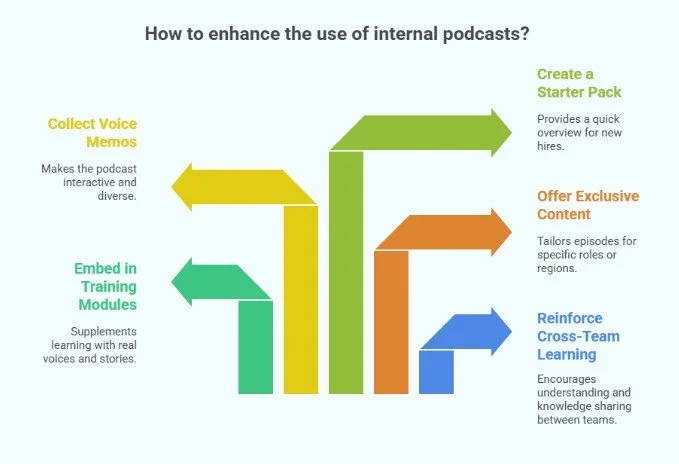
1. Use Episodes to Reinforce Cross-Team Learning
Let teams teach each other. Have your sales team share what they’re hearing from customers, or let product managers walk through upcoming features. This turns your podcast into a living knowledge base and encourages cross-functional understanding.
2. Embed Episodes in Training or LMS Modules
Instead of creating all-new training materials, drop relevant podcast episodes directly into your LMS or onboarding programs. For example, an “Intro to Company Culture” episode can be part of the new hire journey. It’s a low-effort way to supplement learning with real voices and stories.
3. Offer Exclusive Content for Specific Roles or Regions
Create separate tracks or private feeds for different departments, leadership levels, or even global offices. A field team in APAC might need different updates than HQ staff, so tailoring episodes this way makes things more relevant and reduces info overload.
4. Collect Voice Memos from Employees for Peer-Led Episodes
Make your show interactive by inviting team members to send in voice memos where they share success stories, tips, or shoutouts. It’s a fun way to diversify voices and make your podcast feel like a shared space.
5. Turn Evergreen Episodes into a 'Starter Pack'
As your archive grows, bundle a few key episodes into a “Getting Started” playlist for new hires or partners. Think of it like a starter kit where they get the big picture, culture cues, and key context fast, in a voice-driven, human way.
Top 3 Tools for Creating and Distributing Private Podcasts
There are plenty of tools out there, but here are three that work especially well for companies building private internal podcasts:
1. uStudio: Best for Enterprise-Grade Security
uStudio is built for internal communications. It offers private RSS feeds, SSO authentication, mobile access, and detailed analytics, all wrapped in an enterprise-ready platform. This makes it a good choice if you’re serious about content security and large-scale distribution.
2. Descript: Easiest Way to Record and Edit
Descript is a powerful all-in-one tool for recording, editing, and transcribing audio. You can literally edit your podcast like a document, which makes it perfect for teams that want pro-quality output without a steep learning curve.
3. Hello Audio: Private Feeds for Courses and Training
Hello Audio specializes in private podcasting for education, training, and membership content. It’s super user-friendly and lets you create secure feeds for specific teams or programs; great if you want to turn internal training into engaging audio.
Examples of Successful Private Internal Podcasts
Private podcasting isn’t theoretical. Many organizations already use internal audio channels to share updates, strengthen culture, and connect distributed teams.
Here are two real-world examples that show how effective private podcasting can be when it’s tailored to the audience.
Float’s Internal Podcast
Float created an internal-only podcast to strengthen company culture and help employees get to know each other more deeply.
The show highlighted team members across departments and offices. Each episode features light, human, conversation-driven questions such as:
Describe a time when you changed your mind.
What’s your idea of happiness?
What topic could you give an hour-long presentation on without any preparation?
Lululemon’s The Speakers’ Series
Lululemon created The Speakers’ Series, a private internal podcast built to keep their global team aligned during rapid growth. The show helped them increase engagement, strengthen culture, and make leadership communication feel more personal.
As we’ve already mentioned above, Lululemon's internal podcast reports listen-through rates as high as 95% for this internal audio content. That level of engagement is rare compared to email or intranet updates and shows how well private podcasting works when the format fits the audience.
How Content Allies Can Help
Whether you’re just exploring private podcasting or already knee-deep in planning, Content Allies can help you get your internal show off the ground and sounding great.
From shaping your content strategy to choosing the right private podcasting platform, recording episodes, and handling post-production, we’ve got the experience and workflows to make it easy.
For companies without in-house audio/video teams, this kind of support can be a game-changer. You get professional production, streamlined processes, and a team that understands what works without having to build it all from scratch.
If you’re ready to launch a private podcast that actually gets heard, reach out to us and get a head start.
FAQs
How is a private podcast different from a public podcast or a webinar?
Private podcasts are distributed securely to a specific group (like employees or partners), often through password protection or private RSS feeds, unlike public podcasts or live webinars, which are open or time-bound.
Is private podcasting only for large companies?
Not at all. While enterprises often use them at scale, smaller teams and startups are also adopting private podcasts for training, updates, or culture-building, especially as remote work grows.
What does it cost to launch a private podcast?
Costs vary based on tools, production quality, and team setup. At a minimum, you’ll need a mic, hosting platform, and some editing time, or you can work with a partner like Content Allies to streamline everything.
How do you keep private podcasts secure?
Secure hosting platforms offer features like password protection, SSO, private URLs, or domain restrictions so that only authorized listeners can access your content.
What should we track to measure podcast success?
Downloads, unique listeners, completion rates, feedback, and follow-up engagement (like form submissions or Slack activity) all help show what’s working and where to adjust.
What services does Content Allies offer for private podcasting?
We can help with strategy, hosting selection, recording, editing, show notes, distribution, analytics, and ongoing management.
Can Content Allies support just part of the process?
Yes. Whether you need full-service production or just help choosing a platform and setting things up, we offer flexible support depending on where you’re starting.
How long does it take to go from idea to launch with Content Allies?
Most clients can launch their first episode within 30–60 days, depending on episode complexity, team readiness, and how much you want to outsource.