
Podcast Email Marketing: Converting Listeners to Leads
Podcasting earns attention in a way few channels can match. When someone spends 20 to 40 minutes with your host and your ideas, they build familiarity, context, and trust. That creates a real opportunity for B2B demand gen teams, as long as you give listeners a clear path from episode to inbox.
That’s where podcast email marketing comes in.
Email bridges the gap between passive listening and active engagement. It turns one-time listeners into repeat subscribers, and subscribers into leads you can nurture, segment, and measure over time. Instead of hoping your audience remembers you after the episode ends, email gives you a direct, owned channel to continue the conversation.
That’s why below, we’ll break down:
How podcast email marketing works
The types of emails that perform best
How B2B teams can use podcast-driven email flows to support pipeline
Keep reading to see how to turn podcast attention into measurable demand.
P.S. Interested in turning your podcast into a predictable lead channel? Content Allies helps B2B teams plan, produce, and distribute podcasts that actually drive email signups, nurture leads, and support revenue.
What Is Podcast Email Marketing?
Podcast email marketing is the use of email as an owned distribution and engagement channel for podcast audiences.
The goal is to convert podcast listeners into email subscribers, then nurture them into qualified leads through relevant, automated follow-up.
Email is the natural bridge between awareness and conversion.
It is measurable, it is automatable, and it keeps working long after an episode goes live. Recent research from Litmus shows many marketing leaders attribute meaningful returns to email, including cohorts reporting $36 to $50 back for every $1 spent.
Podcast audiences are also primed to act, so any follow-up email they get can push them toward purchase.
Edison Research data published by YouGov found that 54% of podcast listeners are more likely to consider buying from brands they hear advertised.
Pro tip: At Content Allies, we treat podcast email marketing as a simple system: episode CTA to landing page, opt-in to automation, then nurture to a clear next step.
So in this guide, we’ll show you how to:
Set goals and map the listener to the lead journey.
Build episode-level lead magnets that fit B2B buyers.
Create welcome and nurture sequences that drive replies and meetings.
Measure opt-ins, engagement, and pipeline influence with clean attribution.
Why Podcast Email Marketing Matters For B2B Growth
Podcast email marketing matters for B2B growth because it turns attention into an owned audience you can segment, nurture, and attribute. With the right CTAs and automation, your podcast becomes a reliable input to demand gen, ABM podcast strategy, and pipeline reporting.
Here’s why it works:
Podcast Email Marketing Turns Anonymous Listeners into Known Contacts
Podcast email marketing gives listeners a clear path from an episode to an opt-in. A focused CTA directs them to a dedicated landing page where they exchange an email for something genuinely useful, like a checklist, template, or playbook. Once they opt in, automation delivers the asset immediately and starts a follow-up sequence that builds trust over time.
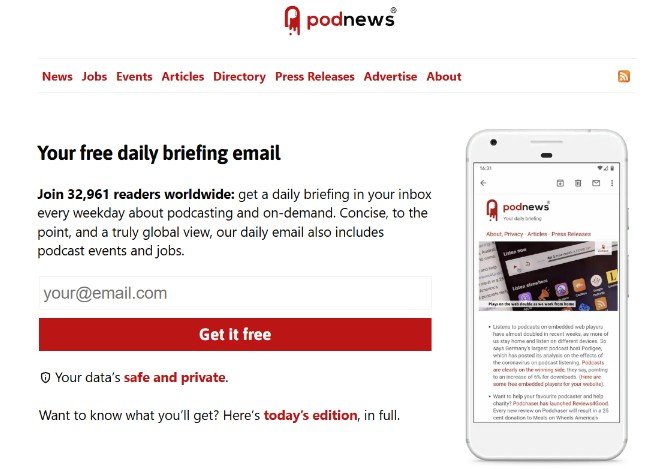
For example, Podcast News Daily makes news their newsletter’s unique value proposition, because that’s what their podcast is about, too. Here’s what that looks like:
Podcast Email Marketing Connects Your Show To Pipeline And Revenue
Once a listener becomes a subscriber, you can measure what happens next. Using UTMs, dedicated landing pages, and other tracking methods, you can tie signups and downstream actions back to specific episodes and campaigns.
That makes it possible to report on outcomes that matter to B2B teams, including reply rates, meeting conversions, opportunity influence, and revenue attribution in your CRM.
Podcast Email Marketing Powers Your ABM And Demand Gen Programs
Podcast email marketing supports ABM because the episode topic itself can act as an intent signal. When someone opts in from a specific CTA, they’re telling you what they care about. That allows you to:
Segment subscribers by theme, pain point, or solution area.
Then you can trigger a sequence that matches that context.
For demand gen, this turns your podcast into a repeatable contact acquisition channel that feeds nurture, retargeting, and sales follow-up with cleaner targeting and stronger messaging alignment.
How to Use Podcast Email Marketing to Get More Leads
Podcast email marketing drives leads, but only when it’s built on a clear strategy and clean systems.
Remember: Before you worry about lead magnets or sequences, we advise you to set your goals, map the listener journey, and make sure your CRM and automation can capture, segment, and route every signup to the right next step.
Let’s use one of our clients’ podcasts as an example.
For the Altus CRE Exchange Podcast using this episode, “What’s driving demand for alternative CRE sectors in 2026,” we would run one episode-specific opt-in that matches what the listener just heard.
CTA: “Download the Alternative CRE Demand Brief for 2026 at creexchange.com/alt2026.”
That URL becomes the single source of truth for tracking signups, segmentation, and downstream conversations tied to this episode.
So, here are the steps you need to take:
Get The Foundations Right Before You Collect Emails
Podcast email marketing performs best when it’s treated like a revenue system. Before you publish CTAs or build landing pages, you want clarity on what success means, how a listener becomes a lead, and how that lead moves through your funnel.
Define Clear Goals For Your Podcast Email Strategy
We always start by choosing goals your team can measure, report, and optimize. For B2B shows, podcast email marketing usually supports one of these outcomes.
Net new leads
If the goal is contact acquisition, define what “qualified” means up front (job title, company size, target industries, intent actions), then measure opt-ins alongside downstream email engagement. As a reference point for inbox performance, HubSpot reports an average email open rate of 42.35% in 2025.
Sales velocity and deal influence
If the goal is to accelerate the active pipeline, your measurement has to connect episodes and emails to meetings, opportunities, and influenced revenue. Tracking is straightforward when you use UTM parameters, dedicated landing pages, and unique promo codes.
Pro tip: A practical reference for implementation is HubSpot’s walkthrough on building UTMs (UTM guide) and creating tracking URLs (HubSpot tracking URLs).
Expansion and customer marketing
Podcasts can also support growth inside existing accounts. With the right segmentation, email can:
Distribute the most relevant episodes to customers.
Promote enablement resources.
And invite stakeholders into deeper engagement.
We found that this works well for customer education, renewal support, and champion building.
Map Your Listener To Lead Journey
From our experience, a listener does not move from an episode to a meeting in one jump. A simple journey map helps you design the right CTAs and emails for each stage.
Awareness, consideration, sales conversations
At the awareness stage, your goal is to capture an email with a low-friction offer that matches the episode topic. In consideration, your emails build credibility through proof, case studies, and curated “start here” episodes. In sales conversation mode, the sequence should make it easy to reply, book time, or request a tailored walkthrough.
Here’s what that journey can look like in practice, using the Altus CRE Exchange episode “What’s driving demand for alternative CRE sectors in 2026” as an example.
Align Stakeholders, CRM, And Marketing Automation
Podcast email marketing creates value when the data flows cleanly. That means the opt-in form passes fields into your CRM, subscribers are tagged based on the CTA they used, and automation routes high-intent actions to the right owner.
This is the difference between collecting emails and generating pipeline.
How we’d set this up for CRE Exchange (so it is measurable):
Landing page: creexchange.com/alt2026 with one primary form submission
CRM properties: Podcast = CRE Exchange, Episode = Alt CRE 2026, Offer = Demand Brief, Topic interest = Alternatives
Automation tags: source:podcast, campaign:alt_cre_2026, topic:alternatives
Routing rule: if a subscriber replies or clicks a meeting link, create a task and alert the owner with episode context
Reporting view: opt-ins, click behavior, replies, meetings created, opportunities influenced, all filtered by Episode = Alt CRE 2026
Segment, Personalize, And Score Your Podcast Subscribers
Once you have consistent opt-ins, segmentation, and scoring, turn your list into a demand gen asset. It keeps messaging aligned to what the listener raised their hand for, and it gives sales a clearer signal on who is ready for a conversation.
Segment Listeners By Topic, Industry, And Stage Of Awareness
Start with segmentation tied to the opt-in source. Tag subscribers based on the episode CTA or lead magnet that drove the signup, then layer in fields like industry and role as you can.
Good segmentation is essential, and the data proves it.
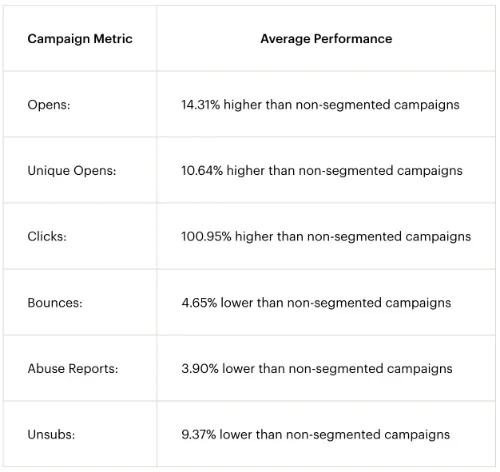
For example, Mailchimp’s analysis found segmented campaigns delivered 14.31% higher open rates and 100.95% higher click rates compared to non-segmented sends.
A workable segmentation setup for most B2B podcasts uses:
Topic or offer (based on CTA/ lead magnet)
Industry or use case (captured on the form or enriched in CRM)
Awareness stage (early learning, active evaluation, sales conversation)
Personalize Email Content With Episode Behaviors And Clicks
Personalization gets stronger when it reflects what the subscribers are engaged with. In podcast funnels, that means referencing the episode, guest, or topic that drove the signup, then recommending the next best asset or episode based on clicks and page behavior.
Even simple personalization moves the needle. Campaign Monitor cites that readers are 26% more likely to open emails with personalized subject lines.
Practical behavior signals you can use for personalization include:
Which CTA page they opted in from
Which links they click inside the welcome flow
Which episode pages or transcripts they return to
Lead Scoring Models That Include Podcast And Email Engagement
Lead scoring helps you prioritize follow-up by assigning points based on fit and engagement.
In the article “Writing a lead nurturing email?”Jeanne Jennings from HubSpot defines lead scoring as assigning a value to each lead based on how likely they are to become a customer. Their setup guidance also emphasizes scoring based on attributes and event actions that matter to your funnel.
If you run Marketo, their engagement reporting also uses scoring concepts to evaluate how effective content is inside engagement programs
From our experience, a podcast-aware scoring model usually combines:
Fit points (role, company size, target account flag)
Engagement points (email clicks, high-intent page visits, replies, meeting link clicks)
How To Turn Podcast Listeners Into Email Subscribers
The goal is to make subscribing feel like the natural next step after a strong episode. When the offer is directly connected to what someone just heard, the opt-in feels useful, immediate, and easy to say yes to.
Create Compelling Lead Magnets Linked To Episodes
Your lead magnet should solve a specific problem that sits inside the episode topic, and it should be deliverable automatically the moment someone subscribes.
Checklists, templates, and frameworks from your show
In B2B, the most reliable lead magnets we’ve seen are “use this at work today” assets, especially checklists, templates, and frameworks.
Examples:
Episode on ABM execution → ABM campaign QA checklist
Episode on vendor risk → security questionnaire template
Episode on pricing strategy → pricing interview script + scorecard
Episode on RevOps alignment → lifecycle stages worksheet for your CRM
Bonus clips, transcripts, and behind-the-scenes content
Transcripts and skimmable episode summaries turn audio into resources your subscribers can reference later. Bonus clips also work well because they extend the value of the episode in a way that feels exclusive.
Use Clear Calls To Action In Intros, Outros, And Show Notes
Your CTA should be clear, specific, and benefit-led. We advise you to use one primary CTA per episode and repeat it in multiple placements, including the intro or outro and the show notes.
Two CTA scripts we use often are:
“If today’s episode is relevant to your team, grab the [asset name] we made to help you implement this. It’s at [short URL].”
“Want the exact template we use for this? Download it at [short URL], and we’ll email it to you right away.”
Pro tip: In show notes, treat the CTA like the main link, label it clearly, and send it to a dedicated landing page that matches the language you used in the episode.
Optimize Podcast Landing Pages For Email Capture
Podcast landing pages convert when they’re built around one primary action: the opt-in. Remove distractions, keep the value obvious, and make the form easy to complete.
A helpful benchmark for early testing is Unbounce’s reporting of a median landing page conversion rate around 6.6% across industries (Q4 2024).
Simple layout, social proof, and one primary action
A strong landing page usually includes:
Headline that mirrors the episode CTA
Short bullets describing what they’ll get
Social proof (testimonial, logo bar, subscriber count, or a short quote)
Minimal fields, with one clear CTA button
Embedding players, timestamps, and episode highlights
We prefer to keep the episode context on the page because it helps the opt-in feel grounded. We recommend that you:
Embed the player.
Include timestamps for the most relevant moments.
Add a short highlight list so visitors immediately understand why the asset matches the episode.
Use Email Campaigns That Turn Subscribers Into Sales Conversations
Email campaigns work best when they create momentum toward a reply, a booked meeting, or a clear next step. For podcast audiences, that starts with a welcome flow, then continues through nurture sequences built around the themes your show is already known for.
Welcome Sequences For New Podcast Subscribers
Welcome emails tend to earn unusually strong engagement because the subscriber's action is fresh. Campaign Monitor cites a study showing welcome emails reached a 91.43% open rate.
Set expectations, share best episodes, invite replies
A high-performing podcast welcome sequence does a few things quickly: it sets context, points the subscriber to the best next listen, and creates a reason to reply.
Here’s our simple 4-email structure that fits most B2B shows:
Email 1 (immediate): deliver the lead magnet, explain what they’ll get from the show, link to the episode they came from
Email 2 (next day): “Start here” playlist with links to your strongest episodes for that topic
Email 3 (later): one relevant proof point (short case example, metric, or outcome) plus a CTA to a deeper resource
Email 4: invite a reply with a specific prompt like “What are you working on right now?” and route replies to the right owner
Nurture Series Built Around Your Strongest Podcast Themes
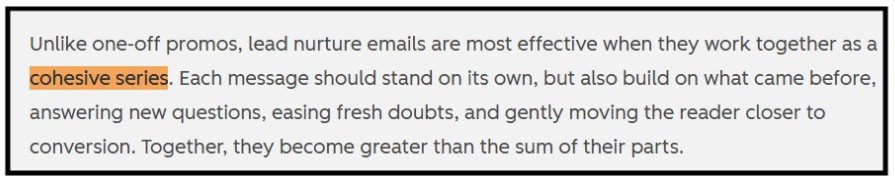
A nurture series works when each email stands on its own and also moves the reader forward through the same storyline, with questions answered in sequence.
Jeanne Jennings from HubSpot frames effective nurture emails as a cohesive series that builds progressively over time. Here’s her complete quote to help you put this into perspective:
Turning episodes into story-driven email sequences
One of the cleanest ways to build nurture is to choose a theme your show covers repeatedly, then turn your best episodes into a guided sequence.
A practical approach:
Choose one theme that maps to a buying trigger, like “pricing,” “RevOps alignment,” or “security reviews.”
Pick 5 to 7 episodes that cover the journey from problem awareness to evaluation questions.
Write each email as one chapter: a takeaway, a short story, a link to the episode, and one action step.
Use clicks to route subscribers into the next most relevant theme.
Here’s what it looks like in practice.
For CRE Exchange, the positioning already signals durable pillars like property valuations, real estate analytics, and property tax, alongside broader CRE market coverage.
To keep nurture scalable, we’d turn each pillar into its own “track,” with each email anchored to one episode and one practical takeaway.
Turning episodes into story-driven email sequences
To make this feel cohesive, each track follows a narrative arc that mirrors how buyers learn. Here’s a compact example track built from the Alternative sectors pillar, anchored on the 2026 demand episode.
Email 1: Deliver the brief
Subject: “Your 2026 Alternative CRE Demand Brief”
CTA: Download the PDF, plus a short reply prompt asking which sector they are watching most closely.Email 2: Sector lens
Subject: “Data centers and life sciences: the questions that matter.”
CTA: Link back to the episode chapter and a 1-page diligence scorecard.Email 3: Allocation decision support
Subject: “A simple allocation checklist for alternatives.”
CTA: Download the checklist, click-to-self-identify by sector (one click tags them for segmentation).Email 4: Conversation opener
Subject: “Want a second set of eyes on your assumptions?”
CTA: Reply-first prompt with an optional meeting link for subscribers who want to discuss.
This approach keeps your nurture content grounded in what the show already delivers, and it creates clean segmentation based on what subscribers click and reply to.
Using Guest Content In Your Email Strategy
Guests give you built-in credibility and fresh angles. They also create natural opportunities for content that feels personal and useful to subscribers.
Featured expert spotlights and quote-driven emails
Guest spotlights work well when they stay specific. Pull a quote from the conversation, explain why it matters for the reader’s job, and link to the exact timestamp or segment.
Formats that tend to perform in our experience are:
“One idea I’m stealing from [Guest]” with a short excerpt and a single link to the episode
“The question we ask every [role] leader” with the guest’s answer and a follow-up prompt
“The framework [Guest] uses” with a simplified version and a download link
Co-branded campaigns with strategic guests and partners
Co-branded campaigns are strongest when both sides share a clear offer and an aligned audience.
A clean co-branded playbook for podcast email:
A joint asset that fits the episode topic, like a checklist, worksheet, or webinar
Two landing pages, one for each brand, so attribution stays clean
A coordinated email schedule where both sides send to their lists with consistent positioning
A clear handoff for leads, defined before launch, including tagging and follow-up ownership
Measure What Matters: Podcast Email KPIs And Attribution
Podcast email marketing gets easier to scale when everyone agrees on the scorecard. That means tracking the metrics that show list growth, engagement, and sales impact, then tying results back to episodes and CTAs with clean attribution.
Core Metrics For Podcast Email Performance
Opt-in rate, open rate, click rate, and reply rate
We advise you to start with the metrics that tell you whether the system is healthy and improving.
Opt-in rate: landing page conversions divided by landing page visits. This is the clearest signal that your offer and page are working.
Open rate: directional context for subject lines and list quality. Privacy features can affect how opens are recorded, so many teams review opens alongside clicks and replies.
Click rate and click to open rate: show whether your copy and CTA create action. MailerLite reports a 2025 average click-to-open rate of 6.81% and an average click rate of 2.09% as broad benchmarks.
Reply rate: one of the strongest B2B intent signals, especially when your welcome and nurture emails invite a direct response.
Meeting requests, opportunities, and revenue influence
Once you can see opt-ins and engagement, connect email behavior to sales outcomes.
Meeting requests: track clicks on your scheduling link, demo request page visits, and booked meetings.
Opportunity creation: attribute deals back to the subscriber’s original opt-in source when they convert later.
Revenue influence: track whether podcast-sourced subscribers appear on opportunities, progress stages faster, or re-engage dormant accounts.
This is where scoring and routing help. If someone clicks a high-intent link or replies with a specific need, it should trigger a sales follow-up path the same day.
Tracking Listeners From Episode To Form Fill In Your CRM
The simplest attribution model is: one episode CTA, one landing page, one tracking setup.
A clean approach we’re always using looks like this:
Create a dedicated landing page for each primary lead magnet, and use a short URL in the episode CTA.
Add UTM parameters to every CTA link so the episode source is captured.
Use your platform’s tracking URL builder so visits bucket into the right campaign reporting.
Store UTM values on the contact record, either via hidden form fields or mapped properties, so sales can see the source at a glance.
Tag subscribers by the specific offer they requested so you can segment and report performance by topic.
Reporting Podcast Impact To Leadership And Sales
Keep reporting focused on outcomes and trends, with enough detail to drive action.
A practical monthly view includes:
Top episodes and CTAs by opt-in volume
Landing page conversion rate by offer
Email engagement by segment, including clicks and replies
Meetings generated from email CTAs
Opportunities influenced and pipeline sourced by podcast subscriber cohorts
When these metrics live in one view, your podcast stops being “content performance” and becomes a channel your demand gen and sales teams can plan around.
How Content Allies Turns Podcast Listeners Into Qualified Leads
To show how everything in this guide works in practice, here’s an end-to-end example using The Altus CRE Exchange Podcast. We’ll use the episode “What’s driving demand for alternative CRE sectors in 2026” with guest Chad Lavender (Newmark) that we also mentioned above.
Strategy: Designing Listener To Lead Journeys For B2B Brands
Podcast: CRE Exchange (Altus Group)
Episode: “What’s driving demand for alternative CRE sectors in 2026”
Goal: capture qualified emails from capital markets, acquisitions, asset management, and valuation audiences, then generate replies and meeting requests tied to the “alternatives” theme
Offer: “Alternative CRE Demand Brief for 2026” (one-page PDF) plus an “Allocation Checklist” add-on
The journey stays simple: episode CTA → landing page opt-in → automated delivery → welcome sequence → nurture → sales conversation.
Execution: From Episode Production To Email Copy And Automation
1. Lead magnet tied to the episode
We build the offer around the episode’s most actionable moments. This episode already has a clear chapter structure, including segments on healthcare and senior housing, data centers and life sciences, and medical office, SFR, and BTR.
That gives us a natural lead magnet: a brief that summarizes where demand is showing up by sector, plus a checklist for investment committee conversations.
2. CTA placement and copy
We use one primary CTA and repeat it in the intro, outro, and show notes, using a short URL that points to a dedicated landing page.
CTA example (intro and outro):
Download the Alternative CRE Demand Brief for 2026 at creexchange.com/alt2026. We’ll email it to you immediately.
Show notes CTA (first link):
Download: Alternative CRE Demand Brief for 2026
3. Landing page built for email capture
The page is built around one conversion goal, the opt-in. We keep fields minimal and place the form high on the page.
To keep context tight, we embed the episode player and include the episode chapters as “highlights,” so visitors see exactly what the brief is tied to.
4. Automated delivery and welcome sequence
The asset is delivered immediately via automation, and then the welcome sequence runs 3 to 5 emails.
Here’s what that looks like on a timeline:
Personalization comes from episode context. We reference the topic they opted in from, and we recommend the next episode or chapter based on what they click.
Optimization: Ongoing Testing, Reporting, And Revenue Alignment
We keep attribution clean by using UTMs on every show notes link and any on-site placements. HubSpot’s UTM guide is a solid reference for building consistent parameters. Google Analytics also supports URL builders for collecting campaign data.
We recommend a simple naming convention that makes reporting easy:
utm_source=cre_exchange
utm_medium=podcast
utm_campaign=alt_cre_2026
utm_content=ep_alt_sectors_2026
From there, optimization becomes a recurring cycle:
Test CTA language and placement
Test landing page headline, bullets, and form friction
Route high-intent clicks and replies into a sales-ready follow-up path
Report on opt-ins, clicks, replies, meeting requests, and opportunities influenced
When To Partner With Content Allies For Podcast Email Marketing
Podcast email marketing works when it is treated as one connected system. That is the difference between having listeners and having leverage. When you apply this consistently, each episode becomes a predictable entry point into your funnel.
At Content Allies, we build that system end-to-end.
We design the listener-to-lead journey, produce episodes with CTAs that match real buyer intent, create the landing pages and lead magnets, and build the email sequences and automation that move subscribers toward replies, meetings, and revenue.
We also test and report so your podcast program stays aligned with demand gen and sales outcomes.
If you want podcast email marketing that is structured, measurable, and built to support the pipeline, let’s talk.
FAQs
How does podcast email marketing fit into a B2B inbound strategy?
Podcast email marketing supports inbound marketing by extending content creation beyond the episode itself. Instead of relying only on audio platforms, teams can reinforce key marketing messages and stay connected with their target audience after the episode ends.
What happens after a listener subscribes to a podcast email list?
Once someone opts in, brands typically use automation sequences to send episode follow-ups through an email newsletter. This keeps momentum going, supports consistent listener engagement, and helps maintain strong completion rates across future episodes.
How do you align podcast emails with the right buyers?
Effective podcast email marketing starts with clear buyer personas. When emails are tailored to specific roles and pain points, they support long-term growth strategies.
Can podcast email marketing improve podcast distribution and reach?
Yes. Email is a powerful support channel for podcast promotion, especially when paired with distribution on relevant social media platforms. This combination helps episodes reach beyond existing subscribers without relying solely on platform algorithms.
Is podcast email marketing only useful for large shows?
Not at all. Even smaller podcasts can use email to strengthen the relationship between the show and listeners, regardless of size, and even promote audience growth.