
Podcasting Trends 2026: What Every Marketing Leader Needs to Know

2026 is shaping up to be a pivotal year in the podcasting world. We’re seeing a wave of transformation, powered by smarter tech, shifting listener habits, and changing platform dynamics. All that's turning podcasting into a more strategic, data-driven, and scalable channel than ever before.
And it’s not just the entertainment podcasting niche that’s evolving.
B2B podcasting is stepping into the spotlight as brands double down on long-form content that builds trust, educates niche audiences, and drives measurable business results.
According to Edison Research’s 2025 Infinite Dial report, over 55% of Americans over the age of 12 now listen to podcasts monthly, which is a sharp rise from just a few years ago. Here is proof that this is no longer an “emerging” medium; it’s now firmly established.
In this article, we’re sharing the top podcasting trends for 2026, pulled from both industry data and our own work producing shows for brands like Meta, Gusto, and Tonkean.
We’ll help you navigate what’s next, and show you how a partner like Content Allies can turn these trends into your competitive edge.
What the Data Says: Big Picture for 2025/2026
As we look ahead to 2026, it’s useful to pause and consider where podcasting is today, in terms of scale, audience, and spending, because that gives us a baseline for what’s coming.
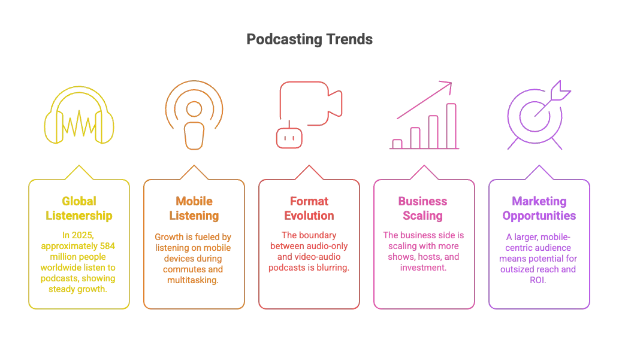
Globally, podcasting has clearly moved from niche hobby to mass‑media staple.
In 2025, there are roughly 584 million people worldwide listening to podcasts. That marks a steady, healthy growth trajectory, up around 6–7 % year‑over‑year, and puts the 2025 listener base well above the ~507 million recorded in 2023.
According to industrywide forecasts from Data Globe Hub, that upward trend is expected to continue, pushing global listenership even higher by 2026 and beyond.
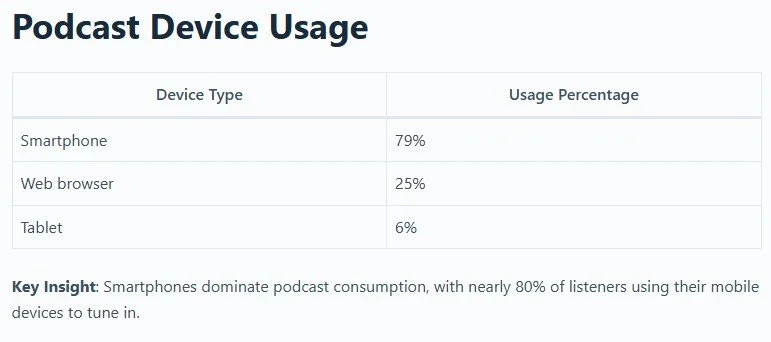
A big part of what’s fueling this growth is listening on mobile devices.
As per Data Globe, almost 80% of people now choose to listen to podcasts on their phones while commuting, working from home, and multitasking. This means podcasts are becoming more woven into everyday life than ever.
Beyond the sheer volume of listeners, the format itself is evolving.
The boundary between audio‑only shows and video-audio hybrids is blurring as more creators and audiences turn to video podcasts.
The growing popularity of watchable podcasts, especially on video platforms like YouTube, signals changing consumption habits, yes, but it also leads to expanded creative and monetization opportunities (more on that later).
Meanwhile, the business side is scaling too, with more shows, more hosts, and more investment. With millions of podcasts indexed globally (even if only a fraction are active), there’s a widening pool of content, experimentation, and opportunity for differentiation.
All this matters because it changes the calculus for marketers, brands, and B2B content leaders. A larger, more mobile‑centric, and more video‑open audience means that if you invest now, with the right strategy and support, you could capture outsized reach, engagement, and ROI.
Trend #1: Video Podcasts Go Mainstream
We’re seeing video‑podcasts go from nice-to-have to must-have, and 2026 is the year that change will become real for many producers. On Spotify alone, creators now publish hundreds of thousands of video‑format podcasts, and the share of top‑ranked podcasts in video format has more than doubled in just a few years.
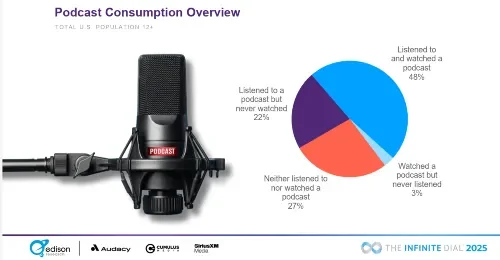
The Podcast Consumer survey from Edison Research found that 37% of Americans are monthly video podcast consumers. Besides, 48% of people prefer to both listen and watch podcasts.
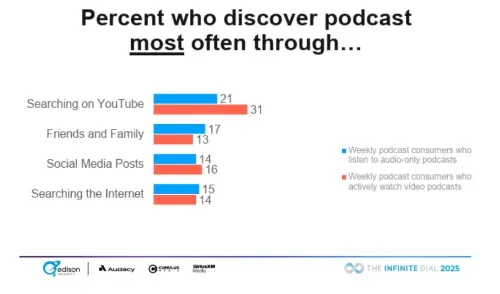
Even more interestingly, Edison Research discovered that most people discover podcasts on YouTube (an obviously visual-first channel). That’s also true for those just listening to the podcasts’ audio version.
For B2B‑focused shows, this shift means rethinking production. You need to be investing in visuals, on‑camera performance, and video editing.
Looking ahead to 2026, we expect a large chunk of new branded and enterprise podcasts will launch with video by default, and that video episodes will become a critical part of multi‑channel content strategy with social clips, YouTube distribution, and videos embedded in web articles.
Trend #2: AI Editing & Automation: Faster Turnarounds, Better Quality
At Content Allies, we’re leaning hard into AI-assisted workflows, and for good reason.
The rise of AI tools has started to transform how podcasts are produced. Today, platforms like Descript, Adobe Podcast (and its audio‑enhancement sibling Adobe Enhanced Speech), Auphonic, or newer suites such as Podcastle.ai now handle many of the previously tedious steps: transcription, noise reduction, auto‑leveling, filler‑word removal, and even full transcript‑based editing.
And we’re not the only ones doing it.
Spotify for Creators surveyed 1,100+ podcast creators and found:
25% are already using AI tools to record, edit, produce, or promote their show
Another 45% aren’t using AI yet, but are open to it
58% are excited or cautiously open to experimenting with AI
Creators with larger audiences are twice as likely to use AI tools
Descript reports a survey with 1,004 podcasters and video creators (with Ipsos) and says:
Nearly two-thirds have already used generative AI in production
78% say they’re likely to use AI tools moving forward
For our clients, whether B2B brands or fast‑moving startups, that efficiency means we can deliver more episodes, on tighter schedules, without sacrificing audio/video quality. In several recent productions, automating editing has let us allocate more resources to creative direction, guest coordination, and distribution.
Looking toward 2026, we expect the use of AI‑powered production pipelines to become the default and help show teams scale, turn around content faster, and keep quality consistently high.
In this YouTube video, you can learn more about some of the trends around AI specifically in B2B podcasting:
Trend #3: Platform Consolidation and Distribution Changes
As we head into 2026, podcast platforms are merging features and tightening their grip on the ecosystem. Apple Podcasts now lists over 2.9 million shows. Meanwhile, Spotify, YouTube, and Amazon are expanding their podcast stacks and blending hosting, analytics, and monetization into all-in-one platforms.
This consolidation means creators have fewer, but more powerful, places to grow… if they pick the right stack. In our work with clients like Meta, streamlining distribution through unified platforms cut launch timelines and expanded platform reach.
Below are some posts we created for them. Strategies like these helped Content Allies reach ~170,000 downloads in the first 6 months of working with Meta on their podcast.
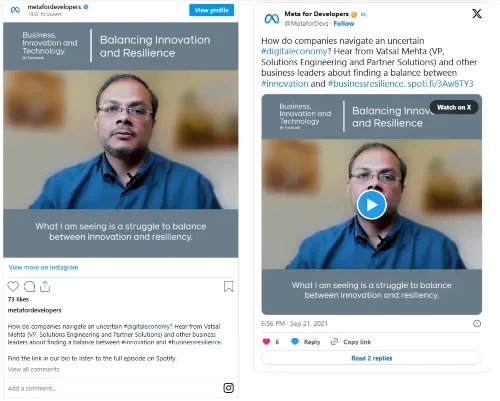
For B2B brands, this shift requires:
A smarter distribution strategy
Data ownership considerations
Flexible hosting choices
It’s one more reason we handle distribution in-house, so our clients stay focused on content.
Trend #4: Branded Podcasts and Content Marketing Shows Surge
More brands, especially B2B companies, are launching their own podcasts as a core part of their content marketing strategy. According to industry data, organizations with branded podcasts tend to see:
89% higher awareness
57% higher brand consideration
14% higher purchase intent
Our experience as a podcast production agency shows the same.
In fact, for Tonkean, we increased reach by over 174% in one quarter, generating 25 new leads.

Why? Because a branded podcast gives companies a voice.
It’s a way to tell stories, build authority, and connect directly with niche audiences. As we look toward 2026, we expect branded podcasts to keep growing fast as a central media channel for marketing operations.
Trend #5: Ad Market Shifts and New Monetization Models
The ad marketplace around podcasts is heating up, and by 2026, monetization will look very different from old‑school sponsorships.
The global podcast advertising market was estimated at US$19.36 billion in 2024 and is forecast to grow about 10% per year through 2030.
That growth is being driven by new models like dynamic ad insertion, programmatic ads, subscription or premium content, and branded‑content integrations. For B2B and niche shows (the kind we specialize in producing at Content Allies), this means that rather than chasing mass‑market CPM, you can build premium, high‑intent audiences that deliver value through sponsorships, direct brand campaigns, or gated content.
For our clients, we’ve seen a hybrid monetization approach combining ad slots, sponsor reads, and gated bonus content yield far better long‑term ROI than depending on one revenue source alone.
Pro tip: Not sure how to monetize your show in 2026? Our advanced podcast monetization strategies guide breaks down dynamic ads, gated content, sponsor bundles, and how to future-proof your revenue model.
Trend #6: Podcasting Becomes a Pillar of Multi-Channel Content Engines
In 2026, the most effective marketing teams will build content engines around their podcast episodes.
At Content Allies, this is standard practice.
One podcast episode fuels blog posts, LinkedIn carousels, YouTube Shorts, newsletters, landing pages, and even outbound sales messaging.
This works because a well-produced episode is rich, long-form content. You’ve already done the hard work, so why not extract every drop of value from it?
For example, in our client work, we often repurpose podcasts into full-funnel content, which improves campaign efficiency and extends reach across multiple platforms. The result is more impressions, higher engagement, and better ROI without reinventing the wheel.
Trend #7: Audience Communities Move Off‑Platform
More and more podcast listeners now expect to go deeper than episodes. In 2025, creators are building private communities on platforms like Discord, Slack, or membership‑based forums, which give fans a place to chat, ask questions, share resources, and stay engaged between episodes.
Podcasts already create unusually strong relationships.
According to Marketing LTB, Over half of listeners say they feel closer to podcast hosts than other media personalities, and 59% trust hosts more than influencers. As a result, many creators are leaning into private communities, where that trust can turn into conversation, collaboration, and long-term engagement between episodes.
From our side at Content Allies, we’ve seen this play out with B2B podcasts where listeners move into gated Slack or Discord groups right after a few episodes drop. That community becomes a feedback loop where listener questions shape future topics, and bonus content (like deeper looks or live Q&As) keeps engagement high.
This builds loyalty way beyond passive listens.
In 2026, we expect community‑driven listener engagement will be a core strategy for brands. Treating listeners like a network rather than a broadcast audience means you build owned, first‑party relationships, increase retention, and unlock long‑term value in ways traditional marketing can’t match.
Pro tip: If you’re rethinking your platform strategy, check out our Guide to B2B Podcasting series. It covers hosting, analytics, and how to scale your reach across podcast directories and social platforms.
Trend #8: Livestreamed Podcasts and Hybrid Events Gain Traction
Live‑recorded episodes, virtual town‑halls, and hybrid events are rapidly becoming staples for shows aiming to deepen engagement, and 2026 is primed to be a breakout year for this format.
Blending live and recorded formats lets creators maximize engagement, monetize in new ways like ticketed virtual attendance and live sponsorships, and repurpose content afterward for on‑demand listeners.
We’ve seen many successful podcasts integrate live‑recorded sessions (like Q&As, roundtables, and guest panels) into their podcast roadmap, then edit and republish them as regular episodes or short‑form socials.
Here are some good examples:
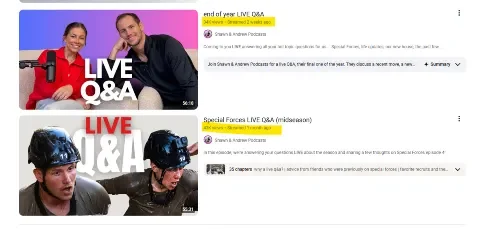
This can lead to higher real-time engagement, stronger community building, and more content per production.
Trend #9: Cross‑Promotion and Podcast Swaps Surge
As the podcast space gets more crowded, smart producers are leaning on cross‑promotion and podcast swaps to reach new ears. In 2025, swaps, where shows trade promo spots, guest appearances, or even full-episode exchanges, are becoming one of the most effective and low‑cost growth tactics for growing your audience.
How does that work?
You can arrange guest swaps or trailer/promotional exchanges between complementary shows, which gives your show exposure to a new but well-matched audience. That approach can unlock a burst of new listeners, without the cost or friction of paid advertising.
Some creators and agencies report that feed swaps (where a full episode or segment is shared) can outperform standard promo reads by large margins, yielding 10-40X higher listener conversion.
We anticipate this trend will only strengthen in 2026.
With discovery harder than ever, creators and brands will double down on cross-promo networks and structured swap campaigns to amplify reach.
Trend #10: Hosts Become the “Brand”, Not the Show
We’re seeing more and more listeners attach themselves to personalities over podcast titles. As audiences build a bond with a host’s voice, views, and point of view, the host becomes the brand.
In fact, research suggests that shows anchored on a strong individual identity get more loyalty, trust, and long‑term engagement.
For brands and B2B content producers, leaning into a recognizable host can pay off big. In our work in the podcast industry, when we help build a show around a key person, whether a CEO, subject‑matter expert, or thought‑leader, we often see deeper listener trust and stronger brand alignment.
Pro tip: Interested in accelerating your brand? Learn how to start a thought leadership podcast, with real examples that worked!
Looking toward 2026, we expect host-first podcasts to become more common. Shows that double as personal brands will have a competitive edge because listeners follow people, not just show names.
Trend #11: SEO, Titles, and Thumbnails Become Growth Differentiators
As competition explodes, how you title, tag, and display your podcast is becoming just as important as the content itself. A strong metadata strategy, built on good episode titles, high‑quality thumbnails (for video podcasts), and detailed show notes, can dramatically boost discoverability in search engines and podcast platforms.
All that’s important because organic search is essential for podcasts:
40% of people discover new podcasts using in-app search, though search engines are fairly used too.

Besides, according to the previous article we cited from Marketing LTB:
Optimizing your podcast episode titles increases organic discoverability by 15%.
Publishing SEO-optimized transcripts can increase organic traffic by 28%.
In our work at Content Allies, when we combine SEO‑optimized titles, descriptive show notes, transcripts, and episode‑level metadata, we consistently see better organic reach and listener acquisition, especially for B2B shows targeting niche audiences.
Looking toward 2026, we expect metadata-first production workflows to become standard. This is where every episode is optimized for search, every thumbnail is crafted for clickability, and every description is tuned for search intent.
Remember: If you want your show to stand out, investing in podcast SEO and on‑platform design is a great way to get there.
Trend #12: Hyper‑Niche Podcasts Outperform Broad Topics
In 2026, niche beats broad. We’ve seen it firsthand: the more specific the show, the more engaged the audience. Instead of launching general “marketing” or “tech” podcasts, smart brands are creating shows like AI for Biotech Ops or CFO Automation Weekly, and it’s working.
Listeners crave relevance. Niche shows tend to build trust faster, earn higher retention, and often deliver better ROI per listener. In our work, going narrow lets us deliver more impact with fewer but more valuable ears.
As competition rises, brands that go deep rather than wide will win.
Here’s a good explanation if you’re more of a visual learner:
Trend #13: Listener Data Becomes a Strategic Advantage
In 2026, data is the backbone of smart podcast strategy. Tracking listener behavior via downloads, retention rates, engagement, demographics, and device type gives you the insights you need to optimize content, marketing, and even monetization.
At Content Allies, we lean on analytics from the start: we monitor which episodes perform, where listeners drop off, what topics grab attention, and even what formats they consume most. That lets us refine future content through tighter intros, better pacing, and more of what works, so every new episode builds on the last.
For B2B and branded podcasts, this data lets us tie publishing to business outcomes like lead generation, brand reach, or audience growth. In a crowded podcasting sphere, first‑party listener data is a great way to stand out.
Trend #14: Podcasts Shift to TV Screens (Living Room Listening)
More people are tuning into podcasts from their couches rather than headphones, and 2026 looks set to make living‑room listening a legit habit.
In the UK alone, weekly listeners who report a smart TV as their primary listening device doubled from 4% in 2023 to 8% in early 2025.
The trend is rising in the US, too. According to the Podcast Consumer survey from Edison Research that we cited above, 61% of weekly podcast consumers use their TVs to watch shows.
More interestingly, 49% of them do so even if they’re only listening to the podcast.

Naturally, this shift matters for your podcast format. Shows that lean into video or high‑quality visual design tend to get more traction when playback happens on a big screen.
If 2026 is when podcasting becomes part of home entertainment, alongside streaming TV, brands that treat episodes like living‑room media could have a major advantage.
Trend #15: AI Co‑Hosts, Summaries, and Research Assistants
We believe 2026 is the year podcast production really enters the automated era. More creators are layering in AI co‑hosts, AI‑generated content, and research/ scripting assistants to help scale shows without bloating episode production time.
As we explained above, AI tools now exist that can automatically transcribe, clean up audio, generate show notes, summarize past episodes, and even script segments or intros to turn long prep work into a few clicks.
Some early adopters are experimenting with AI‑hosted episodes or mixed human+AI co‑host formats, which can cut scheduling friction and make it easier to drop episodes more frequently.
Warning: Using AI avatars or AI voices is not always a good strategy - at least not yet. Sounds Profitable reports that 47% of people would be less likely to continue with a favorite podcast if it used AI-generated voices (and only 21% more likely to keep listening).
At Content Allies, we combine human storytelling and guest interviews with smart AI‑assisted workflows to help clients publish more often, maintain quality, and keep costs under control. If you’ve got a steady cadence to hit, using AI tools for research, editing, summaries, and even co‑hosting could be a very smart move.
What These Podcasting Trends Mean for Your 2026 Budgeting and Strategy
As we look at these podcasting trends for 2026, here’s how we recommend building a budget and strategy that actually let you take advantage of them without wasting money or time.

Build around scalable, modular production
Whether you’re doing video podcasts, AI‑assisted editing, or livestream and on‑demand republishing, it makes sense to plan for a recurring structure rather than one‑offs.
Professional‑level podcast production services range widely, from simple editing to full‑service bundles covering audio/video recording, editing, show notes, hosting, and distribution.
If you outsource to a full‑service partner (like us), you’ll be able to scale content output without inflating headcount internally.
Pro tip: Want to know what to look for in a production partner? Here’s our full guide to choosing the right B2B podcast production agency, including key questions to ask before you commit.
Allocate spend across critical buckets
Here’s roughly how we’d suggest allocating a branded or B2B podcast budget for 2026:
Production and post‑production (audio, video, editing/AI tools, and mixing): 30‑40%
Distribution and hosting across podcast directories, video platforms, social media: 15‑20%
Content repurposing (social clips, blog posts, newsletters, and gated content) as well as SEO/metadata: 10‑15%
Marketing, community building, and data/analytics setup (listener tracking and CRM integration): 10‑15%
Contingency for special episodes like guest appearances, live‑recorded events, and hybrid formats: 5‑10%
This kind of diversified allocation reflects the content trends, audience shifts, and marketing shifts we expect in 2026.
Prioritize flexibility and automation
Because platform reach, distribution changes, and audience behavior keep shifting, you don’t want to lock into a rigid workflow.
Instead, build a flexible backbone: use AI tools for editing/transcripts, keep metadata and SEO optimized, and structure content so you can repurpose across channels. That makes it easier to adjust to new industry trends without blowing up your budget.
Let’s Build Your 2026 Podcast Strategy Together
Podcasting is a strategic content channel that’s only getting stronger. As you plan for 2026, you’ve got an opportunity to stay ahead of industry trends, harness smarter tools, and create content your audience wants to engage with.
At Content Allies, we help B2B companies like Meta, Gusto, and Tonkean launch and scale high-impact podcasts, from strategy and episode production to AI-powered workflows, social media clips, branded podcast promotion, and SEO optimization.
Let’s talk if you’re looking for a partner who knows how to turn podcasting into a full-funnel content engine. We can help you build a plan, streamline execution, and stay flexible as audience shifts and technology evolve.
FAQs
1. How will AI-generated content impact podcasting in 2026?
AI-generated content is speeding up everything from scripting to summaries. It won’t replace hosts, but it’ll assist with prep, structure, and post-production, especially when paired with AI-assisted tools that improve editing and streamline episode delivery.
2. What’s the role of AI transcripts in podcast SEO?
AI transcripts boost podcast SEO by making every episode searchable. Search engines can’t “hear” your content, but they can crawl transcripts. This helps you rank for relevant topics and improve discoverability on both podcast platforms and Google.
3. How is mobile listening shaping podcast content strategies?
With most podcast consumption happening on phones, creators are optimizing for mobile listening: shorter intros, punchier titles, and visuals (like episode artwork) that pop on small screens.
4. Why is download volume no longer the only metric that matters?
Download volume is still useful, but in 2026, we’re looking beyond raw numbers. Engagement, retention, and listener behavior tell a more accurate story, especially as podcasts play bigger roles in audio advertising and audience targeting.
5. What role does podcasting play in modern audio and voice strategies?
Podcasting is now a core pillar of audio content, especially for brands using voice-based assistants, smart speakers, or automotive platforms. It’s long-form, trusted content that supports thought leadership and brand recall.
6. How does podcasting fit into marketing automation workflows?
Podcast episodes can trigger automated email campaigns, content creation workflows, or sales outreach. When connected to marketing automation tools (like your CRM), each episode becomes a lead-gen and nurture asset.
7. How does Content Allies use AI-assisted tools in podcast production?
We use AI-assisted tools across our entire workflow with editing, transcription, summaries, and metadata optimization, so clients can publish faster, scale efficiently, and maintain consistent quality.
8. How does Content Allies improve podcast SEO for its clients?
We optimize each episode with titles, tags, AI transcripts, and show notes designed for maximum visibility across platforms. SEO isn’t an afterthought; it’s baked into our publishing process.
9. Can Content Allies help grow podcast show recognition and brand authority?
Absolutely. From audience targeting to social clips to podcast awards strategy, we build shows designed to earn visibility, recognition, and long-term brand equity.