
The Enterprise Marketer’s Step‑by‑Step Guide to Finding & Partnering with Podcast Influencers

In 2025, 55% of the U.S. population said they had listened to a podcast in the last month. This shows that there’s a massive audience that brands can tap into.
And authentic partnerships with the right creators can improve that reach.
Podcast influencers are capturing more attention from enterprise marketing teams as brands look for ways to connect with targeted audiences and build authority through trusted voices.
At Content Allies, we help teams partner with the right podcast influencers to drive measurable results, and in this article, we’ll walk you through our methods.
Let’s dive in.
What Are Podcast Influencers?
Podcast influencers as trusted voices who already have audiences your team wants to reach.
In the B2B world, this usually means:
Hosts
Recurring guests
Show creators in specific industries
Professional creators on social media, with whom you partner for ads or whitelisted posts
Either way, they attract dedicated, engaged listeners that match your target buyer personas.
And here’s something really important we’ve noticed in our work at Content Allies:
Podcast influencers don’t need millions of followers.
Instead, what matters most is credibility, audience fit, and consistent listener engagement.
A great real‑world example is John Corcoran, host of Smart Business Revolution, a show he’s been producing for years that explores how B2B leaders build relationships and revenue through podcasting. His content is widely shared by business owners and podcast pros because it doubles as both insight and strategy.
Remember: Podcast listeners value these voices because long‑form audio gives time for deeper discussion of ideas, insights, and industry topics in a way social posts rarely do. Besides, 56% of podcast listeners say hosts are the type of influencer that matters the most to them.

Of course, you can also use micro-influencers like Nicaila (with close to 100,000 Instagram followers at the time of this writing) to promote your podcast. In the clip below, Nicaila talks about a podcast ad she likes, getting her followers interested in that show:
Pro tip: When we work with enterprise teams at Content Allies, we help them identify the podcast influencers whose audiences and content align with strategic goals like thought leadership, demand generation, and niche reach.
In the meantime, the following YouTube video teaches you more about the value of B2B influencer marketing:
Why Use Podcast Influencers?
73 % of people aged 12+ in the U.S. have consumed podcasts before, which shows how deeply this medium reaches engaged audiences.
However, you need people to watch your show, not podcasts in general.
For that, you need a good promotion strategy.
In our experience, marketing teams pour budget into traditional ads very frequently.
That’s a great idea, but it may not always be the best. Sometimes, those formats can feel like background noise to busy decision‑makers.
Podcast influencers offer a different path.
They speak directly to listeners who are already paying attention, actively learning, and open to thoughtful recommendations.
Podcast influencers expand what paid content can do because they bring authority, context, and credibility to your message. A host or recurring guest is giving an endorsement in a conversation that listeners trust.
And many performance ad companies attest that influencers can produce a higher ROI and conversion rates compared to branded ads.
We’ve seen this play out with our clients.
For example, when we worked with MSH, we helped connect with high-profile guests from organizations like NASCAR, Techstars, and VillageMD. This resulted in extended engagement and follow‑up conversations from listeners; here’s their testimonial:
Podcast influencer collaborations help you:
Reach specific audiences in a trusted, conversational format
Build brand authority through third‑party validation.
Measure performance tied to downloads, clicks, and lead signals
At Content Allies, we build frameworks that connect enterprise teams with the right podcast influencers so these benefits turn into real business outcomes.
How to Find and Partner with Podcast Influencers
Finding the right podcast influencers takes a structured approach. Here's how we help enterprise teams identify, evaluate, and collaborate with the right voices.
Step 1: Define Your Audience, Goals, and KPI Framework
Before we start searching for podcast influencers, we always begin at Content Allies by zeroing in on who you’re trying to reach and what success actually looks like. Without that clarity, outreach can become scattershot, and you miss the chance to connect with the listeners who actually matter most to your brand.
First, we break audience profiles into precise segments. This includes industry verticals, roles, seniority, and regions like the United States or EMEA, so we can match you with podcasts where listeners resemble your ideal customers. Those segments then inform which influencers and shows make the most sense for your goals.
Next, align those audience segments with your KPIs. Enterprise teams we work with usually have a mix of goals, such as increasing niche brand awareness, generating qualified leads, or positioning executives as category thought leaders. That means tracking metrics like:
Downloads and trend lines over time
Listener loyalty (completion and repeat engagement)
Gated asset clicks or demo requests tied to specific episodes
This kind of strategy matters more and more in B2B influencer marketing.
According to The State of B2B Influencer Marketing in 2025, many marketing professionals say audience targeting and performance measurement are their top priorities when it comes to influencer efforts, which reflects a shift toward data‑informed outreach and ROI accountability.
However, you need to leverage data correctly and take context into account.
For example, podcast influencer campaigns are distinct from standard social influencer efforts because the podcast medium encourages deeper engagement and sustained attention with content over time.
Pro tip: At Content Allies, we build KPI frameworks that help enterprise teams see not just reach but quality engagement and ROI. That way, you understand the real influence an influencer has on your strategic goals.
Step 2: Use the Right Tools and Channels to Find Podcast Influencers
Once you’ve defined your audience and goals, the next step is finding the actual podcast influencers who reach them. At Content Allies, we follow a structured discovery process that combines SEO research, directories, social channels, creator platforms, and communities so you don’t miss the voices that matter in your niche.
SEO and topic research (our Ahrefs‑style workflow)
We start with broad keywords and podcast search patterns to map the show landscape for your topic. For example, we search for your core themes, pairing them with terms like “podcast,” “episode,” “show notes,” “transcript,” “Apple Podcasts,” or “Spotify.”
We then note which domains consistently appear and rank. Those sites often host or link to show pages you’ll want on your list. This helps you build an early list of hosts, topics, and domains that already rank for relevant queries.
Here’s a quick cheat list:
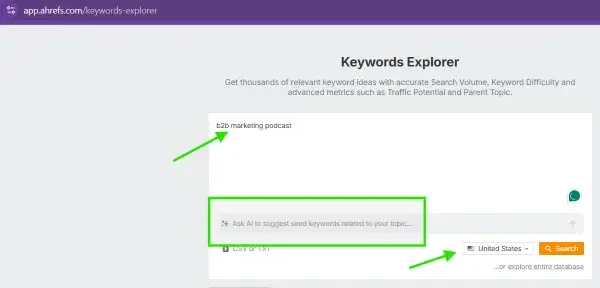
Step 1: Search for the seed term related to your show, like “B2B marketing podcast.” In Ahrefs, you can also use the tool’s AI suggestions.
Step 2: See which domains rank.
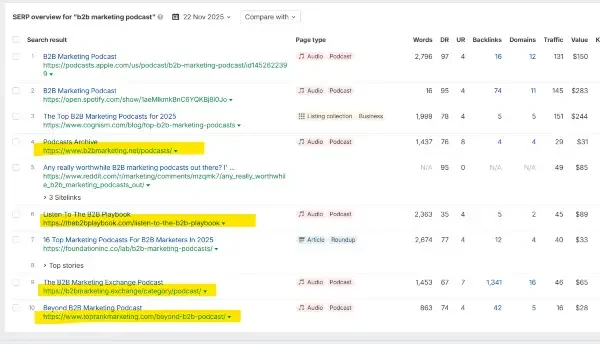
Step 3: Visit those domains to identify hosts and shows.
Step 4: Add them to an outreach list.
Next, run content gap analysis with tools like Ahrefs or SEMrush to compare your site (or a competitor’s) to see where podcast episode pages are ranking for meaningful keywords. If top results for your topic include show‑note pages, that’s an easy way to identify where podcast attention is already strong.
Here’s what that looks like for the Breaking B2B Podcast compared to its first 10 competitors (of course, this number can be adjusted).
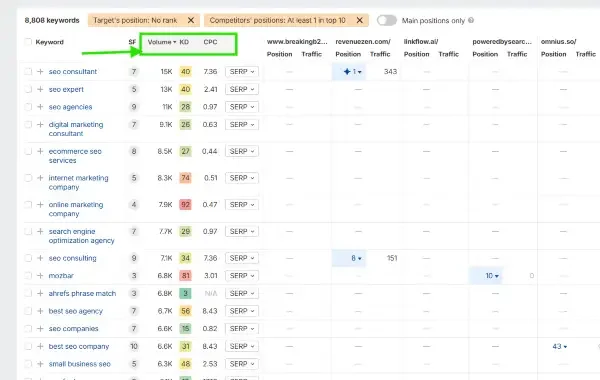
We’ve identified a number of keywords that this podcast’s website doesn’t rank for compared to its competitors. Next, we can filter by keyword difficulty and volume to identify the best opportunities according to this site’s business objectives.
We also look at backlink patterns: find who links to “best [topic] podcasts” or “top [industry] episodes.” Those referring sites often curate shows and can expose you to entire lists of relevant hosts, and sometimes even contact info.
Here’s what that looks like using our previous example:
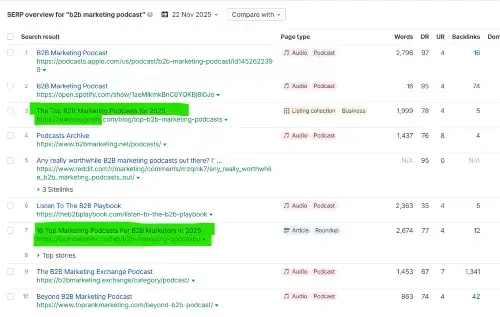
Another angle is traffic analysis for podcast networks. Plug major networks like Wondery or the HubSpot Podcast Network into your analytics tools to see which pages perform best in your niche, then trace back to the shows and hosts driving that performance.
Finally, track brand mentions + “podcast” in your niche using monitoring tools. This can uncover episodes that already talk about your competitors or relevant topics before you ever reach out.
Podcast directories and charts (trusted discovery hubs)
Podcast directories remain one of the most efficient ways to uncover potential influencers. Platforms like Apple Podcasts and Spotify let you filter by category and often suggest related shows through “listeners also follow” behavior.
Podchaser offers deep discovery features, including host and guest profiles, show credits, ratings, and reviews, which you can rely on for research and contact information.
Listen Notes is another powerful search engine for all podcasts and episodes by topic or guest keyword, which makes it ideal for topic‑based discovery. Tools like PodcastDB also surface millions of shows and let you filter by niche criteria such as category, recency, and more.
Together, these directories help you identify hosts, guest histories, topic overlaps, and even past brand mentions so you can prioritize outreach to the right voices.
Social media discovery (where podcasters hang out)
Podcast influencers don’t have to host or appear on podcasts. In many cases, the most effective partners are niche creators who already influence the audience you want your podcast to reach. Social platforms make it easier to identify creators whose content, audience, and authority align with your show’s theme.
LinkedIn: Let’s assume you have a show in SEO. Search for creators who consistently post about your niche, such as keyword research, AI search, technical SEO, and more. Look for individuals whose posts drive thoughtful comments and discussion. These creators usually share resources, frameworks, or opinions that naturally lend themselves to podcast recommendations or episode highlights. Here’s a good example:
X / Twitter: Use keyword searches around your podcast’s core topics rather than podcast-specific terms. For a B2B SaaS podcast, that might include phrases like “SaaS growth,” “PLG,” “enterprise sales,” or “customer retention.” Accounts that regularly spark conversation, threads, or debates in your space are strong candidates to amplify podcast content.
YouTube: Many niche creators publish educational videos, explainers, or commentary aligned with podcast topics. Even if they don’t run podcasts themselves, these creators influence how audiences think and learn. In fact, 98% of people are likelier to trust YouTube influencers than creators on other platforms. Collaborating with them to promote episodes or repurpose clips can introduce your podcast to a highly relevant audience.
Instagram / TikTok: Short-form creators break down complex topics into quick, accessible insights. For B2B SaaS podcasts, this might include creators who post about career growth, tools, workflows, or lessons learned. Their audiences may not be searching for podcasts directly, but they respond well to curated recommendations from creators they already trust.
Take this post, for example:
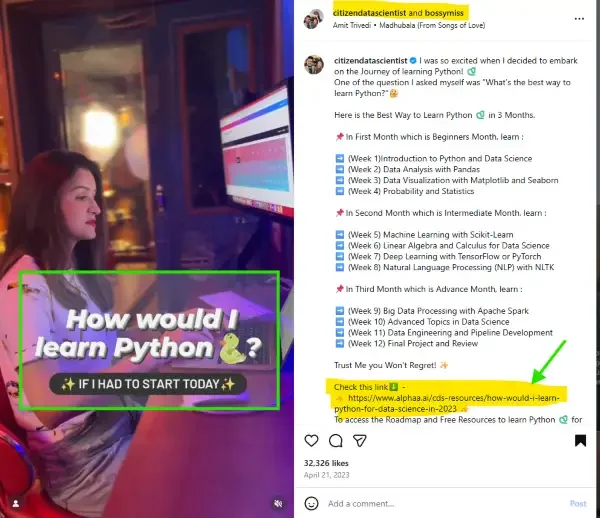
Now imagine that instead of promoting a Python course, this Instagram influencer promotes your IT podcast. Seeing that this post alone has over 32,000 likes, you could open the door to as many engagements regarding your show.
Creator and influencer platforms (for scaling outreach)
If you want to go beyond manual search and build lists for enterprise outreach at scale, tools and platforms can help:
Creator marketplaces like GRIN, Aspire, and CreatorIQ support enterprise‑level influencer discovery across mediums, which includes podcast hosts or potential guests who also have social followings.
Micro‑influencer tools like Modash and Heepsy let you filter by niche, region, and audience traits, which can be useful when you’re targeting regional podcast influencers.
Some tools like Podchaser and Listen Notes double as discovery and contact databases, which makes them natural first stops in our workflow.
Communities where podcast hosts recruit guests
Many hosts scout potential guests and collaborators in online communities because these guests can also turn into long-term partners and influencers for your show.
Facebook groups like “Podcast Guests” or industry‑specific host groups are active places to spot hosts who are sourcing guests.
Reddit communities such as r/podcasts and r/podcasting can reveal hosts looking for collaborators or guest swaps.
Slack/Discord communities in vertical spaces (like SaaS, health tech, or e‑commerce) can lead to direct connections with niche podcast voices.
Indie Hackers/Product Hunt discussions often showcase founders and creators who co‑host shows or want guest conversations.
Agency and network routes
Some podcast booking agencies already maintain relationships with hosts and can route you directly to relevant voices. Similarly, pitching podcast networks can open doors to multiple shows through a single pitch.
This is where Content Allies steps in.
We apply all of the above tactics in a repeatable framework, so your team doesn’t waste time scraping lists or missing high‑value voices. We help identify the podcast influencers whose audiences match your buyers, then streamline outreach, distribution, and tracking so you can focus on results.
Step 3: Vet and Evaluate All Podcast Influencers
Finding potential podcast influencers is only half the job. The other half, and the part that truly drives results, is vetting them well.
At Content Allies, we don’t pick names based on download numbers alone.
Instead, we look at a mix of engagement metrics, audience fit, content quality, and relevance to your buyers.
Audience and engagement analysis
A key part of our vetting is looking beyond raw follower count to how listeners interact with a show. Engagement metrics like listen‑through rates, completion rates, and social behavior tell us whether the audience actually pays attention.
For example, one in two listeners in a recent survey said they gain more trust in a creator’s recommendation when they see products featured across multiple platforms. This kind of deep engagement is the backbone of influencer impact because it means a creator’s recommendation matters.
But before you cross-check channels, you can use influencer engagement calculators. Let’s say you want to partner with Instagram influencer Nazariy Dumanskyy for promoting your tech podcast.
Using HypeAuditor, we can see the following stats, which showcase a low engagement rate despite the good follower count:
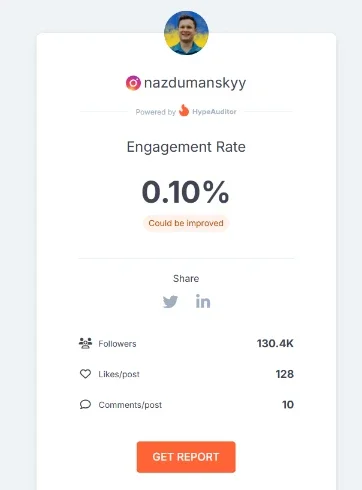
As such, you can either search for lookalike creators or negotiate a lower rate.
Social media vs. podcast overlap
We also examine how influencers perform on social channels like LinkedIn, YouTube, and Twitter/X. A podcast host with an active, relevant social presence often brings amplified reach beyond the audio episode, which boosts awareness and extends the conversation.
Content quality and brand alignment
Even creators with strong reach can be a poor fit if their tone, values, or messaging don’t align with your brand.
We evaluate the influencer’s content across platforms to understand how they communicate with their audience. This includes:
The depth of their insights
How consistently they publish
Whether their content reflects the level of credibility your buyers expect
For B2B podcasts in particular, clarity, expertise, and relevance matter far more than entertainment value alone.
Brand alignment is just as important.
We look at how influencers position products, companies, or ideas in their content. Do they rely on hype-driven promotion, or do they provide thoughtful context and honest opinions? Creators who regularly explain why something matters, rather than simply promoting it, tend to drive stronger trust and higher-quality listeners.
Some common red flags we spot early include infrequent posting, audiences that don’t match your buyer persona, or high early drop‑off rates in episodes. These patterns are a sign of poor engagement or misalignment.
Step 4: Outreach and Pitching Templates
Once you’ve found the right podcast influencers, it’s time to reach out, and how you approach that first message makes all the difference. At Content Allies, we’ve refined outreach strategies that don’t sound generic, get strong response rates, and make your value clear right away.
Here are a few templates that work:
Cold outreach email
Subject: Collaboration with [Podcast Name]?
Hi [First Name],
I’ve been reading your recent posts and really enjoyed your take on [Topic]. I work with [Brand], and we’re looking to collaborate with creators who speak to [target audience]. Would you be open to a quick conversation about a potential partnership?
Thanks,
[Your Name]
Warm outreach (after engaging)
Hi [First Name],
I shared your recent social media post on [Topic] with our marketing team and thought you shared some fantastic insights.
I’d love to explore a collaboration between [Brand] and [Influencer’s Name]. Want to jump on a quick call?
Best,
[Your Name]
LinkedIn DM
Hi [First Name],
I work with enterprise brands looking to collaborate with podcasts in [Industry]. Your profile came up in our research, and I’d love to explore ways to work together.
Maybe a UGC ad, sponsorship, or paid post. Interested?
Key tips we follow at Content Allies:
Personalize every message (mention an episode, social media post, or mutual interest in a shared topic).
Be specific about the ask (guest feature, podcast sponsorship, content swap, UGC ad, or whitelisted social media posts).
Reference metrics that matter: aligned audience, shared themes, and what your brand brings to the table.
Follow up 2-3 times across 2 weeks. Most replies come on the second message.
Use a CRM or simple tracker to log responses and keep follow-ups clean.
Getting this step right sets the tone for everything that follows, from negotiation to execution. We’ve helped clients like Fringe and Disruptive Innovators land high-impact podcast placements with outreach strategies just like this.
Here’s Olivia Chappelear, the EA and Clubhouse Manager at Fringe, sharing her insights regarding our partnership:
Step 5: Negotiate Deals and Collaborations with Your Podcast Influencers
Once you’ve identified and vetted the right podcast influencers, the next step is structuring brand collaborations that drive measurable awareness and listener growth. At Content Allies, we help enterprise teams negotiate influencer collaborations that are clear, repeatable, and aligned with defined performance goals, rather than one-off or loosely scoped promotions.
Agree on the promotion format
The first decision is choosing the promotion format that best supports your content strategy, KPIs, and budget. Podcast influencer partnerships usually include:
Episode promotion: Creators share or recommend a specific episode across their social channels, newsletters, or communities.
Short-form content amplification: Influencers repurpose episode highlights into clips, threads, or posts that point listeners back to the show.
Multi-touch promotion: A coordinated series of posts across platforms to sustain attention beyond a single drop date.
You can even try a social media takeover, like so:
Each format offers different outcomes, from short-term traffic spikes to longer-term audience discovery.
Defining deliverables, timelines, and KPIs
Clear expectations are critical. Influencer agreements should outline exactly what will be delivered, when it will be published, and how performance will be measured. This may include the number of posts or mentions, specific platforms, timing relative to episode releases, and the KPIs tied to each placement.
Common performance indicators include referral traffic to podcast pages, subscriber growth, branded search lift, or downstream actions like demo requests and content downloads.
Here’s what that looks like.
| Category | Details to define |
|---|---|
| Deliverables | Number of posts, mentions, clips, or shares |
| Platforms | LinkedIn, X, YouTube, Instagram, newsletter |
| Content format | Clip, post, thread, video, carousel |
| Publishing timeline | Dates, cadence, episode alignment |
| Links & tracking | Episode URL, UTM, or tracking links |
| Key KPIs | Traffic, subscribers, conversions |
| Reporting cadence | Weekly, monthly, end-of-campaign |
| Usage rights | Repurposing, clipping, duration |
| Compensation | Flat fee, performance-based, hybrid |
One-off promotions vs. ongoing partnerships
One-time promotions can be effective for testing new audiences, but ongoing partnerships tend to deliver better results in our experience.
Repeated exposure from the same influencer helps reinforce credibility and keeps your podcast top of mind with their audience.
Pro tip: For enterprise teams, longer-term collaborations also simplify planning, reporting, and budget allocation.
Contract terms that protect both sides
Enterprise-ready contracts should clearly define usage rights, including whether your brand can repurpose clips, quotes, or visuals created during the partnership. Exclusivity windows may be required in competitive categories, and performance-based compensation can help align incentives.
Because influencer agreements usually involve legal, finance, and procurement teams, we advise you to build in time for review cycles and use language that meets internal compliance standards.
Don’t start from scratch.
Get our free, enterprise-ready podcast influencer contract template here.
At Content Allies, we also:
Structure influencer partnerships with transparent reporting and a defined cadence for performance reviews.
Plan coordinated promotion across influencer channels and owned channels like email, blog, and social.
Of course, that won’t be part of your contract. Still, before you sign anything, it’s important to:
Agree on KPIs and reporting expectations upfront.
Define platforms, formats, and timelines clearly.
Secure usage and repurposing rights early.
Allow sufficient time for legal and procurement review.
Favor repeatable partnerships over one-off promotions.
Get your podcast influencer strategy right with Content Allies
Finding and partnering with podcast influencers doesn’t need to be overwhelming. With the right strategy, enterprise teams can uncover the right voices, reach the audiences that matter most, and turn long‑form content into long‑term growth.
Here’s the framework we use at Content Allies:
Define your audience and goals.
Use smart tools to find relevant podcast influencers.
Vet them with metrics that matter.
Pitch partnerships with a clear value exchange.
Negotiate deals with performance in mind.
We’ve seen this approach work across industries, from HR tech and SaaS to operations and logistics. Podcast influencer partnerships can be a really reliable way to build trust, create meaningful content, and drive results you can actually measure.
Ready to supercharge your podcast influencer strategy with enterprise‑grade research and outreach?
Let Content Allies help you discover targeted podcast influencers, craft perfect pitches, and drive measurable ROI. Get in touch to learn more.
FAQ
How does Content Allies help enterprises find podcast influencers?
We use a structured, research-driven process to identify podcast influencers whose audiences align with your ICP. That includes SEO analysis, social and directory scans, and audience quality vetting to make sure we only recommend high-fit shows.
Can Content Allies assist with outreach and negotiations with podcast hosts?
Yes, we handle the full outreach and negotiation process. We craft personalized pitches, manage follow-ups, and help structure clear agreements that cover deliverables, timelines, usage rights, and reporting.
What metrics should I use to evaluate podcast influencer quality?
Look beyond downloads. We assess content creator credibility through metrics like listen‑through rate, audience demographics, and social share velocity. Strong influencer podcasts typically show consistent content creation patterns, loyal engagement, and alignment with your target market.
How much does it cost to work with podcast influencers?
Pricing depends on the content creator’s reach, the type of influencer podcast collaboration (guest slot, sponsored segment, etc.), and how much custom content creation is involved. We help you evaluate cost against expected ROI.
How fast can I see results from podcast influencer marketing?
It varies. Some influencer podcasts deliver early signals like site traffic or content engagement within days. But content creation also builds momentum over time, especially when creators repurpose episodes into clips, blog posts, or social campaigns that extend your reach.
How do enterprise teams track ROI from podcast influencer collaborations?
We track how content creation from influencer podcasts drives measurable outcomes, from UTM-tagged traffic and demo requests to long‑tail brand engagement. By treating each content creator partnership like a campaign, we make sure your team sees both short‑term and long‑term returns.