
Buzzsprout vs Libsyn vs Transistor: Best Host for B2B Podcasts
Choosing the wrong podcast hosting platform can create serious headaches for B2B teams, from weak analytics and limited team collaboration to poor distribution workflows, confusing pricing plans, and unreliable customer support.
And as podcasts become a larger part of B2B marketing strategies, these problems pile up quickly.
Podcasting is no longer just an optional content channel. According to HubSpot’s State of Marketing Report 2025, 91% of marketers planned to maintain or increase investment in podcasts and audio content at the time of the survey.
This growth makes the hosting decision more important. The right platform should help your team publish consistently, understand audience performance, manage distribution, support dynamic ad insertion or private podcasting where needed, and scale without creating operational friction.
In this guide, we’ll compare Buzzsprout vs Libsyn vs Transistor across podcast hosting capabilities, analytics, private podcasts, dynamic ad insertion, storage capacity, pricing, and scalability to help you choose the best podcast host for your business.
Buzzsprout vs Libsyn vs Transistor: A Quick Comparison Table
Before we dive into the detailed comparison, here’s a quick overview of how Buzzsprout, Libsyn, and Transistor compare across the podcast hosting features that matter most for B2B teams.
| Category | Buzzsprout | Libsyn | Transistor |
|---|---|---|---|
| Ease of Use | Extremely beginner-friendly with clean UX | Functional but dated interface with a steeper learning curve | Modern, intuitive dashboard built for teams |
| Analytics | Simple and easy-to-read analytics | Advanced reporting and monetization analytics | Strong multi-show analytics with executive-friendly dashboards |
| Team Features | Limited collaboration tools | Basic multi-user functionality | Built for collaborative podcast workflows |
| Private Podcasts | Available on higher-tier plans | Supported through Libsyn Pro | Strong private podcasting capabilities |
| Dynamic Ads | Dynamic ad insertion supported | Mature dynamic ad insertion tools | Supports dynamic ads and branded content workflows |
| Usage Limits | 6–15 upload hours per month, depending on plan | 3–55 upload hours per month plus 100GB video uploads | Download limits based on plan, with unlimited podcast creation |
| Video Podcast Support | Supports video uploads | Video podcast support available | Video podcast support included |
| Best For | First-time podcasters and smaller teams | Large legacy podcast libraries and monetization | B2B brands, agencies, and growing podcast networks |
| Starting Price | $18/month | $12/month | $19/month |
| Free Trial | Yes, with limited uploads and hosting for 90 days | No, but a basic $8/month plan is available. The first 30 days on paid plans are free. | Yes, for 14 days |
| G2 Rating | 4.8/5 | 4.5/5 | 5/5 |
Buzzsprout vs Libsyn vs Transistor: Feature-by-Feature Comparison
Choosing the best podcast hosting platform depends on your:
Team size
Publishing workflows
Analytics requirements
Scalability needs
Private podcasting capabilities and
Simplicity of your operations
For B2B teams, this matters because podcast operations usually involve approvals, recurring publishing schedules, guest coordination, reporting, and sometimes multiple shows or video workflows.
Now let’s compare Buzzsprout, Libsyn, and Transistor feature by feature.
1. User Experience and Ease of Use
Efficiency and ease of use matter for B2B marketing teams that manage approval processes, recurring publishing schedules, and multiple contributors.
Buzzsprout
Buzzsprout is built around simplicity. The platform is known for its intuitive UX, streamlined publishing workflow, and beginner-friendly onboarding experience.
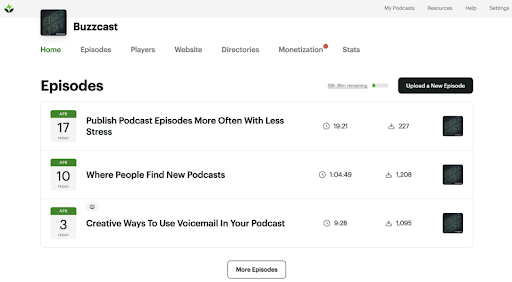
Features like automatic episode optimization, Magic Mastering, AI transcription, and unlimited team members make it approachable for first-time podcasters and smaller teams. The dashboard is clean and easy to navigate, with a minimal learning curve.
Libsyn
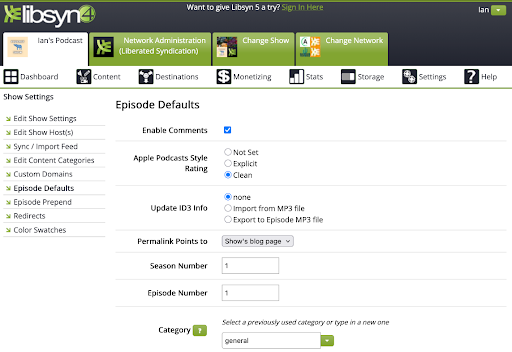
Libsyn offers a broader set of podcast hosting capabilities, but the interface is more complex than newer hosting platforms.
The platform includes multi-user access, social media scheduling tools, bulk episode editing, RSS feed management, and audio/video publishing workflows. While powerful, the dashboard has a more legacy-style feel and typically requires a steeper learning curve.
Transistor
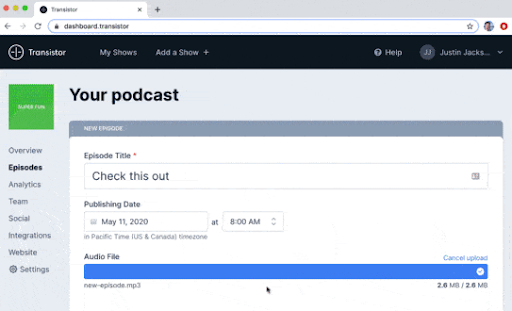
Transistor combines a modern UI with workflows designed for scaling multiple podcasts.
The platform supports unlimited shows, unlimited collaborators, private podcasts, embeddable players, dynamic ads, and podcast website management from a centralized dashboard. Compared to Libsyn, the interface feels more streamlined and team-oriented.
G2 User Experience Comparison
Buzzsprout is frequently recognized for ease of use and smooth onboarding, with an average G2 rating of 4.8/5. Transistor also performs strongly for usability and collaborative workflows, earning an impressive 5/5 rating.
Libsyn benefits from a large, established user base and long-standing reputation, though some reviewers note that its interface feels less modern and requires a steeper learning curve than newer podcast hosting platforms. It currently holds a 4.5/5 rating on G2.
2. Usage Limits and Scalability
Modern B2B podcasting increasingly includes video podcasts, short-form clips, multiple podcast series, and large media libraries. According to Riverside’s 2023 annual report, 85% of companies captured video during podcast production.
This shift makes usage limits and scalability more important. As teams move beyond simple audio episodes, they need a podcast host that can handle larger files, more frequent publishing, multiple shows, and growing content libraries without creating upload or workflow bottlenecks.
Buzzsprout
Buzzsprout keeps publishing simple, but usage is tied to monthly upload limits based on the pricing plan. Users on the Audio and Audio + Video plans can upload up to 6 hours per month, while the Multi-Podcast plan supports up to 15 hours per month.
The platform supports both audio and video podcast hosting, automatic media optimization, dynamic content updates, and multi-podcast management under one account.
Libsyn
Libsyn also structures its plans around monthly upload allowances, ranging from 3 hours per month on the Basic plan to 55 hours per month on the Max plan. All plans include video uploads up to 100GB per month, along with audio and video hosting, YouTube video distribution, and Spotify video distribution on higher-tier plans.
The platform also offers tools for bulk episode editing, podcast networks, monetization, and centralized distribution workflows.
Transistor
Transistor takes a different approach by allowing users to host unlimited podcasts under one account. Instead of upload-hour limits, its pricing is mainly based on monthly downloads and private podcast subscribers.
The Starter plan includes 20,000 monthly downloads and 50 private podcast subscribers, while the Professional plan includes 100,000 monthly downloads and 500 private podcast subscribers. The Business plan includes 250,000 monthly downloads and 3,000 private podcast subscribers.
If you’re managing multiple podcast series or growing a branded podcast network, Transistor’s unlimited-show structure gives you a more flexible operational model than upload-based systems.
It may not be immediately obvious which podcast hosting features your team will need later. As Dave Clements, Tech Support Analyst at Blubrry Podcasting, says:
“You might not need all the bells and whistles now, but it’s better to start on a platform that lets you grow rather than scrambling to migrate later.”
In our experience, usage flexibility becomes far more important after the second or third year of a corporate podcast. As brands expand into video podcasting, repurposed social media clips, private podcasts, and multiple content series, upload caps, download limits, and account-level restrictions can quickly create bottlenecks.
3. Analytics and Reporting
B2B podcast teams need analytics that show audience growth, episode performance, download trends, listener location, listening apps, and platform-level engagement.
Buzzsprout
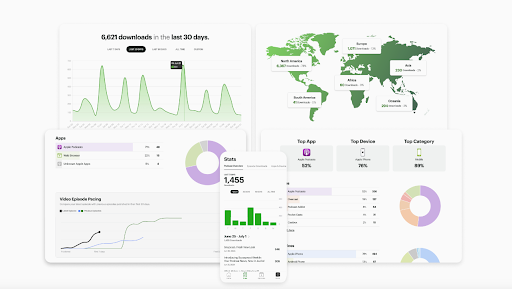
Buzzsprout focuses on simple, easy-to-read podcast analytics. The platform provides advanced podcast statistics that show total downloads over time, listening apps, and listener geography.
Its reporting dashboard is designed for clarity rather than complexity. This makes it accessible for teams that want straightforward visibility into audience growth and episode performance without struggling through a dense analytics interface.
Libsyn
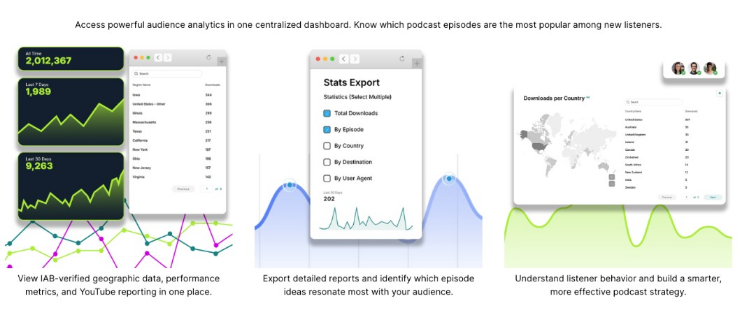
Libsyn offers a more mature analytics ecosystem with IAB-verified statistics, audience insights, geographic reporting, YouTube reporting, and detailed performance metrics all in one centralized dashboard.
The platform also emphasizes monetization analytics and listener behavior insights, which help you identify which podcast episodes are resonating most with your audience. Users can export detailed reports and analyze performance trends across audio and video distribution channels.
Transistor
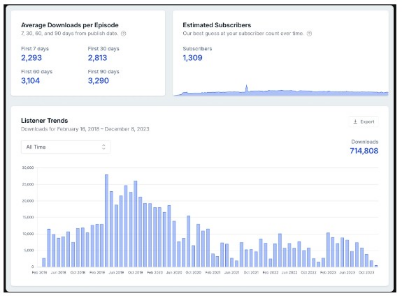
Transistor gives teams a clean analytics dashboard for tracking podcast performance across episodes and shows. It reports monthly listens, total listens per episode, average downloads per episode, estimated subscriber counts, listener trends, popular listening apps, devices, operating systems, and listener geography.
Teams can also compare episode performance, sort episodes by popularity, view country and state-level listener breakdowns, and export analytics data as CSV files. For B2B teams managing multiple shows, this makes Transistor useful for both day-to-day reporting and executive-level visibility.
4. Distribution and Integrations
Distribution matters more as podcast discovery spreads across audio, video, search, and social platforms. According to the Cumulus Media/Signal Hill Insights Podcast Download Fall 2024 Report, YouTube was now the most-used podcast platform in the U.S., with 34% of weekly podcast consumers naming it as their primary listening destination. This put it ahead of Spotify at 17% and Apple Podcasts at 11%.
For B2B podcast teams, the right host should make it easy to publish across major platforms, embed episodes on owned channels, and connect podcast content with broader marketing workflows.
Buzzsprout
Buzzsprout focuses on simple distribution. The platform helps users publish to major podcast directories, including Apple Podcasts, Spotify, YouTube, iHeartRadio, Pocket Casts, Castbox, Overcast, TuneIn, Podchaser, and more.
The platform also includes embeddable podcast players, API access, podcast website tools, Visual Soundbite assets for social media promotion, and integrations with existing podcast tools. Its automatic episode optimization and transcription features also help improve accessibility and search engine visibility.
Libsyn
Libsyn supports centralized audio and video distribution across major platforms, including Spotify, Apple Podcasts, YouTube, Amazon, iHeartRadio, Boomplay, WordPress, and Deezer.
The hosting platform also includes customizable podcast players, customizable podcast websites, RSS feed management, social media scheduling tools, transcript support, and API-driven workflows. For larger teams, Libsyn’s distribution system is designed to support both content syndication and broader marketing operations from a single dashboard.
Transistor
Transistor supports distribution to major podcast platforms, including Spotify, Apple Podcasts, YouTube, Amazon Music, Audible, Pocket Casts, Castbox, TuneIn, iHeartRadio, and additional podcast directories and search indexes.
Its integrations connect with HubSpot, MailChimp, ConvertKit, ActiveCampaign, Drip, Klaviyo, MailerLite, Bluesky, and YouTube, which makes it particularly useful for teams connecting podcast workflows with CRM systems, email marketing, and audience engagement campaigns.
From an SEO perspective, Transistor’s podcast websites, AI transcription features, and embeddable audio players help you support discoverability while keeping podcast content centralized across multiple shows and channels.
5. Private Podcasting and Team Collaboration
Private podcasting now plays a big role in B2B use cases like customer education, executive communication, sales enablement, partner onboarding, and account-based marketing campaigns.
As your podcast operations expand internally, collaboration features, audience controls, and private podcast workflows start to become just as important as public distribution.
| Feature | Buzzsprout | Libsyn | Transistor |
|---|---|---|---|
| Team Accounts | Unlimited team members | Up to five users per podcast | Unlimited collaborators |
| Permission Levels | Team management supported | Multi-user management supported | Individual podcast user groups |
| Private Feeds | Subscription-based premium content | Not emphasized in the core feature set | Dedicated private podcast hosting |
| Audience Controls | Subscriber-only content options | Monetization and distribution controls | Members-only podcast access |
Buzzsprout
Buzzsprout supports collaboration through unlimited team members and allows creators to publish subscriber-only content using Buzzsprout Subscriptions. This makes it useful for premium audio podcast content and restricted listener experiences.
Libsyn
Libsyn includes multi-user access with support for up to five users per podcast. The platform focuses more heavily on centralized publishing, monetization, and distribution workflows rather than dedicated private podcast hosting.
Transistor
Transistor places much stronger emphasis on private podcasts and collaborative workflows. Teams can create members-only podcasts, invite unlimited collaborators, and organize users by individual podcast access groups. All of this makes the platform particularly well-suited for internal communications and customer-facing private audio content.
6. Customer Support Quality
Customer support matters when a podcast has multiple stakeholders, fixed publishing dates, and distribution issues that need quick resolution.
Buzzsprout
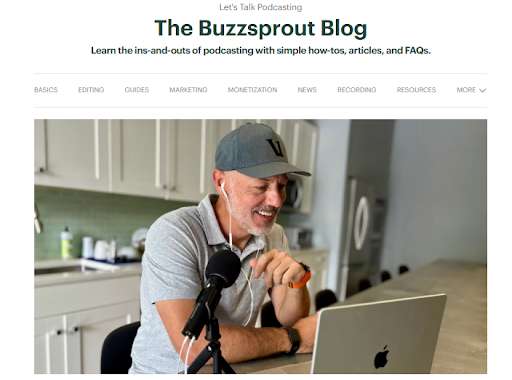
Buzzsprout puts a strong focus on onboarding, education, and customer support. Alongside its hosting platform, it provides an extensive library of podcasting resources through the Buzzsprout Blog, including guides on editing, recording, marketing, monetization, and podcast growth.
The platform also offers tutorial videos, FAQs, community support, and podcast education resources designed to help newer creators publish and grow more consistently.
Libsyn
Libsyn supports users through live Q&As, educational resources, YouTube tutorials, and podcasting guides focused on editing, monetization, and production workflows. While many reviewers praise Libsyn’s reliability and long-standing presence in the podcast market, customer satisfaction feedback on support responsiveness appears more mixed compared to newer hosting platforms.
Transistor
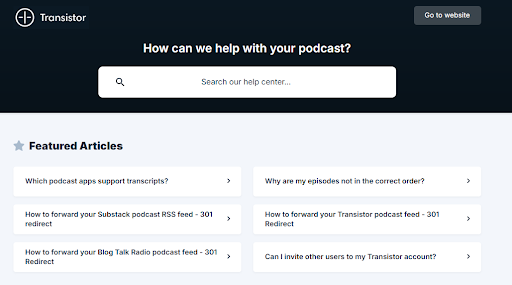
Transistor emphasizes hands-on customer support alongside a large library of podcasting resources. The platform also maintains an active blog with tutorials, publishing guides, video podcasting resources, and migration walkthroughs. For teams managing multiple podcasts or scaling podcast operations, this makes troubleshooting and onboarding much more manageable.
G2 reviews regularly highlight the platform’s responsiveness, migration support, and helpful customer service experience, particularly for teams managing multiple podcasts and collaborative workflows.
Buzzsprout vs Libsyn vs Transistor Pricing Comparison
Pricing structures vary quite a bit between podcast hosting platforms, especially once video podcasting, multiple shows, advanced analytics, and larger team workflows enter the picture.
Here’s how Buzzsprout, Libsyn, and Transistor compare across their major pricing tiers.
| Plan Tier | Buzzsprout | Libsyn | Transistor |
|---|---|---|---|
| Entry Plan | $18/month | $12/month | $19/month |
| Mid-Tier Plan | $30/month | $25/month | $49/month |
| Higher-Tier Business Plan | $36/month | $150/month | $99/month+ |
| Free Trial | 90 days available | No permanent free plan (there’s an $8 plan for the bare essentials), the first 30 days are free | 14-day free trial |
For smaller podcast teams, Buzzsprout’s pricing structure is approachable and easy to understand. Libsyn offers lower entry pricing but becomes more complex at higher usage levels.
Transistor typically costs more upfront, but its unlimited-show structure and collaboration-focused workflows can make budgeting simpler for growing B2B podcast programs.
Which Podcast Host Is Best for You? Buzzsprout vs Libsyn vs Transistor
The three platforms we’ve looked at here all have their own strengths and weaknesses.
To summarize: Buzzsprout is strongest for simplicity and fast publishing, Transistor is best for scalable team workflows and multiple shows, while Libsyn stands out for monetization and mature distribution infrastructure.
The best choice for you really depends on your situation and needs. Let’s break down a few options.
Best for First-Time Podcasters: Buzzsprout
Buzzsprout is best for first-time podcasters because it’s easy to get started, doesn’t require much technical knowledge, and keeps publishing workflows simple.
Best for Enterprise and B2B Marketing Teams: Transistor
Transistor is best for B2B teams that need to manage multiple podcasts, team members, private feeds, and marketing integrations from one platform.
Best for Large Existing Podcast Libraries: Libsyn
Libsyn is a strong fit for organizations with large back catalogs, established publishing operations, and more advanced monetization needs.
Best for Agencies Managing Multiple Shows: Transistor
Transistor works especially well for agencies because unlimited shows and collaborators make multi-client management more scalable.
Best for Monetization-Focused Creators: Libsyn
Libsyn is the strongest option for creators who focus heavily on podcast advertising and monetization workflows.
Best for Simplicity and Speed: Buzzsprout
Buzzsprout is ideal for teams that want to publish quickly without spending time managing technical podcast settings.
You can also check out this YouTube video for a more in-depth comparison of podcast hosting platforms, including Buzzsprout and Libsyn:
Build a B2B Podcast That Actually Drives Results with Content Allies
Choosing the right podcast hosting platform is only one part of building a successful B2B podcast. The bigger challenge is creating a system that consistently drives audience growth, executive visibility, pipeline influence, and long-term content ROI.
That’s where Content Allies helps.
We work with B2B brands and SaaS companies to manage the full podcast process, including podcast strategy and positioning, production and editing, social media promotion, analytics and reporting, and much more.
Whether you’re launching your first show or scaling a multi-podcast content operation, our team helps simplify the process and keep your publishing workflows consistent.
Talk to Content Allies to learn how we can help you grow through podcasting.
FAQs
Is Buzzsprout better than Libsyn?
Buzzsprout is generally better for ease of use and faster onboarding, while Libsyn is stronger for advanced monetization and larger publishing operations.
Is Transistor worth the higher price?
For teams managing multiple podcasts, collaborators, private feeds, and marketing workflows, Transistor’s scalability and collaboration features justify the higher pricing.
Which podcast host is best for B2B podcasts?
Transistor is typically the strongest fit for B2B podcast teams because of its collaboration tools, private podcasting capabilities, and centralized analytics workflows.
Which podcast platform has the best analytics?
Libsyn offers the most mature analytics and monetization reporting, while Buzzsprout prioritizes simplicity, and Transistor focuses on clean multi-show reporting.
Can you migrate from Libsyn to Buzzsprout or Transistor?
Yes. Both Buzzsprout and Transistor support podcast migration workflows using RSS feeds to transfer episodes, metadata, and podcast settings.
How does Content Allies help companies launch podcasts?
Our team at Content Allies helps you with podcast strategy, guest booking, production, editing, distribution, promotion, and ongoing podcast growth operations.