
How to Name Your B2B Podcast and 5 Real Examples
With more than 400,000 active podcasts so far, competition for attention has never been higher.
For B2B podcasting, your show name does more than label the content. It tells a buyer who the show is for, what kind of conversations to expect, and why it may be worth their time.
At Content Allies, we've produced podcasts for B2B SaaS companies, IT companies, professional services firms, and enterprise brands, and we've seen firsthand which naming approaches attract subscribers and support brand awareness, and which ones make discovery harder from day one.
In this guide, we'll walk through a practical framework for naming a B2B podcast and share 10 real examples that demonstrate what works.
But before we dive into the framework, watch the video below where Jake Jorgovan, founder of Content Allies, and Dots Oyebolu, Client Strategist and Marketing Director, break down several key principles behind choosing a podcast name that supports growth and positioning:
Why Your B2B Podcast Name Matters More Than You Think
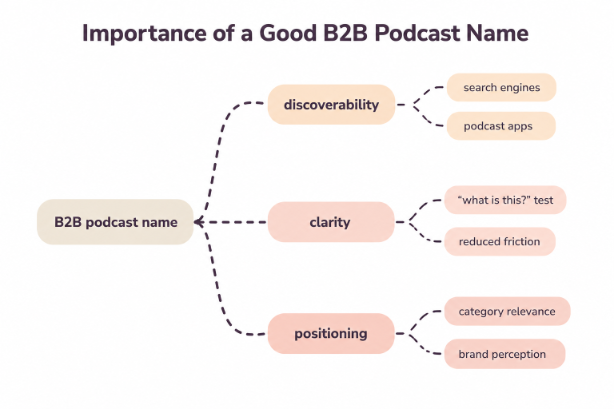
Podcast naming is a branding decision, but it also affects discovery, positioning, and trust. Before someone listens to an episode, your name helps them decide if the show feels relevant.
The first reason is search. In podcast apps, your show title is one of the most important fields for discovery. Apple Podcasts and Spotify both rely heavily on show titles when surfacing results, while Apple's platform no longer uses RSS keyword tags for search.
According to The Podcast Host's 2024 Discoverability Survey, 50% of listeners discover new podcasts by opening their preferred podcast app and searching directly. If your title doesn't contain words your audience is likely to search for, you're making discovery harder from the start.
The second reason is clarity. Most B2B buyers don't spend time decoding clever brand names. Whether they're browsing Apple Podcasts, scrolling LinkedIn, or clicking through from a guest's social media post, they typically decide in seconds.
We call this the "what is this?" test. If someone can't immediately understand the topic, audience, or value proposition of your show, they're likely to keep scrolling. Clear podcast names consistently outperform vague or overly creative alternatives because they reduce friction and set expectations immediately.
Finally, your podcast name is a long-term business asset. Unlike a campaign slogan or webinar title, your podcast name appears everywhere, like episode listings, guest promotions, sales follow-ups, newsletters, SEO blog posts, and content marketing campaigns. Over time, it becomes part of your brand identity and shapes how prospects see your expertise.
What we've learned working with various B2B firms is that the strongest podcast names support both discoverability and positioning. They help the right audience find the show while reinforcing the brand's broader go-to-market strategy.
What Makes a Good B2B Podcast Name?
A good B2B podcast name should help the right audience discover the show, understand its value, and remember it later.
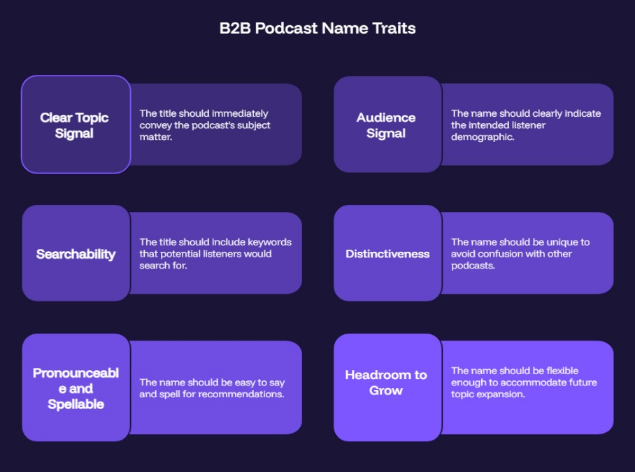
As per our experience, the strongest podcast names share six common traits:
1. Clear Topic Signal
A first-time viewer should know what the show is about within a second. If your podcast focuses on demand generation, product marketing, software sales, or AI in marketing, the title should provide a strong clue.
The goal is to eliminate confusion and make the topic immediately obvious.
2. Audience Signal
The best podcast names usually communicate who the show is for. Examples include:
Marketing leaders
RevOps teams
SaaS founders
Supply chain professionals
Product marketers
Enterprise sales teams
When listeners immediately recognize themselves in the title, they're more likely to click.
3. Searchability
Your podcast title should contain at least one term your ideal listener might actually search for in Apple Podcasts, Spotify, YouTube, or Google.
Good examples include keywords related to:
B2B SaaS
Demand generation
Product marketing
Go-to-market strategy
Sales pipeline
Customer discovery
You don’t have to stuff keywords into the title, but you should use language that reflects how your audience thinks and searches.
4. Distinctiveness
Before committing to a name, search podcast directories and Google. If multiple shows already use similar names, yours becomes harder to remember and easier to confuse with competitors. A distinctive name helps build long-term brand awareness and brand trust.
5. Pronounceable and Spellable
Your podcast name needs to work in conversations, guest recommendations, LinkedIn posts, and voice search. If someone hears the name once, they should be able to spell it and find it without difficulty.
6. Headroom to Grow
Many B2B podcasts evolve quite a bit over time. A show that starts by discussing demand gen may eventually cover broader topics like content marketing, marketing attribution, product positioning, or go-to-market strategy. The best names provide enough flexibility to support that growth without requiring a rebrand a year later.
Common B2B Podcast Naming Mistakes to Avoid
As we have shared above, a great podcast name should be memorable, descriptive, and easy to discover. Unfortunately, many companies make naming decisions that hurt visibility before they publish their first episode.
Here are some of the most common mistakes:
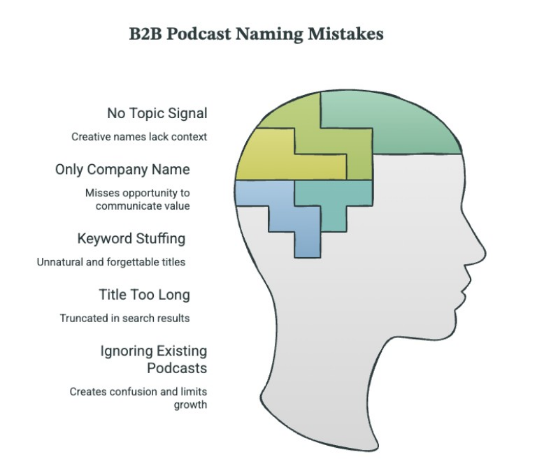
Pure Wordplay
Creative names can be memorable, but they should still give listeners a clue about the content. Names built entirely around inside jokes, puns, or abstract phrases mostly struggle to attract new listeners because they provide no context.
As Dave Jackson, puts it:
"Having the right name for your show can boost your downloads. People try to get cute and use inside jokes as the name of their show. That doesn't work. The more obvious, the better."
Using Only Your Company Name
A title like "[Company Name] Podcast" may work if you already have significant brand awareness. For most companies, however, it misses an opportunity to communicate the show's topic, audience, or value proposition.
Stuffing Multiple Keywords Into the Title
Some brands try to maximize discoverability by cramming keywords into the name, which results in titles that feel unnatural and forgettable. A name should be clear and searchable without reading like a list of SEO terms.
Choosing a Title That's Too Long
Long podcast names are usually truncated in search results and podcast directories. Apple Podcasts recommends keeping titles concise enough to display properly across devices and search interfaces.
Ignoring Existing Podcasts and Trademarks
Before launching, search Apple Podcasts, Spotify, and trademark databases to make sure your chosen name isn't already associated with another active show or protected brand. A naming conflict can create confusion and limit long-term growth.
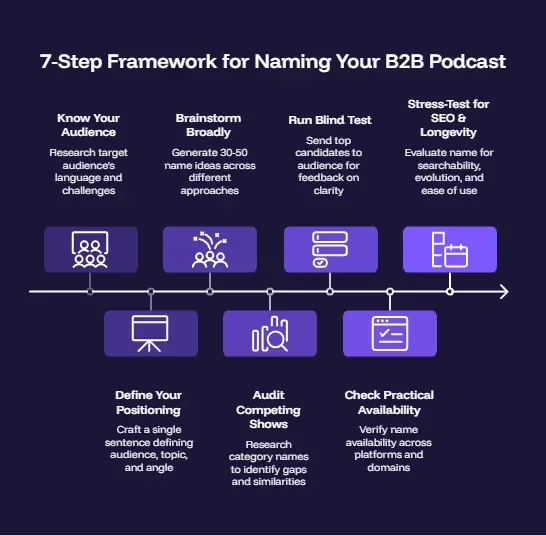
How to Name Your B2B Podcast: A 7-Step Framework
Choosing a podcast name should not depend on creativity alone. You need a name that speaks to the right buyers, makes the topic clear, and still feels strong enough to carry the show over time.
Below, we have mentioned a detailed framework that you can use.
Step 1: Know Your Audience Before You Name Anything
Many podcast naming mistakes happen because teams start brainstorming before they fully understand who they're trying to reach.
Before generating name ideas, spend time researching your target audience:
Review customer interviews and discovery calls
Analyze common questions from prospects
Look at industry forums, LinkedIn conversations, and communities
Interview customers and ask how they describe their challenges
Review search terms your audience uses
Pay close attention to the language people use naturally. Those words can become a strong source of naming ideas.
For example, a show targeting marketing leaders may use very different language from one aimed at RevOps teams, supply chain executives, or SaaS founders. The better you understand your audience, the easier it becomes to create a name that feels immediately relevant.
Step 2: Define Your Positioning
Before naming the show, define its positioning in a single sentence:
A show for [audience] about [topic] hosted by [angle or credibility].
For example:
A show for B2B marketing leaders about demand generation hosted by experienced SaaS operators.
Or:
A show for product marketers about go-to-market strategy hosted by enterprise software executives.
This statement becomes your filter. Every name you consider should support the audience, topic, and credibility behind the show.
Step 3: Brainstorm Broadly
At this stage, your goal is simply to generate as many ideas as possible before you narrow anything down.
Aim for 30-50 potential names across different approaches:
Descriptive names
Metaphorical names
Host-driven names
Audience-focused names
Action-oriented names
Question-based names
Many teams reject useful ideas too early. A wider list gives you more room to compare patterns, spot stronger angles, and move past the obvious first options.
Step 4: Audit the Competing Shows
Once you have a shortlist, research your category. Search your core topics in:
Apple Podcasts
Spotify
YouTube
Look at the names that already dominate your space.
You're looking for two things:
Names that sound too similar to yours
Gaps where your show can stand out
This step is becoming even more important as podcast consumption expands beyond traditional podcast apps.
Step 5: Run the Blind Test
This is one of the most valuable exercises we recommend. Take your top five candidates and send them to people who resemble your target audience.
Ask a single question:
"What do you think this podcast is about?"
If most responses don't match your intended positioning, the name fails.
This test gets around internal bias and quickly shows you whether a title communicates what you think it communicates.
Step 6: Check Practical Availability
Before making a final decision, make sure that the name is available across the platforms that matter.
Check:
Apple Podcasts
Spotify
YouTube
.com domain availability
LinkedIn company page availability
X and Instagram handles
USPTO trademark database
Google search results
This helps avoid legal issues, branding conflicts, and discoverability problems later.
Step 7: Stress-Test for SEO and Longevity
Finally, ask yourself a few practical questions:
Does the title contain at least one term your audience searches for?
Will it still make sense if the show evolves over the next two years?
Can it support new topics, guests, and formats without feeling too narrow?
Is it easy to say out loud?
Is it easy to spell?
Does it sound natural in conversation?
If someone can mention your podcast naturally in a conversation, that is a good sign. Names that need extra explanation are harder to remember, share, and search for later.
The same logic applies inside podcast platforms. As mentioned earlier, Apple Podcasts no longer relies on a separate RSS keyword field for discovery, so keywords matter most when they appear in visible elements like show titles, episode titles, and descriptions. That makes the name itself one of your most important search signals.
This is also where long-term fit matters. A name tied too tightly to one campaign, trend, or narrow topic may feel limiting once your content strategy expands. Choose a name that gives the show room to grow while still making the core topic clear.
5 Real B2B Podcast Names and Why They Work
There isn't a single formula for naming a successful B2B podcast. Some shows win because they're highly searchable. Others succeed because the host has built a powerful personal brand.
The key is choosing an approach that makes sense with your audience, positioning, and growth strategy.
Here are five successful B2B podcast names that demonstrate different naming philosophies, along with the trade-offs that come with each.

1. The Marketing Millennials
Naming approach: Audience-as-title
What it is: A marketing-focused podcast hosted by Daniel Murray that targets modern marketers and growth professionals.
Why it works: The title immediately signals who the show is for. A marketing professional can understand the audience and subject matter in seconds, which helps with discoverability and brand awareness.
Lesson: If your audience is highly defined, naming the audience directly can create clarity straight away.

2. Lenny's Podcast
Naming approach: Host-name-only
What it is: A product, growth, and startup podcast hosted by Lenny Rachitsky.
Why it works: Lenny built significant credibility through his newsletter and personal brand before launching the show. The podcast title uses that existing trust and audience recognition.
Lesson: Personal-brand podcast names work best when the host is already the primary reason people will listen.
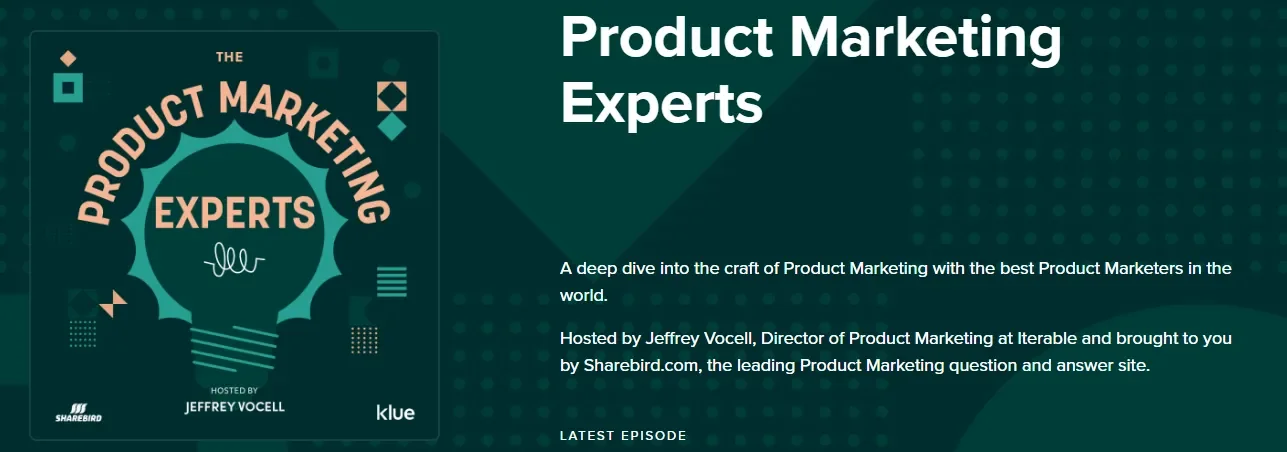
3. The Product Marketing Experts
Naming approach: Expertise-led title
What it is: A B2B podcast focused on product marketing strategy, positioning, launches, messaging, and go-to-market execution.
Why it works: The name clearly tells listeners what kind of expertise they will get. It also signals credibility because the word “experts” frames the show around practical knowledge rather than casual conversation.
Lesson: Expertise-led names work well when your audience wants advice from practitioners. They create trust quickly because the value of the show is clear before someone listens.

4. The Twenty Minute VC
Naming approach: Format-as-promise
What it is: Harry Stebbings' long-running venture capital and startup podcast.
Why it works: The title tells listeners exactly what to expect. It combines audience relevance (venture capital) with a clear format promise (short interviews).
Lesson: Format-driven names can accelerate early growth, but make sure the promise won't limit future expansion.
5. B2B Growth

Naming approach: Pure keyword title
What it is: A podcast that covers demand generation, content marketing, sales, and growth strategies for B2B businesses.
Why it works: The title is exceptionally clear and closely matches what potential listeners search for. There's no ambiguity about the show's focus.
Lesson: If discoverability is the priority, a keyword-focused title can be highly effective, especially when launching a new B2B podcast without an established audience.
The common thread across all five examples is clarity. Whether the show is built around an audience, a host, a format, or a keyword, successful podcast names make it easier for listeners to understand what they're getting.
Launch Your B2B Podcast on the Right Foundation
A podcast name is one of the few decisions that's difficult and expensive to change once a show gains traction. It affects discoverability, brand perception, SEO, guest promotion, and audience growth from day one.
At Content Allies, we've helped B2B firms name, launch, and scale podcasts that support demand generation and long-term brand growth.
Our team can help with positioning, naming workshops, competitive research, availability checks, and the full podcast production process, so your show is built to attract the right audience from the very first episode.
If you're planning a new podcast and want expert guidance before you launch, contact us to discuss your goals and podcast strategy.
FAQs
Should I include "podcast" in the name of my B2B podcast?
Usually, no. Podcast directories already categorize your show as a podcast, so adding the word rarely improves discoverability. In most cases, you're better off using those characters to communicate your topic, audience, or positioning more clearly.
How long should a B2B podcast title be?
Aim for 2-5 words whenever possible. Shorter names are easier to remember, display better in Apple Podcasts and Spotify, and work more naturally in social media posts, email newsletters, and guest promotions.
Can I change my podcast's name after launch without losing subscribers?
Yes. Most podcast hosting platforms allow you to change your show name without affecting existing subscribers because the RSS feed remains the same. However, rebranding can create audience confusion and may require updating artwork, website content, social profiles, and promotional materials.
Should the name include my company name or stay independent of it?
It depends on your goals. If your company already has strong brand recognition, including the company name can build trust. If your goal is broader audience growth and thought leadership, an independent brand often attracts more listeners because it feels less promotional.
How does Content Allies approach naming when producing a new B2B podcast for a client?
We start with audience research and positioning. From there, we facilitate naming workshops, generate multiple naming directions, evaluate searchability and differentiation, and test candidates against the client's growth goals before recommending a final direction.
Can Content Allies rebrand an existing B2B podcast that isn't getting traction?
Absolutely. We regularly help companies reassess podcast positioning, naming, artwork, messaging, and distribution strategy when a show isn't attracting the right audience or generating the business outcomes they expected.