
Podcast Marketing Services Explained: What's Included & How to Choose an Agency
You could have the most insightful, thought-provoking, and even fun-to-listen-to podcast, but it’s no guarantee that the right people will find it.
Consider just how popular podcasting has become as a medium. 70% of Americans aged 12 and above have listened to a podcast, and 51% have watched one, too.
To vie for people’s attention and compete in this increasingly competitive space, podcast marketing becomes an essential part of the deal. And that’s all the more relevant for B2B podcasts that need to target a highly discerning audience, like executives, buying committees, and analysts.
The good news is that there are professional podcast marketing agencies that specialize in podcast strategy and promotion. This guide takes a detailed look at podcast marketing services, what they can do, what they should do, and how to go about picking one.
Looking for podcast marketing agency recommendations? Check out the Top 10 Podcast Promotion Agencies.
What Are Podcast Marketing Services?
Podcast marketing services are the activities used to get a show in front of the right people and turn that attention into measurable business results.
For instance, in B2B podcasts, this usually extends beyond basic promotion to include distribution, content repurposing, social media posts, advertising campaigns, and ongoing podcast management.
Basically, podcast marketing services that specialist agencies typically offer help podcasts grow in reach and revenue. The specifics of that vary depending on the podcast format, who it’s for, and the exact capabilities of the professionals marketing it.
What’s Included in Podcast Marketing Services?
Podcast marketing services consist of a range of offerings, such as strategy, promotion, PR, and reporting. As far as advertising goes, that can include search, social media, and influencer promotions.
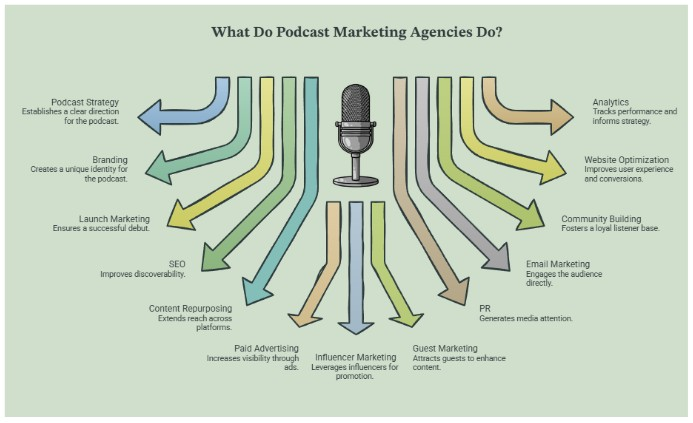
Here's what's typically included when you bring in a podcast growth agency or podcast marketing agency to run the show.
Podcast Marketing Strategy
Every solid engagement starts with a marketing strategy. For podcasts, that includes:
Defining an audience persona based on your ideal buyers, their problems, preferred topics, and listening behavior.
Conducting a competitor analysis to understand how comparable shows position themselves, which guests and topics they pursue, and where your show can occupy a differentiated space.
Deciding the primary business goal. That could be demand generation, strengthening category authority, developing relationships, or increasing the number of qualified inbound opportunities.
From there, the agency builds a content calendar and a distribution plan across platforms like Apple Podcasts, Spotify, and YouTube.
This stage sets the KPIs the rest of the engagement gets measured against. So agencies with real marketing experience tend to spend more time here than newer shops eager to jump straight into production or ads.
Podcast Branding and Positioning
Branding covers everything a listener sees and hears before a single word of an episode plays. That’s the podcast's name, artwork, intro music, and narrative.
A podcast marketing agency will typically develop a positioning statement that ties the show back to the client's brand voice. That way, the podcast doesn't feel like a side project bolted onto the company's marketing, especially in the B2B context.
This also includes copy updates across podcast websites, media kits, and social platforms, so the show's branding stays consistent everywhere a potential listener might encounter it.
For B2B podcasts especially, strong branding is important because these shows are used as a sales and PR tool, too.
Podcast Launch Marketing
If you’re hiring a podcast marketing agency from the start, they can also help with launch marketing, that is, build buzz and awareness.
Launching a podcast well matters more than most founders expect.
Podchaser's 2026 data shows that of the roughly 407,000 actively publishing podcasts it tracks, only about 7% ever reach 10,000 or more listeners. 42% of shows launched in the first half of 2026 had already gone inactive within six months.
A launch plan exists precisely to keep a new show from becoming one of those statistics.
Within launch marketing, services could include coordinating guest appearances for the first few episodes, posting episode clips on social media, running launch ads, sending out emails, or conducting media outreach.
At Content Allies, we saw this play out with Meta's Business, Innovation, and Technology podcast. The show had spent almost a year trying to launch with another agency before we took it over.
Once we got it publishing on a regular cadence, it hit around 170,000 downloads in the first six months and exceeded the initial download target by 7x. The difference wasn't the recording setup, it was pairing the launch with a strategy built around Meta's actual business objectives from day one.
Podcast SEO and Discoverability
Podcast SEO helps episodes appear when potential listeners search in podcast apps, on YouTube, or on Google. The agency covers relevant keywords, optimizes titles, metadata, and show notes, and makes sure episode pages on podcast websites give search engines useful context.
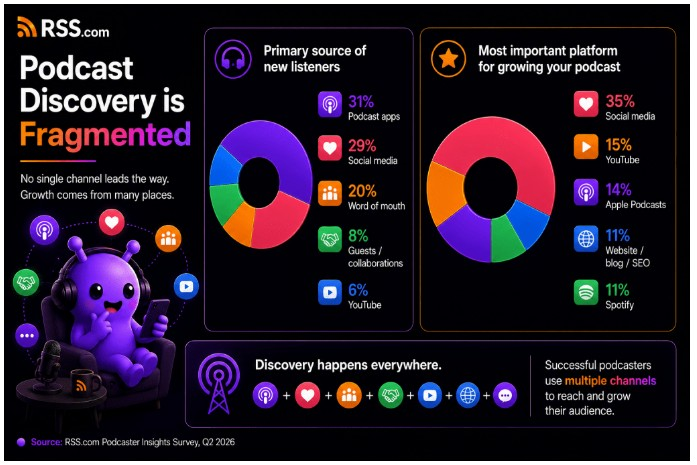
Industry research from RSS.com found that around 30% of listeners discover new podcasts through internet search. That means a show's discoverability depends heavily on whether an SEO team has optimized its show notes and episode pages for Search Engine Page Results.
Pro Tip: Full transcriptions do double duty here. They make episodes accessible, and they give search engines text to index that audio alone can't provide.
Video and Short-Form Content Repurposing for Social Media
One of the best ways to promote your podcast online is through creating short-form content for social media. That includes engaging clips from the episodes. Most podcast promotion agencies lean into social media and promote the podcast through videos.
After all, social media is the place where people discover podcasts. Spotify says 42% of listeners discover new podcasts via TikTok, Instagram, and Facebook. For B2B podcasts, the channel for discovery is, of course, LinkedIn.
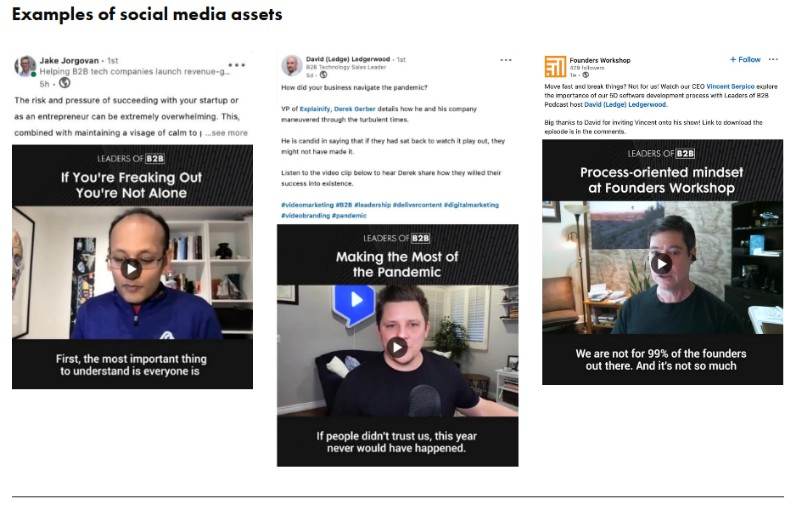
A podcast marketing agency can cut longer episodes into audiograms and short-form clips for social platforms.
This is content repurposing at its most valuable: one recording session becomes a full YouTube episode, a set of vertical clips for social media, and even quote graphics for platforms like X or Threads.
Paid Podcast Advertising
Paid advertising in podcasting can cover two different things:
Running ad placement for the brand's own campaigns (like on podcast advertising networks)
Sponsorships sold within the client's own content
Agencies handle media buying, negotiate with podcast networks, and track performance against KPIs such as conversions and sales, in addition to downloads.
Some agencies may also help the podcast secure sponsorships (pre-roll, mid-roll, post-roll, and host-read ads). They may also optimize episodes to drive more platform ad revenue, like on YouTube.
For brands that use podcast sponsorships as a distribution channel rather than producing their own show, this service alone can be the primary reason they hire a podcast agency.
Influencer and Creator Marketing
Influencer and creator marketing leverages trusted voices with established audiences to introduce your podcast to people already interested in your topic.
For instance, B2B podcasts can enlist the help of industry experts and opinion leaders to talk about the podcast on social media or even other podcasts.
Influencers can also come on the show. This can mean booking creators and established podcast talent for guest spots and cross-promotion, or running influencer partnerships in which creators share their experiences on social platforms and channels.
At Content Allies, we run our own show, the Leaders of B2B Podcast, using the same strategy we recommend to clients: interviewing target prospects alongside strategic partners and influencers with audiences that overlap with ours. That approach generated over $100,000 in revenue within the first four months and led to a partnership with SaaS Connect, where we became the official sponsor.
Remember: Content Allies is also part of the Fieldtrip agency ecosystem, so when a client's influencer marketing needs go beyond the podcast itself, like broader creator partnerships or influencer campaign management, we can bring in Fieldtrip's partner agencies to support that work.
Podcast Guest Marketing
Guest marketing has two sides:
Booking great guests for your show
Getting you booked as a guest on other shows.
In fact, there’s a third element, too: helping guests promote the show and episode on their accounts.
Guest outreach for B2B podcasts, in particular, has become a significant lead-generation channel. Industry data compiled by Omniscient Digital in 2026 cites an average guest-to-client conversion rate of around 10% on B2B podcasts, with some companies attributing seven-figure pipeline directly to relationships built through podcast guest appearances.
Guest booking services typically build and maintain media lists of relevant shows and hosts, pitch clients for guest spots, and prep talking points so each appearance reinforces the brand's narrative.
In terms of guest booking, we've seen this compound into a real pipeline channel. For Rebar Technology's Subscriptions Scaled podcast, we booked interviews with CEOs from more than 48 subscription-economy companies, including brands like ClickFunnels, PetPlate, and CurlMix. Every guest matched Rebar's exact buyer persona, which turned the show into a sourcing tool for sales conversations rather than just a content asset.
Podcast PR and Earned Media
PR strategy for podcasts includes getting the show featured in media outlets, securing features in industry newsletters or "best podcasts to listen to" roundups, and building the kind of press narrative that supports launches or big episodes.
This is earned media in the traditional sense, applied to an audio/video product.
There are specialist podcast PR agencies, but many podcast marketing agencies bundle these services with others.
They might use case studies and press-ready audience data (download numbers, listener retention rate, audience demographics) that make the show more attractive to journalists and outlets. Generally speaking, a podcast with strong analytics behind it is simply an easier pitch.
Email and Newsletter Marketing
Email remains one of the most direct ways to convert casual listeners into an owned audience. This typically means a dedicated podcast newsletter that recaps each episode. That’s combined with email sequences that nurture new subscribers gathered through the show, whether that's lead magnets tied to episode topics or simple ‘new episode’ alerts.
Agencies usually tie this back to the show's content calendar, so newsletters go out consistently and repurpose material the team already produced for show notes and blog posts.
Community Building
A dedicated community, whether that's a Discord server, a private Facebook or LinkedIn group, or simply an engaged comment section, turns passive listeners into an audience that promotes the show for you.
This is where audience engagement moves beyond downloads into something an agency can actually track and grow over time.
Community management can include:
Running discussion prompts tied to episodes.
Spotlighting listener questions in future episodes.
Using the community as an early testing ground for new content ideas or guest suggestions.
Website and Conversion Optimization
The podcast's website is where casual listeners become customers. While not every agency may offer this service or excel at it, some make it a core part of their growth strategy. Again, this is valuable for podcasts with their own website and perhaps something to sell.
The podcast becomes a functional part of the sales funnel, with clear calls to action, lead-capture forms, and links to the brand's core product or service.
This work usually includes technical SEO and conversion tracking, so the team can see which episodes or content assets actually move listeners toward becoming customers.
Podcast Analytics and Reporting
Everything above only proves its worth through analytics platforms and regular reporting.
Reliable podcast marketing agencies track downloads, listener retention rate, audience growth, and where listeners are coming from, whether Apple Podcasts, Spotify, YouTube, or the podcast's own website.
Standard analytics reports also break down performance by country, since the audience mix varies widely depending on where a show is promoted.
This reporting closes the loop on the original KPIs set in the strategy phase and typically includes quarterly editorial audits, in which the team reviews what's working and what isn't. Then, they can adjust the content calendar and distribution tools accordingly.
We've seen strategy translate directly into measurable growth. With Tonkean, we tracked 174.36% growth in unique listeners in a single quarter, along with a category ranking win on Spotify. That kind of jump usually comes from reporting that's tied to the right KPIs from the start, not from a single viral episode.
Note: Not every agency may offer all of the services listed above, or may charge extra for certain services. It’s best to ensure what’s included when selecting an agency and signing a contract.
Organic vs. Paid Podcast Marketing: Which Is Better?
We recommend combining organic podcast promotion efforts as well as paid marketing like collaborations, social ads, and PR. Even organic tactics aren’t entirely free, as you’re spending time and resources to earn mentions and get seen. They just take longer to show their impact.
On the other hand, paid promotion is useful when you need faster, more predictable reach. or example, Dr. NoSleep Studios used Spotify Ads Manager to promote Scary Horror Stories, generating 472,000 reach, 205,000 streams, and 7,000+ new listeners in the reported campaign.
Here are the differences between organic marketing efforts and paid advertising for podcasts:
| Area | Organic Podcast Marketing | Paid Podcast Marketing |
|---|---|---|
| Main channels | SEO, social, email, cross-promotion | Paid social, podcast ads, YouTube, search |
| Cost structure | Primarily labor and content costs | Labor plus media spend |
| Speed | Usually slower | Can generate reach quickly |
| Scalability | Depends on content and audience | Easier to scale with budget |
| Longevity | Can compound over time | Usually stops when spending stops |
| Best for | Sustainable discovery and community | Launches, testing, and accelerated growth |
Who Provides Podcast Marketing Services?
Podcast marketing can be handled by a specialist podcast agency, a broader marketing firm, or an internal team. The best fit depends on whether you need end-to-end support or help with one specific growth function.
Types of Podcast Marketing Agencies
Full-service: Such agencies, like ours, combine strategy, podcast production, editing, publishing, and promotion.
Podcast promotion: These specialists focus primarily on growing an existing show through paid campaigns, cross-promotion, audience development, and other marketing tactics.
Podcast PR: PR-focused providers secure earned coverage and podcast appearances. They may use tools like Podchaser Pro to identify relevant shows based on contact information, audience reach, demographics, top countries, and chart position data.
Podcast publishing: Publishing providers handle episode uploads, metadata, feeds, and distribution tools. Some marketing agencies may also handle publishing.
Tip: The key is to identify which of these capabilities you actually need before comparing agencies. Otherwise, you may pay for overlapping services or assume important work is included when it is not.
How to Choose the Right Podcast Marketing Agency?
Look for a partner whose marketing experience, capabilities, and measurement approach match what your business expects the show to accomplish. This is what you want to do:
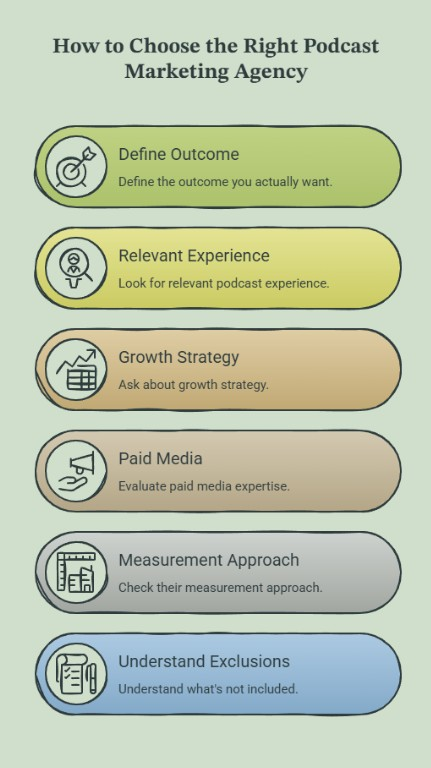
Define the Outcome You Actually Want
Decide whether your priority is brand awareness, demand generation, stronger relationships with prospects, thought leadership, or qualified sales opportunities (in the case of B2B podcasts).
Your agency should then translate that outcome into appropriate KPIs. A show designed to influence enterprise buyers, for example, should not be judged solely by whether it reaches the Apple charts.
Look for Relevant Podcast Experience (Case Studies, Testimonials, and Reviews)
Look for results with companies, formats, and audiences comparable to yours.
Ask agencies to explain exactly what they contributed to each result. You can always ask for case studies privately if detailed results aren’t public.
Review testimonials and third-party reviews as well, and speak directly with a previous client when the engagement is substantial.
Review Their Distribution Capabilities (If Required)
If you want the agency to manage content publishing, confirm exactly which platforms it handles and who owns the accounts and RSS feed.
Don’t assume that publishing through one host automatically handles every destination. Spotify states that shows hosted there are automatically available on Spotify, but creators must separately submit them to platforms like Apple Podcasts and Amazon Music.
Your agreement should specify who manages submission, metadata, troubleshooting, and platform access.
Ask About Growth Strategy
Ask how the agency expects to generate growth. A credible answer should connect your target audience to specific acquisition channels, experiments, and milestones.
For B2B podcasts, we recommend asking what the agency would test in the first 90 days and how it would distinguish relevant listeners from cheap traffic. The strategy should evolve as the team learns which topics, channels, and creative generate meaningful response.
Evaluate Paid Media Expertise
If paid promotion is within scope, ask who controls targeting, creative testing, budget allocation, and attribution.
Look for experience reaching the audience you actually sell to. Also establish whether media spend is included in the agency fee or billed separately.
Check Their Measurement Approach
Ask to see a sample report before signing. It should explain what happened and what the agency plans to change.
Platform definitions matter. Apple, for example, counts a listener as engaged if they consume at least 20 minutes or 40% of an episode.
Google Analytics can complement podcast-platform data by helping you understand the customer journey on your website and evaluate marketing ROI.
For a B2B show, reporting should ultimately connect listening activity to outcomes such as qualified site traffic, inquiries, opportunities, and revenue, where attribution is possible.
Understand What's Not Included
Finally, get the exclusions in writing. A podcast marketing agency may market the show without handling production, guest outreach, studio recording, paid-media spend, website development, or creative revisions.
Ask for a clear scope that outlines deliverables, ownership, approval responsibilities, any additional fees, and cancellation terms. This prevents a common mismatch: assuming you have hired an end-to-end partner when the agency is responsible for only one part of the podcast workflow.
Work with Content Allies to Grow Your B2B Podcast
Don’t look at podcast marketing as a way to get more downloads and views. Use it to build a repeatable system that connects the right guests, topics, content assets, distribution, and promotion to measurable audience growth and business outcomes. That last part is super important for B2B podcasts.
Content Allies is a full-service production and marketing firm that helps companies produce and market B2B podcasts.
From strategizing episode topics to arranging guests to promoting the podcast with paid advertising, we provide an end-to-end solution. This allows us to keep branding, podcast content, and promotional materials cohesive.
If you want to turn your B2B podcast show into a more measurable growth channel, speak with a Content Allies podcast expert.
FAQ
How much do podcast marketing services cost?
Podcast marketing services can cost $1,000 to $10,000+ per month, depending on the scope of service. Specific services like content repurposing or podcast ads may cost less than bundled promotion, PR, and analytics.
Should I hire a podcast marketing agency or handle marketing in-house?
Hire a podcast marketing agency when you need specialized expertise, established promotion systems, or additional capacity. Handle podcast marketing in-house when your team has the required skills, time, and tools.
Can podcast marketing agencies also handle production?
Podcast marketing agencies can handle production when they offer full-service podcast management. Production services may include recording support, audio editing, video editing, show notes, artwork, publishing, and distribution. Some agencies specialize only in promotion, so confirm whether production support is included.
What is the best way to market a podcast?
The best ways to promote your podcast are through search, social media, email, video clips, guest audiences, and partnerships. Create reusable content from every episode and optimize titles and descriptions for discovery. Consistent publishing and targeted distribution help turn individual episodes into sustained audience growth.
What metrics to measure podcast marketing performance?
The metrics may vary depending on the podcast's end goal. Generally, metrics such as downloads, unique listeners, follower growth, episode completion rates, audience retention, website traffic, social engagement, email sign-ups, leads, and conversions can indicate whether marketing efforts are paying off.
How long does podcast marketing take to show results?
Podcast marketing can show early engagement results within 1-3 months, while sustained audience and organic growth often requires 3-6 months or longer. Paid campaigns and collaborations may speed up the process.