
B2B Podcast Best Practices That Boost Authority and Lead Quality
More than 40% of Americans aged 12 and older say they’ve listened to a podcast in the past month, a massive jump from just 12% back in 2013. That explosive growth shows that podcasts aren’t just a niche hobby anymore.
For B2B business leaders, this means an opportunity.
A well-produced podcast can reach engaged listeners, build authority, and attract high‑intent potential clients.
But here’s the problem: many B2B podcasts end up feeling dry, unfocused, and weak on conversion. If you want a real lead generation podcasting engine, you need more than a microphone.
In this article, we’ll walk you through a practical, repeatable system, from strategic guest selection to smart call-to-action placement, that turns a podcast into a trusted channel within your broader content marketing strategy.
Along the way, you’ll see how partnering with Content Allies can make the difference between a hobby show and a lead‑driving asset.
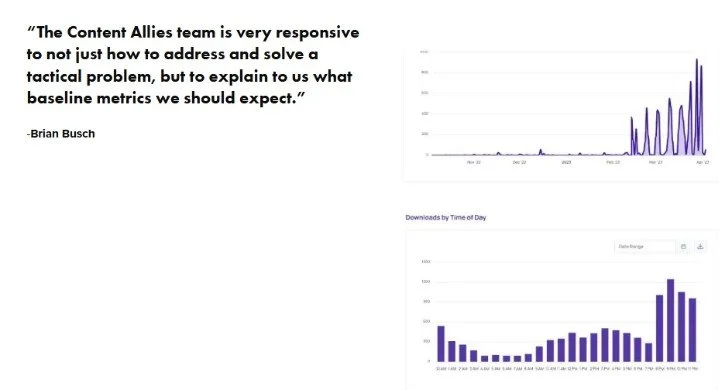
Side note: It’s how we helped the Disruptive Innovators podcast grow, too. Here’s their testimony:
What Is B2B Podcast Production?
B2B podcast production is the end-to-end process of creating a podcast specifically for business audiences, usually with the goal of building thought leadership, generating leads, and creating long-form content that fits into a larger content marketing strategy.
A full B2B podcast production workflow typically includes:
Strategic planning: defining goals, audience, and content pillars
Guest booking and prep: finding subject matter experts who’ll resonate with your audience
Recording: handling equipment, hosting, and delivery
Editing and sound design: delivering clean, professional audio
Publishing and promotion: uploading to platforms, writing detailed episode descriptions, and distributing through social and email
Some companies handle this all in-house. But more often, brands turn to B2B podcast services like Content Allies to save time and scale results, especially when they want founder-led podcasts or executive-driven content without pulling bandwidth from internal teams.
Here’s a YouTube video that talks a bit more about building a B2B podcast:
The Case for B2B Podcast Best Practices
If you’re serious about building a strong B2B content marketing strategy, consistent, high-quality podcasts should be near the top of your playbook.
Podcasts give you something most formats don’t, which is intimacy, trust, and the chance to go deep. Rather than hard-to-read blog posts (most of which are outsourced to freelancers anyway), you’re offering long‑form content with real conversations, expert insights, and nuanced ideas.
Take it from us:
The deep understanding you demonstrate on a podcast builds authority much faster than traditional blog posts or whitepapers.
Right now, the podcast boom makes this especially powerful. Globally, there are more than 584 million podcast listeners in 2025, which shows how massive the audience has become. And for B2B, that matters, partly because many of those listeners are decision‑makers, professionals, and leaders who appreciate thoughtful content over clickbait.
That combination of long‑form, meaningful content and a growing, engaged audience can be truly powerful. Done right, a lead generation podcasting program becomes a core pillar of your funnel marketing. It helps you:
Build authority.
Nurture relationships.
Attract potential clients who pay attention because they want valuable, actionable ideas.
But if you treat podcasting as a side‑project or random experiment, you’ll waste time and dilute your brand. Without a repeatable B2B podcast strategy and a clear focus on measurable business goals, episodes risk sounding like watered‑down blog posts read aloud and underperform. What you need is a system that means every episode drives toward authority building and lead quality.
That’s exactly what we’ll lay out in this article: a practical, step‑by‑step framework to turn your podcast into a high‑impact, lead‑driving asset.
8 B2B Podcast Best Practices to Follow
If you want your podcast to boost authority and generate real leads, you need a system. These eight best practices will help you run a B2B podcast that connects with your audience and moves you closer to your goals.
1. Overview of the Framework: From Prep to Post
A successful B2B podcast is built on a solid system. From the first brainstorm to the last piece of repurposed content, every step plays a role in authority building and lead generation.
Here’s how that might look:
Pre-production research: Know your audience and what they care about.
Guest selection and positioning: Choose voices that bring credibility and insight.
Episode structure and CTA: Keep it engaging and guide listeners toward action.
Execution and quality: Sound polished and professional.
Repurposing and authority signals: Get more mileage from each episode.
Lead tracking and iteration: Measure what matters and improve over time.
When you follow this kind of repeatable framework, you avoid randomness. That’s important because a scattered approach leads to weak episodes, wasted effort, and missed opportunities.
A system, on the other hand, builds trust, delivers consistency, and makes your podcast a meaningful part of your B2B content marketing strategy.
2. Pre‑Production Research: The Foundation of Quality
If you want your podcast to hit home with decision‑makers, you’ve got to start with what they care about, instead of solely focusing on what you feel like talking about. Solid pre‑production research helps make sure your podcast content is relevant.
Start with topic research. Check out recent industry reports, trending discussions on LinkedIn or Reddit, and headlines your audience is already paying attention to. The goal is to fill your episodes with timely, useful insights.
Next, get clear on audience profiling. Are you targeting CMOs, procurement leaders, or IT directors? What keeps them up at night? What kind of language do they use when they talk about those challenges?
Don’t forget keyword strategy. Including relevant keywords in your episode titles, show notes, and landing pages helps your content show up where it matters. It also supports podcast SEO, discoverability, and funnel marketing alignment.
That’s exactly what we helped Gusto Technologies do. Before launching their podcast for Gusto Embedded, our team dug deep into industry conversations, audience pain-points, and the questions SMB-focused SaaS leaders were already asking online.
That pre-production research shaped everything, from the show’s name and positioning to the episode themes that would resonate with decision-makers in vertical SaaS. Because of that foundation, the podcast didn’t just land; it ranked.
The show hit Top 10 SEO positions for multiple keywords, drove 10,000+ downloads in 15 episodes, and became a genuine demand driver at the top of their funnel.
To guide your prep, try this simple template:
Problem Statement: What issue are we helping solve?
Key Questions: What will listeners learn or take away?
Why It Matters: Why this topic right now?
You can use tools like LinkedIn polls, audience surveys, social listening platforms, or competitor podcast audits to gather input and test ideas. Social listening tools especially help you spot trending pain‑points or questions your target audience is discussing online.
3. Thoughtful Guest Selection and Expert Positioning
Your podcast guest is part of the “brand” of your episode, and picking the right person to interview can make or break your episode’s authority, reach, and lead‑generation potential. That’s why guest selection and positioning matter.
What to look for in a guest
Recognized expertise. Think about industry leaders, analysts, or well‑regarded peers with real credibility.
Topic and audience relevance. You want someone whose experience and story align with what your listeners care about (e.g., CMOs, IT directors, procurement heads).
Practical insight from someone willing to share concrete, actionable ideas rather than generic marketing speak.
A good communicator with a natural voice. Polish helps, but authenticity matters even more.
When you position a guest as “an expert helping solve X for people like you,” you build trust. It becomes a powerful authority-building move, rather than just a branded promo.
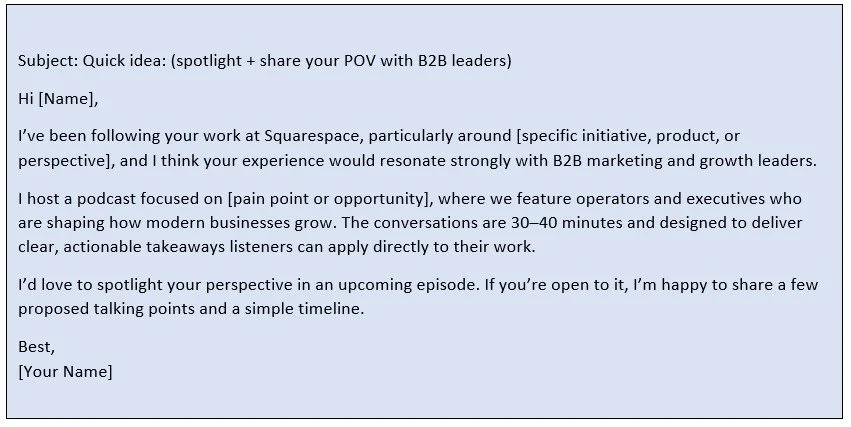
Outreach matters. Make it simple and value‑driven.
Here’s a template you can use when reaching out to prospective guests:
If you don’t have bandwidth, agencies like Content Allies can help with guest sourcing, outreach templates, and scheduling, so you get quality experts without the hassle.
We can also help you leverage those guest interviews to expand reach, credibility, and ROI.
4. Episode Structure & Strategic CTA Placement
A well-structured podcast episode keeps listeners hooked, builds trust, and makes it easy for them to take the next step. Without structure, even great conversations can wander, and your podcast ends up feeling like just another rambling blog post read aloud.
Here’s a proven episode flow that balances value and engagement, while setting up smart lead generation moments:
0:00–1:00 — Hook & promise: Why should the listener care? Set expectations.
1:00–3:00 — Guest intro: Brief, but high-impact. Emphasize credibility and relevance.
3:00–15:00 — Main conversation: Focus on insights, personal stories, and unique angles.
15:00–20:00 — Concrete takeaways: Frameworks, how-tos, or practical strategies.
20:00–25:00 — Recap: Reinforce top lessons. This is great for note-takers and memory.
25:00–30:00 — Soft CTA: Invite them to learn more with no hard sell.
Outro — Tease the next episode and encourage social sharing or reviews.
When you do include calls to action, make sure they come after you’ve delivered value. Position them like: “If you found this helpful and want to dive deeper, check out…” instead of “Now go buy our thing.”
Effective CTAs might include:
A downloadable framework
A free strategy call
A gated case study
Subscription to your B2B content marketing newsletter
And don’t forget your episode description. That’s prime SEO real estate, so include relevant keywords, guest credentials, time stamps, and any resources mentioned.
5. Execution and Production Quality: Make It Sound Professional
In a B2B world, how your podcast sounds can make or break your credibility. If audio is scratchy, chopped up, or just plain awkward, even a brilliant guest or top-tier insight can fall flat. That’s why execution matters a ton.
According to Edison Research, monthly podcast consumers are significantly more likely to be college‑educated and have higher incomes than the average. For a B2B show targeting decision‑makers, that means your audience expects professionalism and will steer clear of amateurish audio or sloppy editing.
Here are the basics to keep every episode polished:
Use a decent microphone in a quiet, controlled environment. Even a simple pop filter and modest acoustics can make a noticeable difference.
Do clean editing to remove “ums”, awkward pauses, or background noise, smooth out volume levels, and tighten pacing so the flow feels natural.
Prep both host and guest ahead of time. Send talking points, clarify the flow, and make them comfortable. Good chemistry and clarity make the conversation feel real and trustworthy.
Keep consistency: Similar sound quality, style, and episode format help build brand professionalism and listener trust episode after episode.
Strong production quality reinforces authority, shows respect to your audience, and increases the odds that listeners stay, engage, and turn into potential clients.
6. Post‑Production and Repurposing to Stretch Every Episode’s Value
Publishing your podcast is just the beginning. If you want a serious return on investment from your B2B podcast, it pays to treat each episode as a content engine rather than a single asset. Repurposing turns one long‑form conversation into dozens of potential touch points across your broader marketing ecosystem.
That’s exactly what we did for Meta.
Our team transformed every episode into social campaigns, thought-leadership articles, internal decks, and co-marketing assets their guests could share across their own channels. Partners like VidMob and Boston Consulting Group promoted their episodes using the materials we created, extending reach far beyond Meta’s native audience.
Here are just a couple of social media posts we created for them:
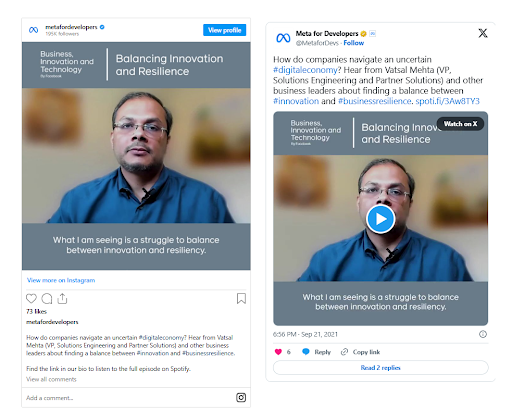
The results speak for themselves: ~170,000 downloads in the first six months, a 7× performance lift over their initial target, and steady engagement from leaders at Salesforce, LinkedIn, SAP, BCG, and more.
Here are some of the most effective ways in which you, too, can repurpose your episodes:
Short‑form audio clips or teasers. These are great for social media or previewing the full episode.
Transcripts turned into blog posts, gated PDFs, or long‑form articles. This helps with SEO, discoverability, and reaching people who prefer reading over listening.
Quote cards or infographics for social media are useful for sparking engagement, social shares, and reinforcing key insights in bite-sized form.
Video versions (if recorded visually). Upload full episodes to YouTube or other video platforms, or create short clips/highlights.
Email newsletters to your list where you share a recap or top takeaways and link to the full episode. This helps keep your audience engaged even if they don’t listen immediately.
When you repurpose consistently, episodes stay relevant longer. This can help you reach non‑listeners (people who don’t usually listen to podcasts) and meet audience members on their preferred channels.
That means bigger visibility, improved SEO, and more sustained engagement, all without needing to record a new episode right away.
If you’re running a content calendar, a repurposing process might look like this:
Day 0: publish full episode
Day 1: release teaser or short‑form clip
Day 3: publish blog post or transcript-based article
Day 5: share quote cards/infographics on social media and send newsletter
Day 7: evergreen update or repromote key takeaways
7. B2B Podcast Promotion Best Practices
Having great episodes is only half the battle. If you don’t promote what you create, your B2B podcast won’t reach the people who matter. A smart promo strategy makes sure your podcast finds decision‑makers, builds authority, and turns listeners into potential clients.
Multi‑channel promotion and distribution
Own your home base: Publish episodes on a podcast website or hub. That way, you control the environment, host detailed show notes, integrate with your wider content marketing strategy, and drive traffic back to your site.
Use social media strategically: Share episode teasers, quote cards, audiograms, or short clips on platforms where your target audience hangs out (for B2B, that’s LinkedIn, X/Twitter, YouTube, and maybe even TikTok or Instagram, depending on your niche).
Make use of email and owned audiences: Send each new episode to your newsletter list or existing contacts. Many listeners from your email list will be warmer leads, which makes them more receptive to deeper content and more likely to convert.
You can even use OOH ads. One of our clients, Disruptive Innovations, placed their podcast ad on the Nasdaq billboard in Times Square:

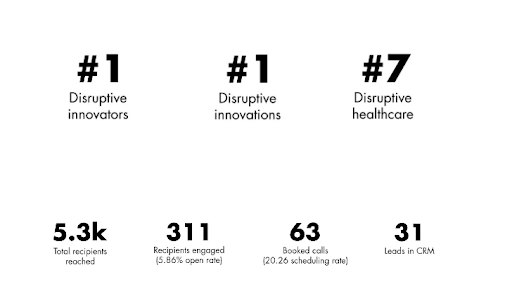
As a side note, we also helped them rank #1 for branded terms and gain considerably more clients:
Collaborations, guest networks, and influencer‑style promotion
Cross‑promote with your guests. When a guest participates, encourage them to share the episode with their networks. That taps into a new audience segment beyond your own.
Appear on other podcasts (guesting) or collaborate with complementary shows/creators. These are great ways to reach similar audiences and build credibility.
Use influencer or industry thought‑leader amplification. Partnering with people whose following overlaps with your ideal listeners can help your podcast reach a highly relevant audience.
If you're trying to grow your audience with real decision-makers, check out our guide to LinkedIn strategies for B2B podcast audience growth.
Test, track, and tweak
Treat your podcast like any other channel. Build a simple analytics approach where you track which distribution channel or format (audiogram, blog‑post, email, social post) drove the most listens, subscriptions, or leads.
Experiment with different formats & messages: sometimes a short social video clip, sometimes a LinkedIn article linked to a full episode. See what works best for your audience.
Stick with consistency. Remember that growth rarely comes overnight. Many podcast‑marketing guides note that shows often need months of regular publishing and promotion before seeing noticeable listener growth.
Why this matters for B2B and lead generation?
Data backs this up: in a survey of over 100 businesses running B2B podcasts, effective promotion and content repurposing emerged among the top drivers of reach and engagement.
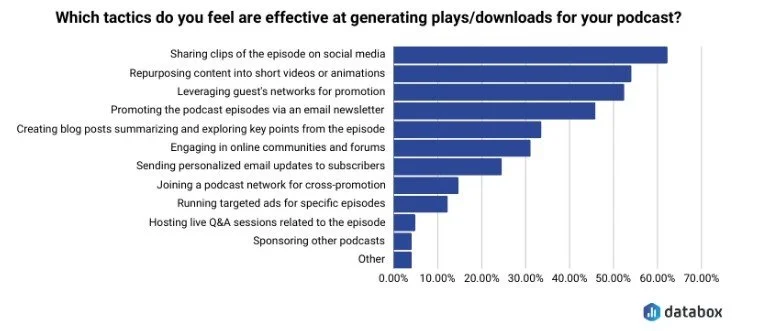
Because B2B buying decisions tend to start with research and trust-building rather than impulse, a distribution strategy that surfaces your podcast consistently across multiple touchpoints can help you stay top-of-mind when prospects are evaluating solutions.
Want to boost reach and engagement? Here’s our playbook: The Ultimate Guide to Podcast Promotion.
8. Measuring Success and Lead Quality Beyond Download Numbers
If you treat downloads as your main (or only) metric, you’re playing the results game with one hand tied behind your back. Downloads by themselves don’t show whether people actually listened, cared, or took action.
What truly matters are meaningful metrics and measurable business goals. Here are the key data points you should track for a B2B podcast:
Listener engagement and completion/listen‑through rate: Learn how much of an episode people actually consume helps show if your content is resonating.
Website/landing-page clicks from show notes: This is a direct signal that a listener was interested enough to act.
Resource downloads, demo requests, or gated content conversions: It shows real interest and intent beyond casual listening.
LinkedIn connection requests, form fills, or CRM leads tied back to podcast-driven traffic: This is essential for B2B lead generation.
Returning listeners/growth in subscribers over time: A loyal, returning audience is a good sign that you’re building trust and ongoing interest.
For B2B, integrating podcast data with your CRM or analytics stack helps turn content into pipeline. Track what “high‑intent” means for you. Maybe it’s company size, job title, or behavior (like downloading a whitepaper after listening), and build a lead‑scoring system based on that.
Also, we advise you to set up feedback loops. Survey your listeners or guests, ask for audience feedback on topics, and watch for patterns in engagement. Use those insights to iterate on episode topics, formats, and guest choices. Always optimize for conversion and not just downloads.
Tracking the right meaningful metrics lets you prove real return on podcasting in terms of influence, engagement, and potential revenue.
Mistakes to Avoid in B2B Podcast Production
Even solid B2B podcast strategies can get derailed by small missteps. These are the subtle mistakes that can quietly erode quality, listener trust, and lead-gen potential.
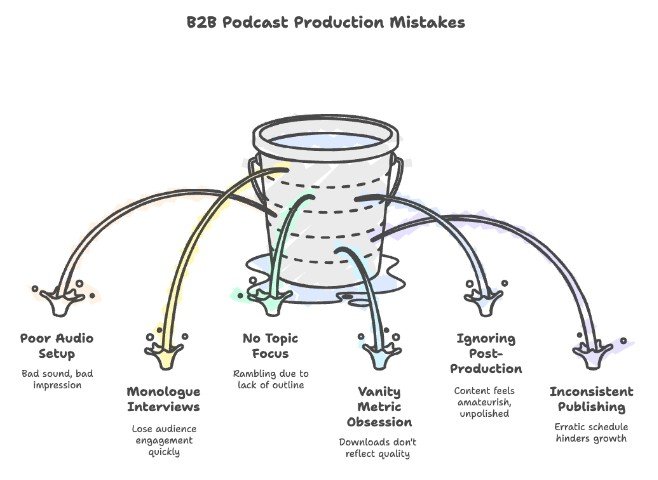
Poor Audio Setup (Even “Just Once”)
Bad sound means a bad impression on your audience.
Listeners might forgive it once, but repeat it, and you’re sending a signal that quality doesn’t matter to you.
Talking At, Not With
Monologues disguised as interviews are a fast way to lose your audience.
Let your guest speak, but don’t disappear as a host. Keep the energy dynamic and conversational.
Pro tip: We pulled together the best interview questions we use to spark real insight and thought leadership in Best B2B Podcast Interview Questions to Ask.
No Clear Direction or Topic Focus
If your guest or host rambles, it’s usually because there’s no outline.
Always define (in advance) the episode’s “North Star”: what’s the one thing the listener should walk away with?
Obsessing Over Vanity Metrics
Downloads are easy to track, but they don’t reflect lead quality or authority building.
Focus instead on metrics that reflect meaningful outcomes like listener behavior, inbound engagement, and measurable actions taken.
Ignoring Post-Production Polish
Leaving in filler words, awkward transitions, or dead air makes even great content feel amateur.
Editing matters more than you think, and it’s what gives your podcast that professional edge.
Inconsistent Publishing
B2B podcast success often compounds over time, but not if your schedule is erratic.
Set a cadence you can sustain, even if that’s just 2x/month.
Avoid these traps, and you’ll stand out by sounding better and building trust that drives real business value.
Turn Your Podcast into a Lead Engine with Content Allies
If you're serious about building authority and driving high-intent leads, these B2B podcast best practices are the system behind podcast success. From thoughtful guest selection to smart repurposing and measurable outcomes, this framework helps you turn long-form content into a real growth lever inside your larger marketing ecosystem.
But doing it all in-house can stretch your team thin. This is especially true when you’re juggling content planning, lead gen, and broader marketing success metrics.
That’s where Content Allies comes in.
We help enterprise brands create founder-led podcasts that drive measurable outcomes. From guest sourcing and episode production to repurposing and results tracking, we help you launch a podcast that builds authority and fills your funnel.
Ready to turn your podcast into a lead-generation asset? Visit Content Allies’ podcasting page to learn how we help enterprise teams build shows that engage decision-makers and influence revenue.
FAQs
1. What makes a good B2B podcast guest for lead generation?
The best guests can offer actionable tips and speak directly to your audience’s challenges. Prioritize guests who bring a mix of real-world experience, subject-matter authority, and alignment with your relationship-building efforts.
2. How often should I publish B2B podcast episodes for maximum impact?
You don’t need a special degree in broadcasting to get this right. It’s all about quality over quantity. A steady cadence (like 2x/ month) keeps episode consumption up and makes your podcast a dependable part of your audience’s routine.
3. How can I measure whether my podcast is generating high-intent leads, not just downloads?
Look beyond vanity metrics. Track downloads from podcast calls to action, social shares, and Google Analytics data on traffic to your landing pages. Map your podcast metrics to sales-related key metrics like demo requests, lead quality, and terms of revenue influence to see what’s actually moving the needle.
4. Is it better to repurpose podcast content or produce fresh content for other channels?
Repurposing gives you both long-form and short-form content from the same episode. This not only extends reach but also fuels your future content ideas while engaging a broader audience across different platforms.
5. What’s the ideal length for a B2B podcast episode targeting decision-makers?
Decision-makers tend to prefer tight, valuable content. Aim for 20–30 minutes. This is long enough to go deep, short enough to respect time. High episode consumption is a sign you're nailing that balance.
6. Should I transcribe podcast episodes, and if so, how should I use the transcript?
Definitely. Transcripts fuel SEO, improve accessibility, and help you create more short-form content. They also surface audience interests, giving you suggestions for improvement and ideas for your next episode or spin-off assets.
7. How can I align my podcast with SMART Goals and track real audience feedback?
Start by setting SMART Goals (Specific, Measurable, Achievable, Relevant, Time-bound) for your podcast, like “increase demo requests by 20% in Q1 from podcast-driven traffic.” Then use tools like Apple Podcast Connect to track engagement data, and gather direct insights from your audience via surveys to understand what’s working, what’s not, and what topics they want more of.
8. How can Content Allies help me find and book the right guests for my B2B podcast?
We handle guest research, outreach, and booking based on your ICP, campaign goals, and ideal key metrics. You get guests who not only sound great but drive meaningful engagement and pipeline movement.
9. Does Content Allies handle full production (recording, editing, publishing) or just advisory services?
We’re full-service. From sound quality to scripting to Google Analytics tracking, we manage every detail so your team can focus on results. We prioritize metrics over vanity ones, so every episode is optimized to support your measurable business goals.
10. Can Content Allies help repurpose episodes into other formats (blogs, social content, gated assets) to maximize lead generation?
Absolutely. We specialize in repurposing audio into long-form and short-form content that supports your broad audience growth metrics and fuels ongoing relationship-building efforts. That includes everything from blog posts and quote cards to email recaps and whitepapers.