
CEO Podcast: Why Founders and Executives Are Launching Shows in 2026
A few years ago, hearing a CEO spend two hours talking publicly about leadership mistakes, relationships, mental health, or what really happens behind the scenes of building a company felt unusual.
But now, it feels much less surprising.
Take Steven Bartlett’s The Diary of a CEO as an example. The show started with conversations about entrepreneurship and business, then expanded into leadership, health, psychology, relationships, science, and personal growth. In 2025, Spotify ranked it as the second most popular podcast globally.
Its success shows how much influence an executive can build when conversations feel more open, thoughtful, and personal than standard corporate communication.
Other business leaders have clearly taken notice. More founders and executives are using podcasts to share expertise, develop a public voice, and build stronger relationships with the people they want to reach.
And at Content Allies, we’ve seen that interest firsthand, with executives across different industries exploring ideas for their own leadership podcasts.
So why are more CEOs considering podcasts in 2026, and when does launching one actually make sense? Well, that’s what we’ll discuss here.
Why CEO, Executive, and Founder Podcasts Are Growing in Popularity
CEO and founder podcasts are becoming popular for two reasons.
First, podcast consumption, in general, continues to grow. Just over half of U.S. adults say they’ve listened to a podcast, according to Pew Research.
Second, audiences want to hear directly from the people behind businesses. In one survey, 36% of podcast listeners said they like to hear thought leaders and experts.
But let’s dive deeper into why leaders and their companies are choosing CEO podcasts:

1. Executives Are Becoming Media Brands
A CEO's public identity has traditionally been closely connected to the company they lead. Today, executives can build their own following through LinkedIn, YouTube, newsletters, social media, interviews, and podcasts. Over time, that presence can turn the executive into a media brand of their own.
A podcast gives executives space to build influence that benefits them personally and the business they lead.
Instead of reducing an idea to a short corporate statement, they can:
Explain their leadership philosophy
Reflect on mistakes and lessons learned
Discuss organizational culture
Explore subjects like artificial intelligence (AI) or hybrid work
Have genuine conversations with other leaders and experts
Over time, these discussions can strengthen the executive's personal brand and establish a recognizable point of view.
2. Companies Want More Direct Audience Relationships
Brands have spent years building visibility on platforms they don’t control. A company can accumulate thousands of social media followers and still be affected by algorithm changes, declining organic reach, changing ad costs, or the rise and fall of individual platforms.
A podcast gives businesses another way to build a more direct relationship with their audience. Listeners can subscribe to the show, return for future episodes, watch it on YouTube, join an email list, visit company resources, or follow the CEO across other channels.
This means the relationship does not have to restart with every ad campaign or social post. Over time, the company can build a group of people who actively choose to keep hearing from it.
3. One Podcast Can Power Multiple Content Channels
Another reason CEO podcasts are attractive is that one podcast recording can power an entire content system.
A single 60-minute conversation can become:
A full podcast episode
A YouTube video
Short-form video clips
LinkedIn posts and quotes
An article or newsletter
Executive commentary
Internal communication content
You can also turn particularly strong ideas into guides, digital marketing resources, sales enablement content, or follow-up discussions.
In other words, an executive podcast unlocks a consistent stream of content for both the brand and the executive to share through their accounts. The sheer volume of content also creates more opportunities to interact with audiences.
How Can a CEO Podcast Benefit Your Business?
A CEO podcast can create value far beyond the host’s public profile. For the company, the strongest benefits can show up in credibility, demand generation, business relationships, recruiting, and wider market visibility.
For B2B companies in particular, these outcomes can make a podcast much more than another content channel.

1. Strengthen Brand Authority
A strong CEO podcast gives the company a consistent body of ideas around the subjects it knows well. When your CEO hosts thoughtful conversations with customers, researchers, founders, or industry leaders, the business becomes associated with those discussions too.
This can be valuable for newer companies competing against much more familiar names. The 2025 Edelman and LinkedIn B2B Thought Leadership Impact Report found that 53% of both hidden and target decision-makers agreed that brand recognition matters less when a company produces high-quality thought leadership.
For a startup or challenger brand, a credible executive podcast can give potential buyers more reasons to take the company seriously before it has decades of name recognition behind it.
2. Support Sales and Demand Generation
In our experience producing and marketing B2B podcasts, we’ve seen executive-led shows create valuable opportunities for sales and account-based marketing (ABM). A podcast gives your team a natural reason to start conversations around shared expertise rather than leading with a product pitch.
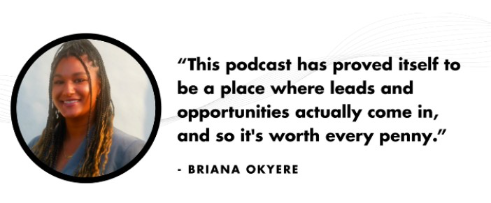
Tonkean, a business process management software company, worked with our team at Content Allies to launch Modern Business Operations. The goal was to reach business leaders and strengthen Tonkean’s position as a credible enterprise company.
The podcast outreach reached 6.2K recipients, generated 93 booked calls, and added 25 leads to the CRM. The show also reached the top of its Spotify category within six months, while unique listeners grew 174.36% in a single quarter.
This matters in B2B, where a prospect may follow your CEO, watch clips, listen to several episodes, and read company content long before they are ready to speak with sales. A podcast gives them repeated opportunities to hear how your team thinks and develop familiarity with the people behind the business.
3. Build Relationships With Hard-to-Reach Executives
Getting 45 minutes on a senior executive’s calendar can be difficult when you are simply asking for a meeting.
But a podcast invitation changes the conversation. You are giving the guest a platform to discuss their experience, ideas, or leadership journey and content they can share with their own audience afterward.
That can open doors to senior executives, potential partners, investors, and customers who may be difficult to reach through traditional outreach.
For founders and business owners, the guest network can eventually become one of the most valuable parts of the show. A good interview can start a relationship that continues long after the episode goes live.
4. Attract the Right Talent
Potential employees research the people running a company as much as the company itself.
A CEO or founder podcast can give candidates a clearer view of:
Leadership style
Company values
Communication
Workplace culture
How senior leaders approach difficult decisions
Conversations about empathy, feedback, management, generational differences, or personal growth can reveal far more about leadership than a standard careers page.
This helps candidates decide if the company feels like the right fit before they apply. It can also help your business attract people who connect with the way its leadership thinks and communicates.
5. Increase Investor and Industry Visibility
Regular podcasting also gives investors, analysts, journalists, partners, and other industry stakeholders more opportunities to understand the business.
Your CEO can discuss changes in the market, customer needs, product strategy, company priorities, or broader industry questions in far more depth than a short quote or social post allows.
These conversations become more useful when clips, articles, interviews, and commentary reach people beyond the podcast feed.
A CEO podcast cannot replace formal investor communication, but it can keep the company and its leadership more visible between major announcements. Over time, it can also make the CEO a more familiar voice within the industry.
What Are the Different Types of CEO Podcasts?
CEO podcasts can take several formats depending on the goals, audience, and available time. Some focus on interviews and networking, while others are designed primarily to showcase the executive's own expertise and perspective.
Common formats include:
Founder-Led Thought Leadership Shows
These shows center on the founder's perspective on specific business or industry topics. Episodes may include commentary, reflections, case studies, or conversations that reinforce the executive's personal brand and establish them as a credible voice in their market.
My First Million is a relevant example of a founder-led podcast in which Shaan Puri and Sam Parr, both entrepreneurs, discuss business ideas.

Industry Conversation Podcasts
These focus on developments within a particular sector. Guests may include analysts, operators, researchers, or subject matter experts who can add different perspectives on the same market.
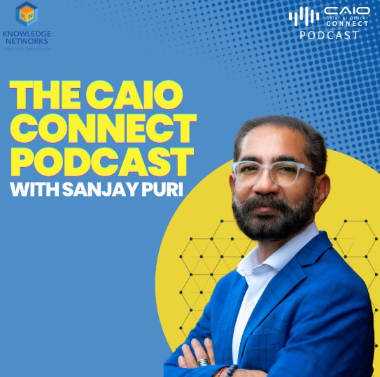
For instance, the CAIO AI Leadership Podcast with Sanjay Puri, which Content Allies helps produce, focuses on developments in AI and the challenges AI leaders face. It blends industry insights and leadership experiences in a conversational format.
Executive Roundtable Podcasts
Several CEOs, founders, or senior leaders discuss one issue together. This format brings together different perspectives and can be powerful for giving leaders from other industries space to share their insights and opinions.
The CEO2CEO podcast is a good example, where chief executives discuss leadership challenges with their peers.

Executive Interview Shows
The host interviews other executives, entrepreneurs, investors, or business leaders about their experience, decisions, leadership, company growth, or career lessons.
One example is Masters of Scale, hosted by LinkedIn co-founder Reid Hoffman, with discussions built around a theory of how businesses scale.
Customer Conversation Podcasts
These podcasts can focus on the customers. Leaders and experts could discuss what customers want or how they solved a specific problem. Customers could even become guests and talk about the problems they face, what they have learned, and how their industry is changing.
For B2B companies, this can strengthen existing relationships while creating useful conversations for similar prospects.
Zendesk’s Repeat Customer was one such podcast, where they took an in-depth look at how different businesses found success with a customer-centric approach.
Is a CEO Podcast Right for Your Business?
A CEO podcast can be valuable, but it works best when the format matches how your business sells, communicates, and builds trust. Some companies have a much stronger case for launching one than others.
Below, we have shared a few situations where an executive-led show can make sense.
1. Category Education Is Part of the Sale
If your company is creating a new category or challenging an established way of working, the market may first need to understand why the problem should be approached differently.
A podcast gives the CEO room to introduce new ideas, explain the company’s perspective, and bring other credible voices into the discussion. That can help shape how people understand the category and where the company fits within it.
2. Trust Plays a Major Role in Winning Business
Some industries depend heavily on reputation, expertise, and long-term relationships.
Consulting, finance, professional services, enterprise technology, and real estate are good examples. In these sectors, buyers may want to understand the people behind the company before they feel comfortable entering a serious commercial conversation.
A podcast gives executives more room to show how they communicate, approach problems, and engage with people in their field.
3. The Buying Process Is Long and Complex
Complex B2B products rarely sell after one interaction. Buyers may spend months comparing approaches, involving several stakeholders, and building confidence in potential vendors.
A CEO podcast can support that process with discussions around industry challenges, customer concerns, decision-making, and the questions prospects already raise during sales conversations.
If your deals require a long period of consideration before buyers are ready to move forward, a podcast can give them useful material throughout that process.
4. The CEO Has Enough to Say
A podcast needs more than a visible executive. The CEO also needs enough experience, ideas, and perspective to sustain meaningful conversations over time.
This could come from years in the industry, strong opinions about where the market is heading, lessons from building the company, or access to people the audience wants to hear from.
If there is a clear set of topics the CEO can return to without repeating the same talking points, the show has a much stronger foundation.
Why CEO Podcasts Are Hard to Produce Consistently
Launching a CEO podcast is one thing. Keeping it running consistently is usually the harder part.
Executives already have demanding schedules, so recording competes with board meetings, travel, customer calls, hiring, fundraising, and day-to-day leadership responsibilities. Even when the CEO is committed to the show, finding a reliable recording cadence can quickly become a bottleneck.
The recording itself is only one part of the workload. Each episode may involve:
Topic planning
Guest research and outreach
Scheduling and coordination
Interview preparation
Recording and editing
Show notes and thumbnails
Publishing
Promotion and distribution
Video-first shows add another layer of complexity, with camera setup, lighting, multicamera editing, short-form clips, and YouTube optimization all needing attention.
Editorial quality also needs attention. A CEO podcast can become repetitive if every episode returns to the same leadership themes. It can also lose credibility if conversations regularly turn into product promotion.
Someone needs to keep the topic mix fresh, prepare useful angles for each guest, and make sure the show continues to give listeners a reason to return.
This is where working with a podcast production company can make the process easier.
A reliable podcast production agency like ours can handle the planning, guest scheduling, scripting, setup, recording, editing, and publishing. This leaves the CEO with more time to focus on preparation and the conversation itself.
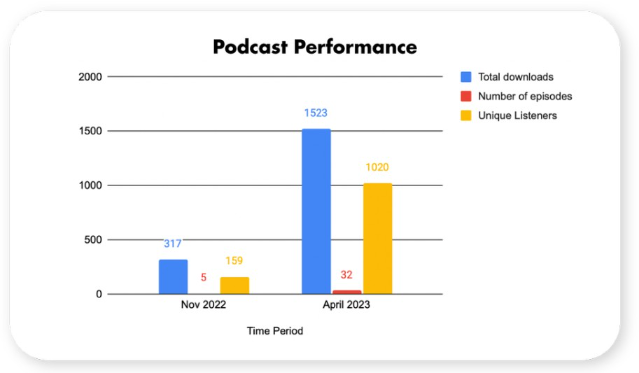
When MSH, a recruitment firm, wanted to start a podcast with their CEO, Oz Rashid, all they had was a name. Our team at Content Allies stepped in and took over key tasks like guest scheduling, coordination, and social media marketing to reduce the CEO's and MSH team's time and effort. The podcast maintained a consistent episode cadence and saw increased downloads.
How to Start a CEO, Founder, or Executive Podcast
A successful CEO podcast usually starts with strategy. Before recording the first episode, the company should be clear on what the show is meant to achieve, who it is for, and how it fits into the broader content and business strategy.
This is how we suggest approaching it:
1. Define the Business Goal
The podcast's goal will define everything: format, guests, topics, and even where the podcast gets shared.
The goal might be to:
Build executive thought leadership
Strengthen the CEO's personal brand
Deepen customer relationships
A podcast designed for customer acquisition will probably look different from one built around employer branding or executive visibility.
Avoid using vague goals such as ‘build awareness’ without defining what useful business outcomes that awareness should support.
2. Define the Audience
Design a CEO podcast for a specific group. Identify the people you want to reach, such as startup founders, enterprise buyers, CEOs, finance leaders, business owners, investors, marketing executives, or prospective employees.
Go beyond job titles and consider what those people actually care about.
What challenges are they facing?
Which conversations would they make time for?
What kind of actionable advice, industry insight, or personal reflection would make them return for future episodes?
The clearer the audience, the easier it becomes to choose topics, guests, and distribution channels.
3. Choose a Clear Editorial Position
The best executive podcasts have a recognizable point of view. Instead of creating another generic show about ‘leadership and business,’ define a narrower editorial position that gives people a reason to listen.
For example, a cybersecurity CEO might focus on how enterprise leaders manage digital risk, especially in the age of AI, when concerns about AI’s impact on digital security are growing.
A clear position helps the show build identity and keeps it from becoming a collection of unrelated interviews.
4. Choose the Right Format
Select a format that fits both the audience and the executive's personality.
Interview-led shows are a natural fit for many executives because they bring outside perspectives into the discussion while giving the host opportunities to build relationships with guests. There is audience demand for that depth too.
In fact, in a 2025 study cited by Simplecast, 63% of podcast listeners said podcasts give them access to more in-depth conversations and interviews than other media.
A solo format can work well too, particularly when the CEO has strong experiences or opinions to unpack around leadership, industry developments, or lessons from building the company.
Also, consider practical factors. A CEO with limited availability may find a 20-minute interview format easier to maintain than weekly two-hour long-form episodes.
5. Develop Repeatable Content Themes
Creating several recurring content pillars makes planning easier and gives the audience a clearer idea of what to expect. Start by developing three to four themes that connect directly to the show's editorial position.
Within those themes, episodes can explore narrower subjects. As your show launches and episodes are downloaded, watch performance for specific themes and topics. That can drive data-informed decisions on future content.
6. Build a Guest Strategy
Don’t choose guests based solely on follower counts or charisma. The guests should bring expertise, an interesting story, a distinctive viewpoint, access to an audience you want to reach, or a relationship that’s strategically valuable to the business.
Guests also don’t have to be from your industry or hold an executive position. You can create several guest categories, like customers, prospects, entrepreneurs, industry specialists, investors, academics, and other thought leaders.
7. Build the Production and Distribution Workflow
Finally, create a repeatable system for everything that happens before and after recording. Define who handles guest outreach, research, scheduling, episode preparation, recording, editing, approvals, publishing, and performance reporting. Establishing this workflow early makes it much easier to maintain a consistent release schedule.
Distribution should be part of the plan from the beginning. A single conversation can generate the full podcast episode, a YouTube video, short social media clips, LinkedIn posts, articles, and other digital marketing resources.
Again, delegating much of the production to a dedicated internal team or a specialist podcast agency can create efficiencies that improve consistency in production cadence and quality.
Launch and Grow Your CEO Podcast with Content Allies
CEO and executive podcasts may seem like a hurdle for an extremely busy leader, but the benefits such a show brings to the executive’s personal brand and the company are too good to pass up.
If you’ve been thinking about starting a podcast as a founder or executive, our experts at Content Allies can help you make it happen. As a complete B2B podcast services provider, we can handle the show’s strategy, episode planning, guest booking, production, distribution, and promotion.
We have helped B2B executives launch and grow podcasts while reducing the operational work required from the host and internal team. Many of those shows have generated booked calls, leads, and new business while helping hosts build stronger relationships with guests and industry peers.
FAQs
What should a CEO podcast be about?
A CEO podcast can cover the executive's expertise, the company they run, and topics the target audience genuinely cares about. It can feature guests like other executives, industry experts, and even customers.
How often should a founder podcast publish episodes?
We believe a weekly or every-two-weeks cadence is sensible for a leadership-led podcast. Consistency matters more than volume, so a biweekly show that reliably publishes strong conversations is usually better than attempting weekly episodes and repeatedly missing the schedule.
Can a CEO podcast generate leads?
Yes, a CEO podcast can produce leads, particularly for B2B companies with complex or relationship-driven sales. A CEO podcast can generate demand by attracting relevant prospects, inviting target accounts as guests, and building trust through long-form thought leadership.
Should an executive podcast be video or audio or both?
We recommend both audio and video for executive podcasts. Audio gives audiences the convenience of traditional podcast listening, but video improves discoverability and gives the company much more material for YouTube and social media.
Can Content Allies produce a podcast without taking up much of the CEO’s time?
Yes, the team at Content Allies can handle most pre- and post-production work, as well as the recording itself, whether in studio or remotely. We cut the actual time the CEO spends on podcasting by strategizing episodes, handling guest outreach, creating scripts for each episode, and ensuring seamless recording with the right equipment and software.
What parts of an executive podcast does Content Allies manage?
Content Allies is a full-service podcast agency, so we can handle the entire production and distribution workflow for an executive podcast. We help with show planning, guest scheduling, scripts, recording, editing, content repurposing, and podcast marketing across different channels.
Can Content Allies turn CEO podcast episodes into LinkedIn and other marketing content?
Yes, in fact, that’s one of our key strategies to get the podcast to the right audience. We carefully create short clips of key moments from the podcast and share them on LinkedIn and other relevant social platforms with relevant captions and guest tags for organic targeting and maximum visibility.