
15 Podcast Studios and Production Companies in Washington, DC
Searching for a podcast studio in Washington, DC usually means one of two jobs. Some teams need a soundproofed room with a camera and an engineer for a morning. Others need a partner who will plan the format, book guests, record, edit, and get each episode in front of the right listeners.
Most DC lists blend the two. We built this shortlist around a few plain tests:
Named work: Every company had to show current podcast work with named shows or clients.
DC presence/coverage: 12 of the 15 operate a studio or office inside the District. Three are remote producers with podcast production experience suited for DC organizations.
Entries are ordered by how much of a show each team can run end to end, from strategy and guests through recording, post-production, and promotion, and by how strong and checkable their named work is.
Disclaimer: Content Allies publishes this article and appears on the list and is measured against the same criteria.
How Do DC Podcast Studios and Production Companies Compare?
Narrow the list by where a team works and what you are buying: a room, a staffed session, or a finished show.
| Company | DC presence | Recording model | Named shows or clients | Published rate | Best for |
|---|---|---|---|---|---|
| Podville Media | 1819 L St NW, plus Rockville | Full-service producer with studios | ESPN shows, Special Olympics | Quoted per scope | Broadcast-grade flagship shows |
| Clean Cuts | Studio on Wisconsin Ave NW | Full-service audio house with studio | Pod Save America, The Ezra Klein Show | Quoted per scope | Political, media and narrative shows |
| Content Allies | Remote, books DC studios | Full-service B2B producer | Meta, Tonkean, MSH | Quoted per scope | Contractors and B2B firms |
| Interface Media Group | 20th St NW, near Dupont | Broadcast studio plus post-production | World Bank Group, PBS Kids, Intelsat (media work) | Quoted per scope | Live-switched video podcasts |
| Big Whig Media | Willard courtyard, Pennsylvania Ave NW | Broadcast studio plus production | Capitol Forum, American Maritime Podcast | Quoted per scope | Executives and advocacy groups |
| Voxtopica | 15th St NW | Public affairs podcast agency | Association of Old Crows, Amended! | Quoted per scope | Associations and policy messaging |
| Goat Rodeo | DC-based studio team | Narrative series producer | Lawfare, International Spy Museum | Quoted per scope | Reported limited series |
| District Productive | Capitol Hill, near Eastern Market | Studio, network and producer | Transition Lab, Stoppable | Quoted per scope | Policy talk on the Hill |
| Evergreen Podcasts | Remote, Cleveland HQ | Producer and podcast network | Big Whig Podcasts partnership | Quoted per scope | Network distribution |
| Volubility Podcasting | K St NW, Georgetown | Remote-recording producer | CGAP, Kennan Institute, National PTA | $2,000 per episode + $1,000 setup | Predictable per-episode budgets |
| Heartcast Media | DC-founded | Done-for-you B2B producer | GovCon After Hours | Quoted per scope | GovCon and B2B interviews |
| Switch and Board | Connecticut Ave NW, Dupont | Engineered studio plus editing | American Diplomat; Red, Blue, and Brady | $300/hour | Weekly interview recording |
| DCTV | Newton St NE, Brookland | Community studio with crew tiers | Nonprofit and local producers | Quoted on request | Nonprofits and first-time hosts |
| Taicoon Media | K St NW and L St NW | Staffed rooms | Not named publicly | Quoted per scope | Recurring downtown rooms |
| Podigy | Remote, no HQ published | Remote B2B producer | ASCO, Google, Warner Brothers | From $2,500/month | Fixed monthly post-production |
15 Best Washington DC Podcast Studios and Production Companies
Podville Media, Clean Cuts and Content Allies can take a DC show from concept to promotion. The middle of the list mixes broadcast facilities with specialist producers, and the final entries are rooms and remote teams for narrower jobs.
1. Podville Media
Podville pairs its own DC studios with a production team that plans, records, and edits the show.
Special Olympics recorded season seven of Inclusion Revolution Radio in Podville's DC studios, and the same piece credits Podville with ESPN shows including The Dominique Foxworth Show and SVPod.
The company is a full-service production company based in DC, working with public and private sector clients since 2017. It lists more than 9,000 production hours, more than 10 million downloads, two locations, and on-location recording for guests who cannot come in.
Modular sets let a show change its look without changing rooms, which matters for video-first series.
2. Clean Cuts
Clean Cuts brings 40 years of film, broadcast, and game audio to podcasting. Its podcast portfolio lists Pod Save America, A Great Book with Barack Obama, The Ezra Klein Show, Freakonomics and Spotify's Science Vs, along with Stand Together's An Army of Normal Folks.
The company runs its Washington studio at 4100 Wisconsin Ave NW alongside its original Baltimore facility. Rooms range from one- and two-person setups to multi-guest configurations, and Clean Cuts ships professional audio kits to remote guests so a DC host and an out-of-town guest sound matched.
Services cover producing, editing, mixing, mastering, hosting, distribution, and data analysis, with custom scoring and sound design for shows that want their own sonic identity. Clean Cuts also consults on in-house studio builds.
3. Content Allies
Content Allies produces B2B podcasts built to create relationships, pipeline, and revenue. Since it does not run a DC studio, it books a District studio that fits each client's guests and format, or records remotely, and runs everything around the session.
The clearest proof is the Meta Business Engineering podcast.
After Meta spent nearly a year trying to launch with another agency, Content Allies built the content strategy, branding and guest scheduling, and the show reached about 170,000 downloads in its first six months, beating its initial four-month target by a factor of seven. Guests came from Salesforce, LinkedIn, SAP, and Boston Consulting Group.
Services include guest outreach, host training, repurposing episodes into written and social content, paid promotion and revenue attribution reporting.
4. Interface Media Group (IMG Podcast Studio)
IMG has produced media in Washington for more than four decades, and its podcast suite plugs into that broadcast infrastructure.
The IMG Podcast Studio at 1233 20th St NW runs five Sony PTZ cameras that shoot up to 4K, a Vizrt TriCaster 2 Elite switcher and a connected broadcast control room with chyron graphics.
Shows can bring in remote guests over Zoom, Teams, or Riverside, stream live to YouTube or LinkedIn, and record ISO audio and video feeds for a later edit. Post-production happens in-house: editing, mixing, custom graphics, music, and distribution-ready exports.
IMG also offers hair, makeup, wardrobe, and custom set design.
5. Big Whig Media
Big Whig sits in the courtyard of the Willard InterContinental, half a block from the White House, and was named the OCTFME Location of the Month in July 2024.
It runs two equipped studios with views of the Capitol and the Washington Monument, plus editing suites and satellite uplinks.
Its podcast credits come through Big Whig Podcasts, an advocacy and policy channel launched with Evergreen Podcasts. Shows recorded at its Willard studios include Capitol Forum with Jack Kalavritinos, Buy Hold Sell, and the American Maritime Partnership's American Maritime Podcast.
The facility also handles talk shows, media tours, webcasts and media training.
6. Voxtopica
Voxtopica builds and runs podcasts for public affairs and non-profit teams. It is a production partner based in DC, but does not rent studio space. Its founder spent three decades working with Washington associations and think tanks, and the agency is headquartered at 1015 15th St NW.
For the Association of Old Crows, Voxtopica produces From The Crows' Nest, a show for a highly technical defense-industry audience that the client says now pays for itself. In summer 2024, Voxtopica added subscription-only episodes that double as a perk for paying members.
It also runs the Timbre Awards for public-interest audio and publishes research on how podcasts shape opinion. Services span strategy, production, distribution, outreach, and ad campaigns.
7. Goat Rodeo
Goat Rodeo designs, writes, and produces original narrative series from Washington. Its partners lean toward institutions with complex stories to tell: Lawfare's Escalation series on US-Ukraine relations, the Roosevelt Institute's Made to Fail and the International Spy Museum, which relaunched SpyCast in 2025 with Goat Rodeo as a shorter, narrative-driven show.
The team's senior producers come from public radio and specialize in sound-rich storytelling on dense topics. That background shows in the work: reported episodes released as limited-run seasons.
Narrative series take longer to make than interview shows, so plan the calendar accordingly.
8. District Productive
District Productive runs a podcast network and studio on Capitol Hill near Eastern Market, led by veteran spoken-word producer Paul Woodhull.
Its show slate includes Stoppable: True Crime Stories and Transition Lab, and an executive at Cadence13 credits the team for creative and technical work from concept to air.
The model suits organizations that want a single team for ideas, recording, editing, distribution and marketing, with a Hill address that is easy for staffers, members and advocates to reach.
District Productive also rents its studio to outside producers and incubates new series from content creators.
9. Evergreen Podcasts
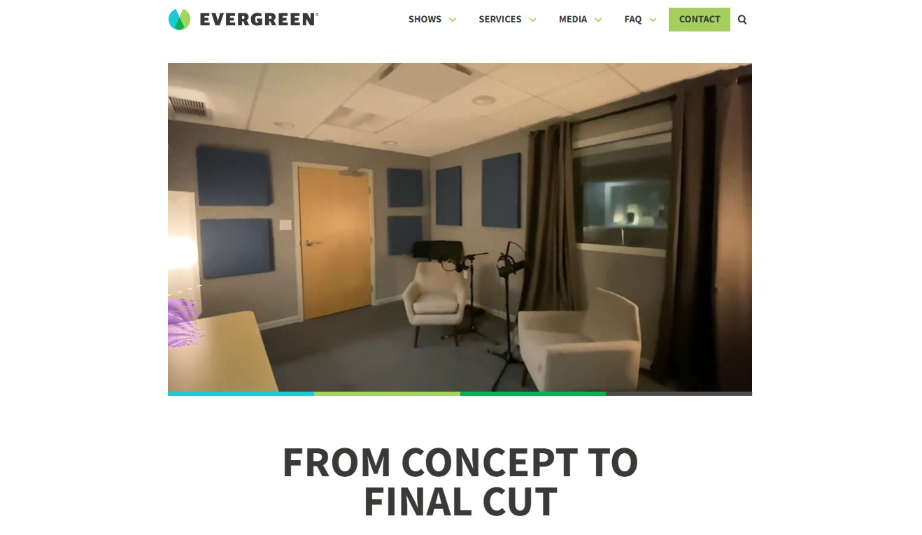
Evergreen is a Cleveland-based production company and network with a direct line into DC. In 2022, it partnered with DC-based Big Whig Media to give Washington organizations a path from recording to distribution, which became the Big Whig Podcasts channel for advocacy and policy shows.
The company reports 10,000+ hours produced since 2018 and offers branded podcast development, video podcast production, guest booking, marketing, and monetization.
It runs five studios in Cleveland but supports clients who record remotely or on location. Its network gives shows cross-promotion that a standalone agency cannot.
10. Volubility Podcasting
Volubility is a DC company at 3299 K St NW that moved to fully remote recording in 2020. It ships its own Volubles headsets to every host and guest, and an engineer joins each session to troubleshoot in real time.
Clients include CGAP's Inclusive Finance Frontiers, the Kennan Institute's Kennan X, the National PTA and the Institute for Justice.
It is also one of the few DC producers with a public price: its complete package costs $2,000 per 30-minute edited episode plus a $1,000 setup fee, covering guest prep, an hour of engineered recording, transcript-based editing and RSS setup.
Hosts approve a transcript before the edit, so only the messages they want make the final episode.
11. Heartcast Media
Heartcast is a branded podcast agency founded in the District by Molly Ruland, who moved production to a remote model during the pandemic.
As a branded podcast agency, it has produced 1,000+ episodes for 100+ B2B clients, with seven shows reaching the global top 10% and a roster that includes ACLU DC.
Its government contracting work is easy to hear. GovCon After Hours is produced by Heartcast, with episodes on set-asides, contract acquisition and AI in federal contracting.
Services cover podcast and audiobook production, human-led guest booking and website design for each show, so a client's podcast has a home that the same team maintains.
12. Switch and Board Podcast Studio
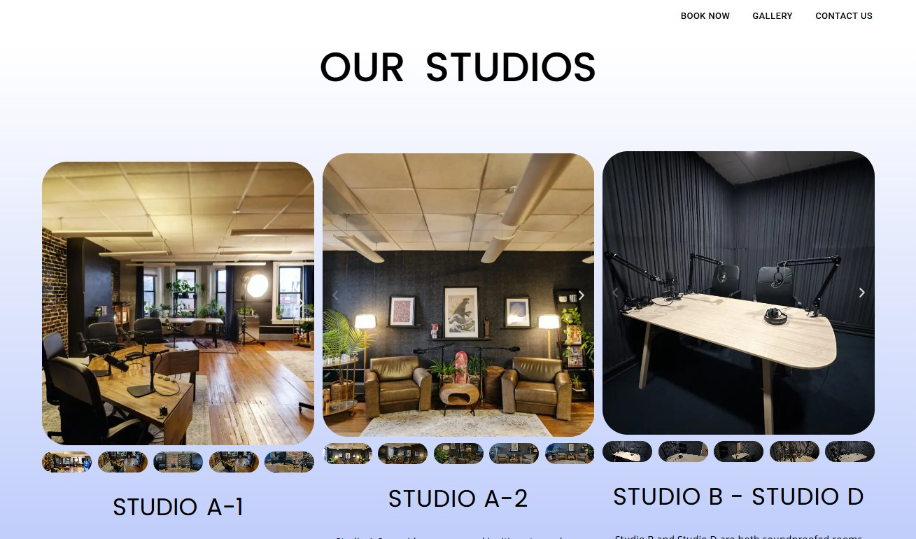
Switch and Board runs podcast-only studios at 1605 Connecticut Ave NW near Dupont Circle, with an engineer in every session. Its main room seats up to four guests around a U-shaped table for interviews, remote sessions, or video podcasts.
Engineered audio recording for up to four people is billed by the hour. A three-hour development session turns an idea into a show with an episode arc.
In client reviews, the host of American Diplomat calls it the show's recording and editing partner for two years, and the teams behind Red, Blue, and Brady and Medicare Meet-Up record there regularly.
13. DCTV
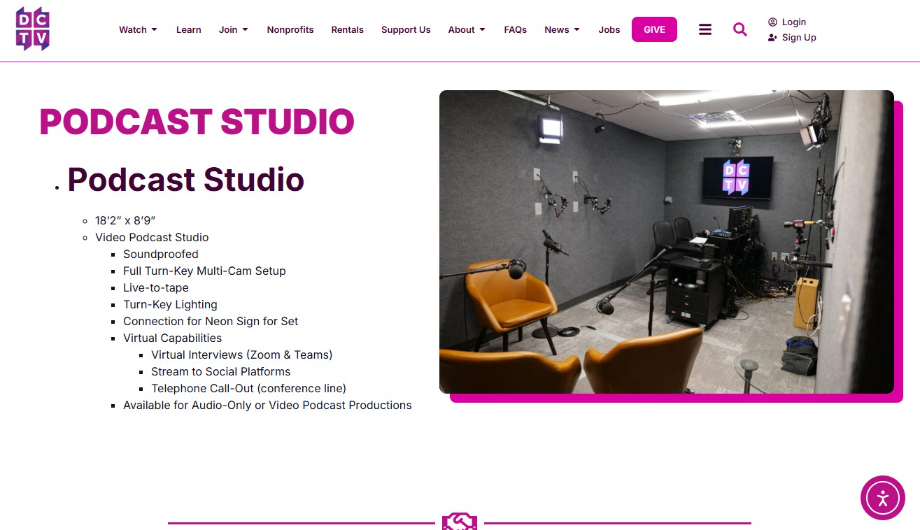
DCTV is the District's nonprofit community media center, and its podcast studio at 901 Newton St NE is one of the more flexible rooms in the city. The soundproofed space has a turnkey multi-camera setup, lighting, live-to-tape recording, Zoom and Teams interviews, and streaming to social platforms.
Rentals come in tiers:
the room alone
the room with equipment
add the control room
add an engineer
add a full crew
Hourly, half-day and full-day rates are quoted on request, and rental fees support DCTV's community media mission. Producers who are not renting can join DCTV's non-commercial membership programs, take classes, and broadcast their own shows on its channels.
14. Taicoon Media
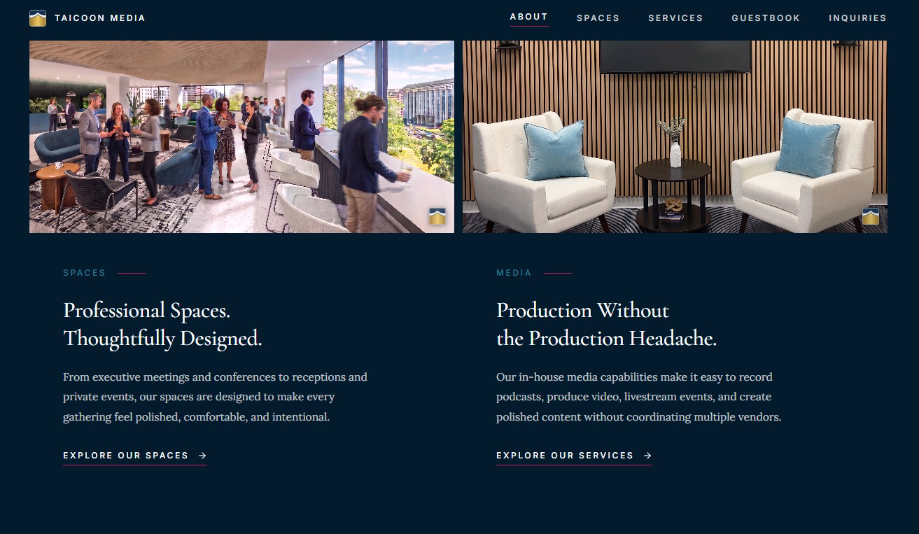
Taicoon Media operates podcast rooms at two downtown addresses: a four-person studio at 1400 K St NW and a two-person studio at 1899 L St NW, between the White House and Dupont Circle.
On-site staff manage and clean the spaces, and the company works with organizations that want recurring meeting space, ongoing media production, or both.
As a studio rental only, it is best for shows with a dedicated production team that only need space to shoot episodes.
15. Podigy
Podigy is a remote B2B producer that targets DC buyers directly. It does not run a studio or publish a headquarters.
It caters to government contractors, associations, and think tanks, and says it produces 190+ episodes a year for ASCO inside institutional review workflows. Google and Warner Brothers are also listed as clients.
Clients record in their own offices, at home, or in any local studio, then upload files. A dedicated editor delivers audio, video, SEO clips, vertical clips and thumbnails within five business days, and nothing publishes without client approval.
Which DC Podcast Production Companies are Best for Associations, Think Tanks, and Contractors?
Associations do best with producers that already work inside review cycles, think tanks with narrative or policy-literate teams, and contractors with B2B producers who treat guests as relationships.
Here is how the entries above map to those three buyers, based on the work each has published.
Associations and member organizations
Voxtopica's defense-industry association show is the closest match, since it was built for a narrow technical audience and earns its keep.
Volubility suits associations that want a flat price and transcript approval, and its National PTA and CGAP work shows it handles member and policy audiences. Podigy fits associations with in-house recording that need high episode volume under review workflows, as its ASCO work suggests.
Think tanks and policy groups
Goat Rodeo is the pick for a reported, limited-run series, with Lawfare and the Roosevelt Institute as reference points.
District Productive covers weekly policy talk recorded on the Hill. Big Whig Media, together with its Evergreen network partner, gives advocacy shows a downtown studio and a distribution channel at once.
Government contractors
Content Allies brings B2B experience in strategy, guest outreach, and promotion that can be valuable for contractors in DC.
Heartcast Media's GovCon After Hours is a working example of a contractor-audience show. IMG suits contractors that need a live-switched, broadcast-quality video set for executive or program updates.
How Much Does a Podcast Studio Cost in Washington, DC?
Most DC podcast studio rentals fall between $50 and $150 an hour for the room, and the number you see rarely includes an engineer, video switching or editing.
Compare what the hourly figure covers before comparing the figures themselves.
Hourly Room Rates on DC Booking Platforms
Peerspace booking data puts recording studios in Northwest DC at an average of $119 per hour, and citywide recording studios at $142 per hour on average (at the time of publishing).
Rooms listed specifically for podcasts on Tagvenue average $85 an hour, with most between $60 and $125.
Minimum bookings matter as much as the rate. Listings commonly require one to four hours, and a few production studios require full-day blocks, so a 45-minute interview can still cost a two- or three-hour minimum.
Engineer-Run Sessions at Broadcast Facilities
Broadcast facilities price differently because the control room and crew are part of the booking.
DCTV, for example, quotes five rental tiers that build from the empty room up to an engineer and full crew, while IMG and Big Whig Media scope sessions around switching, streaming and post-production.
These quotes run higher per hour but often replace a separate editor and camera operator.
Charges DC Listings Leave Out: Overtime, Building Access and Parking
Peerspace's own guidance on DC podcast rooms notes that engineers, video capture and editing are sometimes billed separately, along with remote-guest support, setup time, parking and overtime.
Downtown office buildings can add security check-in time for guests, which eats into a short booking.
Producers add their own policies too: Volubility, for instance, charges $300 an hour for episode revisions and up to $300 for same-day cancellations. Ask for a written list of extras before you book.
Do You Need a DC Podcast Production Company or Just a Studio?
Rent a studio when you already have a host, a format, an editor, and a plan to promote episodes. Hire a DC production company when nobody owns guest booking, editing or growth.
According to the CoHost State of Podcast Agencies 2026 report, 29% of agency clients spend between $5,001 and $15,000 per season, the realistic budget band for handing those jobs to a producer.
A producer typically handles format planning, guest preparation, recording, editing, distribution and, at the fuller end, promotion and reporting. Agencies are small: 76% have fewer than 10 employees, as per the CoHost report, so who does each step matters as much as the list of services.
Pre-Production: Format, Guest Booking and Compliance Review
Pre-production decides whether the show has a reason to exist. A good producer defines the audience, episode format, and guest criteria before the first recording, then prepares questions and briefs guests.
Our guide to B2B podcast content strategy covers how that planning shapes guest selection.
DC organizations should also ask how the producer handles legal, communications or member-relations review, since associations and contractors often need sign-off before an episode goes live.
Recording Options: Studio, Your Office or Shipped Remote Kits
DC producers record in three ways:
In their own studios: the producer hosts the session.
On location: the crew brings cameras and microphones to your office or a conference venue.
Remotely: the producer ships headsets or audio kits to guests and runs the session over an internet recording platform with an engineer listening in.
Pick the setup that matches where your guests are. If your host records from the office, invest in high-quality podcast microphones.
Post-Production and Distribution: Edits, Clips, Transcripts and RSS Ownership
Post-production covers editing for pacing, noise cleanup, mixing and mastering, followed by show notes, transcripts, artwork and publishing.
Federal agencies, and contractors producing shows for them, need a transcript for every audio-only episode to meet Section 508, so confirm transcripts are included and posted beside each episode.
Ask whether short clips, YouTube cuts, and written content (repurposing) are included or billed per item. Confirm in writing that your organization owns the raw files and the RSS feed, so the show can move if the relationship ends.
What Should a DC Video Podcast Studio Include?
Video podcast production in DC ranges from a single camera in a rented room to live-switched, multi-camera broadcasts with graphics.
Camera Counts and PTZ Setups
Two or three cameras cover a host and one guest; panels need one camera per speaker plus a wide shot. Pan-tilt-zoom cameras let one operator cover a table without crew in the room, which is why broadcast facilities like IMG run five of them.
Ask how many angles are recorded separately, since isolated feeds give an editor more to work with later.
Live-Switched Episodes vs Edited-After Workflows
Live switching cuts between cameras during the recording, so a near-final episode exists when the session ends. It suits livestreams, news-style shows, and tight turnarounds.
Recording isolated feeds and cutting afterward takes longer but allows tighter edits and more clip options. Facilities with a control room can do both in the same session.
YouTube Cuts and Vertical Clips in the Deliverables
The same research found 40% of listeners name YouTube as the platform they use most for podcasts, ahead of Spotify and Apple.
Ask producers for a full YouTube episode with chapters and a custom thumbnail, plus a set number of vertical clips framed for Shorts, Reels and LinkedIn. Get the clip count and turnaround written into the scope.
How Should a DC B2B Team Plan a Podcast?
Match the partner to the work you can't cover in-house: a room if you have an editor, a producer if you don't, and a B2B agency when the show has to support sales conversations.
A B2B podcast also needs a reason for the right guests to say yes and a plan for what happens after publishing.
If your organization needs strategy, guest outreach, production, and promotion handled together, Content Allies has experience in all of that. And if you need a local studio for recording episodes in Washington, DC, the Content Allies team can work with you to arrange that (or you can rent a studio of your choice with remote support from the team).
FAQ
Is there a free or low-cost podcast studio in DC?
The city's Office of Cable Television, Film, Music and Entertainment runs the 202Creates Podcast Studio at 200 I St SE, offering space, equipment and staff support to creatives in its residency and co-working programs. DCTV also offers non-commercial membership programs that include production training and the chance to broadcast your own show on its channels. Its rental studio is quoted separately.
How far ahead should I book a DC podcast studio?
Book a week or more ahead for weekday sessions and earlier for evenings, weekends and weeks with major events downtown. Recurring shows should ask whether the studio offers standing weekly or monthly slots.
Do I need every guest's consent to record in DC?
Get written consent from every guest regardless of the legal minimum. A signed release covering recording, publishing, and reuse in clips protects both the show and the guest, so ask your producer to build one into pre-production.